Loading...
Done
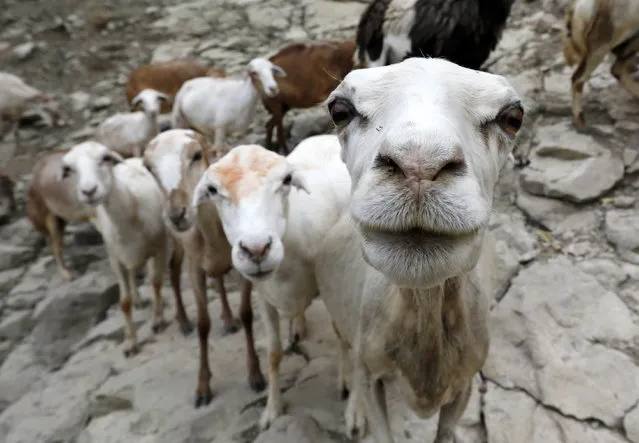
A flock of sheep and goats is led by shepherds to pastures at a mountain village on the outskirts of Sana'a, Yemen, 27 July 2023. At least eight million sheep and goats from about 470,000 pastoralist and agro pastoralist households across Yemen will be treated and vaccinated over the two years 2023 and 2024, in an effort to reduce livestock losses, improve production efficiency, and household income generation amid an acute food insecurity, the UN Food and Agriculture Organization (FAO) has reported. Livestock production in Yemen is a main income-generating activity for many rural and poor households. Yemen remains one of the worst humanitarian crises in the world with over 17 million people out of its 30-million population are food insecure due to a combination of prolonged conflicts and economic crisis. (Photo by Yahya Arhab/EPA)

A flock of sheep and goats is led by shepherds to pastures at a mountain village on the outskirts of Sana'a, Yemen, 27 July 2023. At least eight million sheep and goats from about 470,000 pastoralist and agro pastoralist households across Yemen will be treated and vaccinated over the two years 2023 and 2024, in an effort to reduce livestock losses, improve production efficiency, and household income generation amid an acute food insecurity, the UN Food and Agriculture Organization (FAO) has reported. (Photo by Yahya Arhab/EPA)
Details
01 Aug 2023 03:44:00
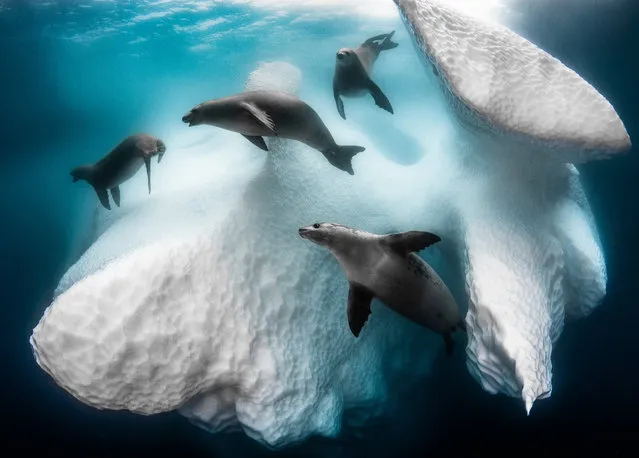
Underwater photographer of the year 2020 and wide angle category winner: Frozen Mobile Home by Greg Lecoeur (France) in the Antarctic peninsula, Antarctica. Crabeater seals swim around an iceberg. These massive and mysterious habitats are dynamic kingdoms that support marine life. As they swing and rotate slowly through polar currents, icebergs fertilise the oceans by carrying nutrients from land that spark blooms of phytoplankton, fundamental to the carbon cycle. (Photo by Greg Lecoeur/Underwater Photographer of the Year 2020)

Underwater photographer of the year 2020 and wide angle category winner: Frozen Mobile Home by Greg Lecoeur (France) in the Antarctic peninsula, Antarctica. Crabeater seals swim around an iceberg. These massive and mysterious habitats are dynamic kingdoms that support marine life. As they swing and rotate slowly through polar currents, icebergs fertilise the oceans by carrying nutrients from land that spark blooms of phytoplankton, fundamental to the carbon cycle. (Photo by Greg Lecoeur/Underwater Photographer of the Year 2020)
Details
28 Feb 2020 00:05:00
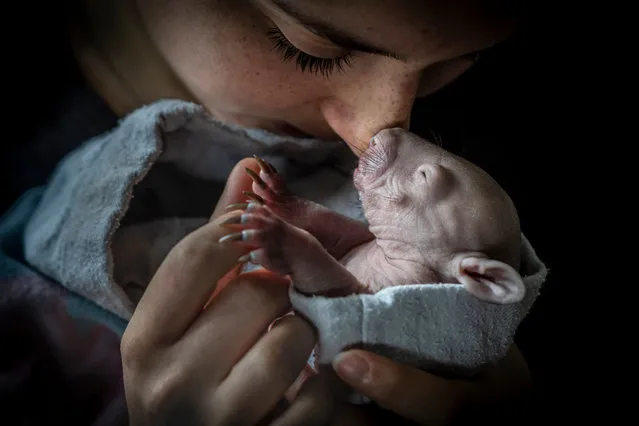
Nose to Nose; Human/Nature winner. “Doug Gimesy was documenting work at the Joey and Bat Sanctuary near Melbourne when he met a wombat (Vombatus ursinus) whose mother had been killed by a car. Gimesy watched as a young veterinary student bottle-fed the orphaned joey, then touched her nose to the joey’s in a tender moment of interspecies bonding”. (Photo by Doug Gimesy/BigPicture)

Nose to Nose; Human/Nature winner. “Doug Gimesy was documenting work at the Joey and Bat Sanctuary near Melbourne when he met a wombat (Vombatus ursinus) whose mother had been killed by a car. Gimesy watched as a young veterinary student bottle-fed the orphaned joey, then touched her nose to the joey’s in a tender moment of interspecies bonding”. (Photo by Doug Gimesy/BigPicture)
Details
25 Jun 2023 05:33:00
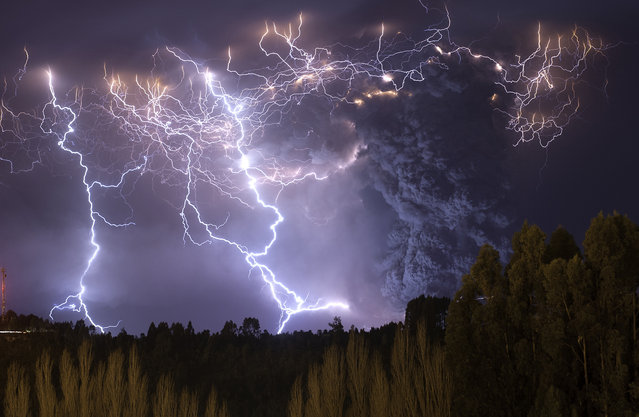
The eruption of Cordon Caulle began on June 4, 2011, located in the Region of Los Rios in Chile. For about 12 months, people and animals became accustomed to living with the daily fall of ash, which also caused problems in the air traffic in South America. The explosions and lightning during first days of the eruption could be seen from hundreds of miles around. This photograph was taken on the second night of eruption from the town of Lago Ranco. (Photo and caption by Francisco Negroni/National Geographic Traveler Photo Contest)

The eruption of Cordon Caulle began on June 4, 2011, located in the Region of Los Rios in Chile. For about 12 months, people and animals became accustomed to living with the daily fall of ash, which also caused problems in the air traffic in South America. The explosions and lightning during first days of the eruption could be seen from hundreds of miles around. This photograph was taken on the second night of eruption from the town of Lago Ranco. (Photo and caption by Francisco Negroni/National Geographic Traveler Photo Contest)

ATTENTION! All pictures are presented in high resolution. To see Hi-Res images – just TWICE click on any picture. In other words, click small picture – opens the BIG picture. Click BIG picture – opens VERY BIG picture.
Details
23 Jun 2013 11:24:00
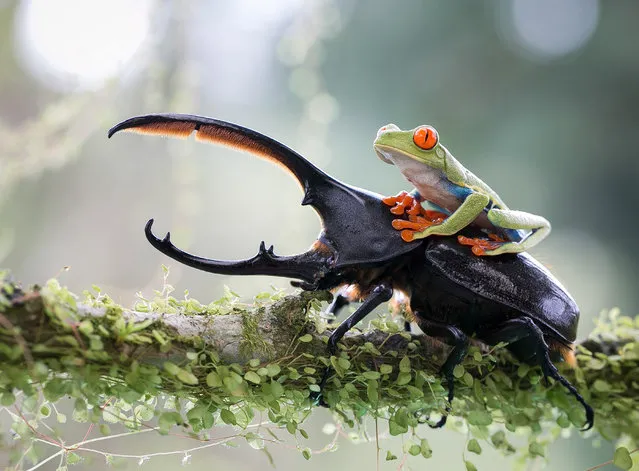
“The knight and his steed”. This picture was taken in a natural but controlled environment. There are pictures that can not be done in nature or that would imply a very high cost of both time and money, thats why photography workshops are run conducted at strategic locations and bringing EVERYONE who is interested, the basic notions (lighting, camera handling, composition, etc...) or the specimens, and afford them the opportunity to take pictures like this. (Photo and caption by Nicolas Reusens Boden (Sweden)/2014 Sony World Photography Awards)

“The knight and his steed”. This picture was taken in a natural but controlled environment. There are pictures that can not be done in nature or that would imply a very high cost of both time and money, thats why photography workshops are run conducted at strategic locations and bringing EVERYONE who is interested, the basic notions (lighting, camera handling, composition, etc...) or the specimens, and afford them the opportunity to take pictures like this. Although controlled, this shot was not prepared at all, I was performing a workshop with the agalychnis callidryas treefrog from Costa Rica when the frog managed to jump to the branch where this huge titan was sleeping... I had my gear ready so I only had to change a few settings and shoot... the rest is history. (Photo and caption by Nicolas Reusens Boden (Sweden)/2014 Sony World Photography Awards)
Details
10 Dec 2013 07:23:00
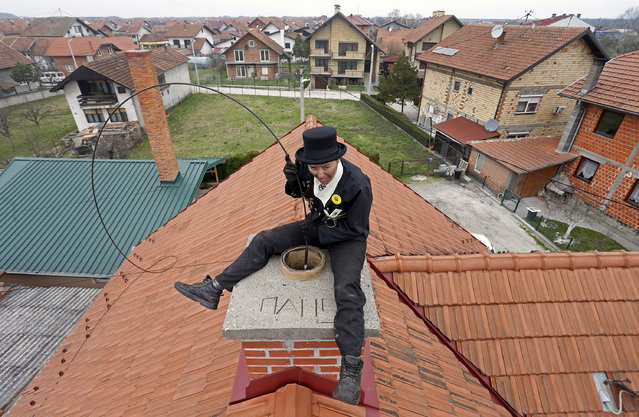
Dajana Djuric, 25, who has worked as a chimney sweep since the age of six, cleans a chimney in Brcko, Bosnia and Herzegovina. Picture taken March 3, 2016. (Photo by Dado Ruvic/Reuters)

Dajana Djuric, 25, who has worked as a chimney sweep since the age of six, cleans a chimney in Brcko, Bosnia and Herzegovina. Dajana Djuric, believed to be the only female chimney sweep in Bosnia and Herzegovina, has to contend with perilous roofs in the depth of winter. (Photo by Dado Ruvic/Reuters)
Details
09 Mar 2016 13:07:00
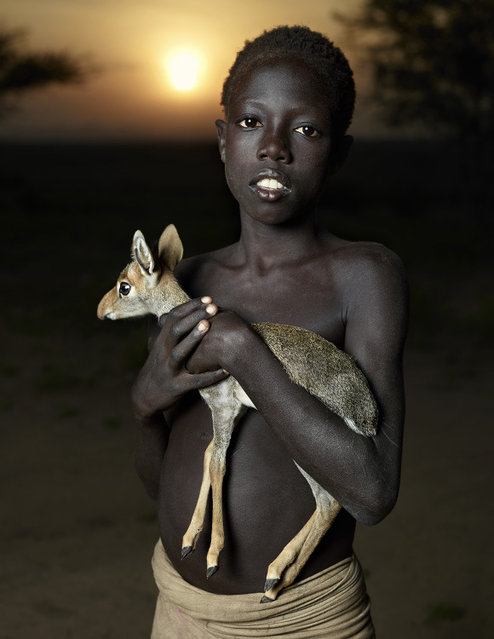
Raja - Karo tribe

Raja - Karo tribe
Details
07 Jun 2012 01:55:00
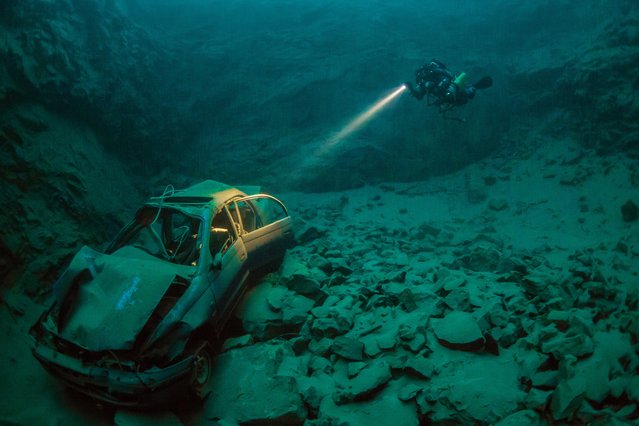
Wide-angle category winner. Part of the Illusion by Marcus Blatchford (UK). Location: National Dive & Activity Centre, Chepstow, Wales. “This is the deepest inland dive centre in the UK. The dive plan was to explore the deep end, but this time I dived ‘unplugged’ (without my strobes). With the exception of this change to my camera technique, there were no planned shots I wanted to achieve – just a fun dive with ad-hoc photos along the way. Shortly after this photo was captured, in 6C water and two hours of decompression ahead of us, we turned and started the long ascent back to the surface”. (Photo by Marcus Blatchford/Underwater Photographer of the Year 2016)

Wide-angle category winner. Part of the Illusion by Marcus Blatchford (UK). Location: National Dive & Activity Centre, Chepstow, Wales. “This is the deepest inland dive centre in the UK. The dive plan was to explore the deep end, but this time I dived ‘unplugged’ (without my strobes). With the exception of this change to my camera technique, there were no planned shots I wanted to achieve – just a fun dive with ad-hoc photos along the way. Shortly after this photo was captured, in 6C water and two hours of decompression ahead of us, we turned and started the long ascent back to the surface”. (Photo by Marcus Blatchford/Underwater Photographer of the Year 2016)
Details
18 Feb 2016 13:44:00