Loading...
Done
Photograph: Sandrine Kerfante.

Sandrine Kerfante has had a fascination with “doubles” ever since meeting her mother’s twin as a child. In 2012, this lifelong captivation inspired her to create a blog called twin-niwt, which celebrates photographs of doubles in all their forms. “I’m fascinated by the idea of the duo, repetition, symmetry, reflection, mirror games and all the symbolism associated with it”, she says. “I think it’s a topic often present in photography, more or less consciously”. (Photo by Sandrine Kerfante/The Guardian)
Details
21 Aug 2016 11:01:00
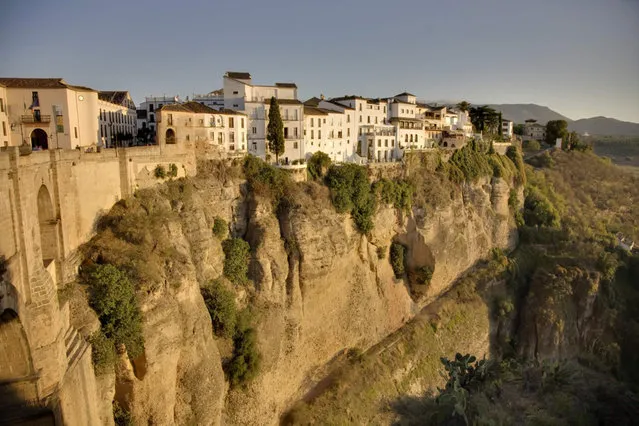
The Amazing Rock City In Spain

Ronda is a small Spanish town that it well known by many people around the world. It became a popular tourist destination due to its peculiar location. Some of its buildings are standing right next to the large cliff drop, making for a very scary sight, especially if you were to look down through one of their windows unaware of what kind of sight awaits you. If you ever find yourself looking for this ancient town, you can travel to it from Costa del Sol or Malaga. In the past, this town played a major strategic role due to its high elevation, which made defending it from invaders a lot easier.
Details
03 Mar 2015 11:40:00
Model Madeline Stuart stands backstage between two male models at New York Fashion Week in New York City, U.S., September 6, 2018. (Photo by Andrew Kelly/Reuters)

Madeline is the first person with Down's syndrome to ever stride down a runway as a model during New York Fashion Week. Here: Model Madeline Stuart stands backstage between two male models at New York Fashion Week in New York City, U.S., September 6, 2018. (Photo by Andrew Kelly/Reuters)
Details
20 Sep 2018 00:03:00
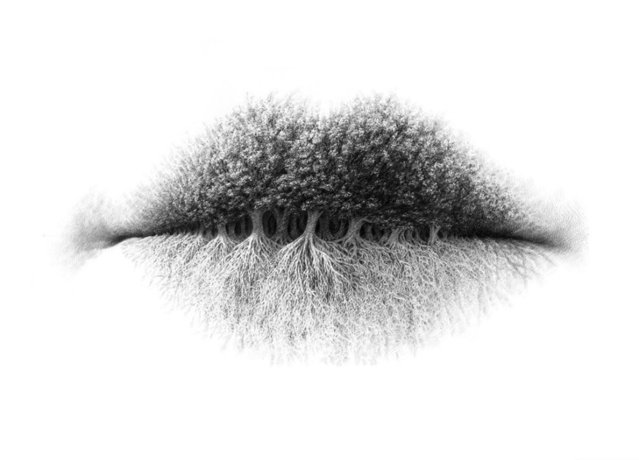
Surreal Drawings Of Lips By Christo Dagorov

Have you ever heard of a phenomenon called the Uncanny Valley? Illustrations created by Swiss illustrator Christo Dagorov show how horrible something may look when it’s a hair’s breadth away from looking human. In his illustrations he combined the shape of human lips with trees, buildings, and even human bodies, making it look from a distance as if the lips were horribly deformed by some unknown disease. However, after a while you make out the shapes, yet the feeling of uneasiness remains, making you shiver from unsuppressable disgust. (Photo by Christo Dagorov)
Details
16 Dec 2014 12:14:00
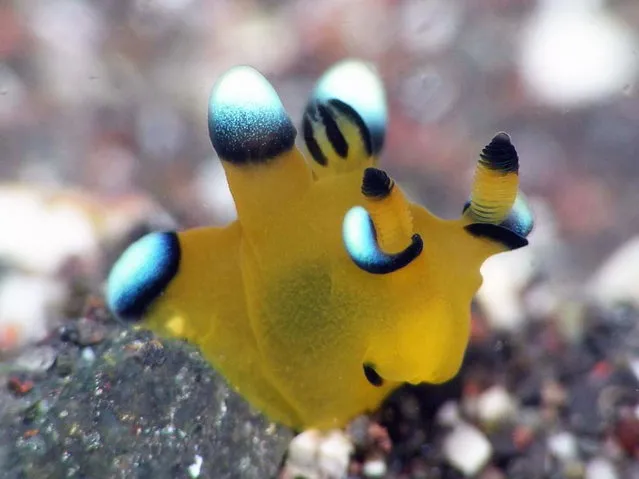
Thecacera Pacifica AKA Pikachu

If you ever wanted to meet a live Pikachu, you might have a hard time finding one. However, there is a creature on this Earth that kind of looks like one. That creature’s name is Thecacera pacifica and it is a species of a sea slug. These little critters can be found in the Indian Ocean from African coast to Indonesia and Vanuatu. Their vibrant orange and blue colors look gorgeous, making it look like some sort of anemone. Also, as you might have guessed from the striking colors of the sea slug, just like most of anemones, this creature is very toxic. Thus, keeping it as a pet isn’t an option.

Details
19 Dec 2014 12:51:00
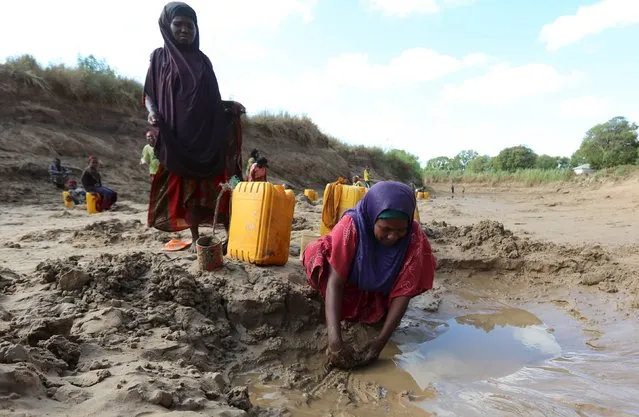
People collect water from shallow wells dug along the Shabelle River bed, which is dry due to drought in Somalia's Shabelle region, March 19, 2016. The cabinet ministers of the federal republic of Somalia have held on Thursday their weekly meeting in Mogadishu and discussed on the drought situation in parts of the country and its humanitarian consequences. Chaired by the acting PM and justice minister Abdullah Ahmed Jama (Ilka-Jir), the cabinet noted with deep concern the the prevailing situation in Somalia, with one of the worst ever drought in two decades. (Photo by Feisal Omar/Reuters)

People collect water from shallow wells dug along the Shabelle River bed, which is dry due to drought in Somalia's Shabelle region, March 19, 2016. The cabinet ministers of the federal republic of Somalia have held on Thursday their weekly meeting in Mogadishu and discussed on the drought situation in parts of the country and its humanitarian consequences. Chaired by the acting PM and justice minister Abdullah Ahmed Jama (Ilka-Jir), the cabinet noted with deep concern the the prevailing situation in Somalia, with one of the worst ever drought in two decades. (Photo by Feisal Omar/Reuters)
Details
20 Mar 2016 11:38:00
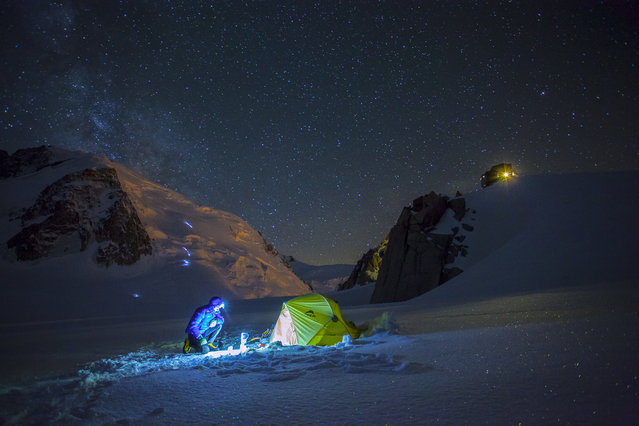
“A snapshot from mountaineer's life”. Have you ever wondered how does a mountaineer's day start? (Photo and caption by Kamil Tamiola/National Geographic Traveler Photo Contest)

“A snapshot from mountaineer's life”. Have you ever wondered how does a mountaineer's day start? I will give you a hint: you wake up at 3 am, set the stove, wake up your partner, pretend it is warm, quickly consume a high-calorie breakfast, watch your friends slowly ascending the icy slopes of your dream summit with their tiny head torches glimmering against perfectly blue ice, and hope for the good weather. One would ask: why all this trouble? The answer is easy: for the love of the adventure and the unknown. Location: Chamonix, Haute Savoye, France. (Photo and caption by Kamil Tamiola/National Geographic Traveler Photo Contest)

ATTENTION! All pictures are presented in high resolution. To see Hi-Res images – just TWICE click on any picture. In other words, click small picture – opens the BIG picture. Click BIG picture – opens VERY BIG picture.
Details
27 Jun 2013 12:47:00
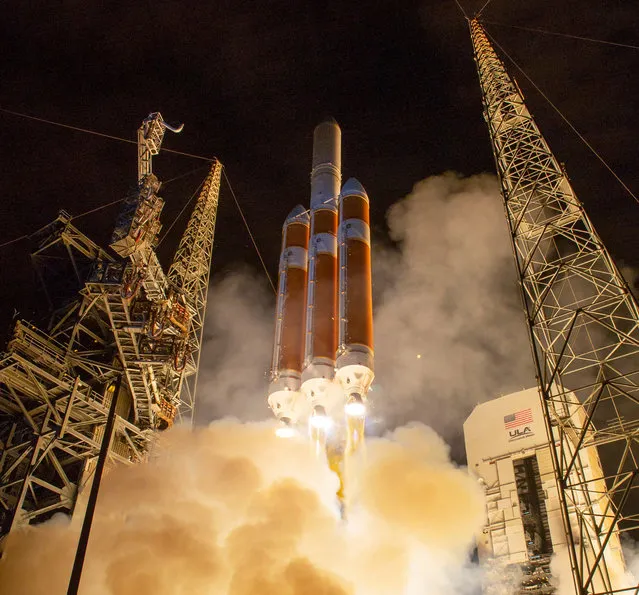
A handout photo made available by the NASA shows the United Launch Alliance Delta IV Heavy rocket launches NASA's Parker Solar Probe to touch the Sun, from Launch Complex 37 at Cape Canaveral Air Force Station, Florida, USA, 12 August 2018. Parker Solar Probe is humanity’s first-ever mission into a part of the Sun’s atmosphere called the corona. Here it will directly explore solar processes that are key to understanding and forecasting space weather events that can impact life on Earth. (Photo by Bill Ingalls/EPA-EFE/NASA)

A handout photo made available by the NASA shows the United Launch Alliance Delta IV Heavy rocket launches NASA's Parker Solar Probe to touch the Sun, from Launch Complex 37 at Cape Canaveral Air Force Station, Florida, USA, 12 August 2018. Parker Solar Probe is humanity’s first-ever mission into a part of the Sun’s atmosphere called the corona. Here it will directly explore solar processes that are key to understanding and forecasting space weather events that can impact life on Earth. (Photo by Bill Ingalls/EPA-EFE/NASA)
Details
13 Aug 2018 07:26:00