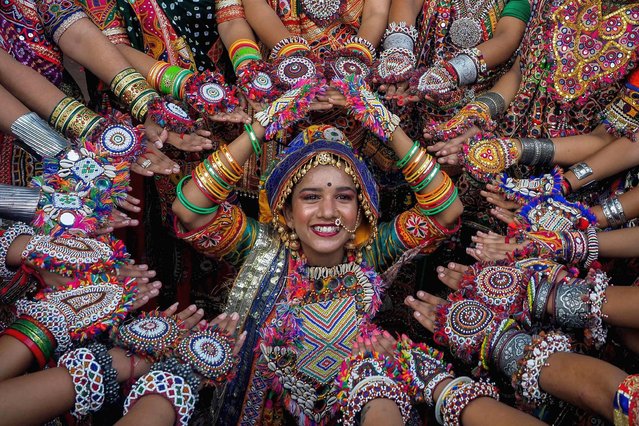
Participants from an art group wearing traditional dresses rehearse Garba dance ahead of the Navratri festival in Ahmedabad on September 20, 2022. (Photo by Sam Panthaky/AFP)
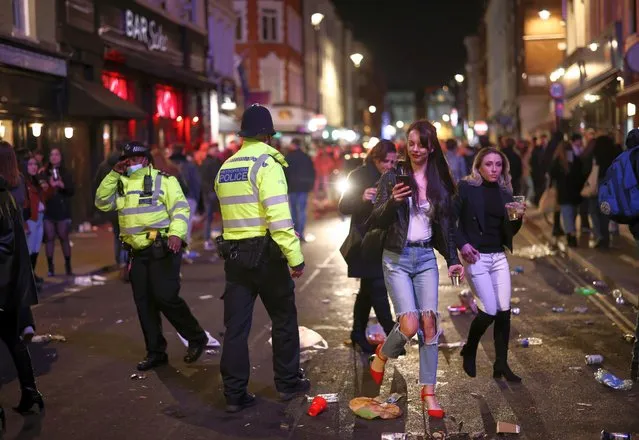
Metropolitan Police patrol as people party at the Soho district, as the coronavirus disease (COVID-19) restrictions ease, in London, United Kingdom on April 16, 2021. Pubs and Restaurants are expecting good business tonight being the first Friday night after Coronavirus lockdown rules were relaxed to allow outside dining and drinking. (Photo by Henry Nicholls/Reuters)
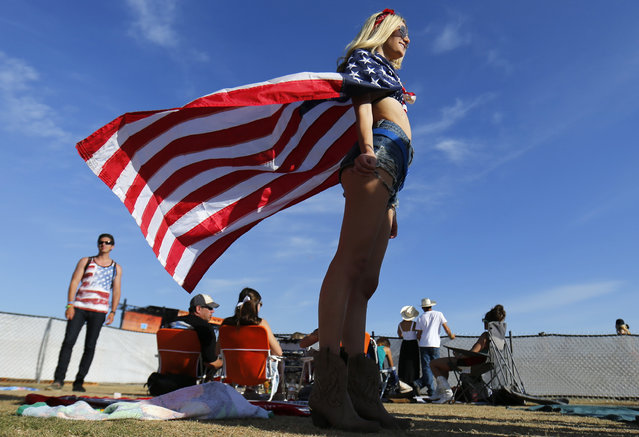
A country music fan cools off in the wind on the second day of the Stagecoach country music festival in Indio, California April 26, 2014. (Photo by Mike Blake/Reuters)
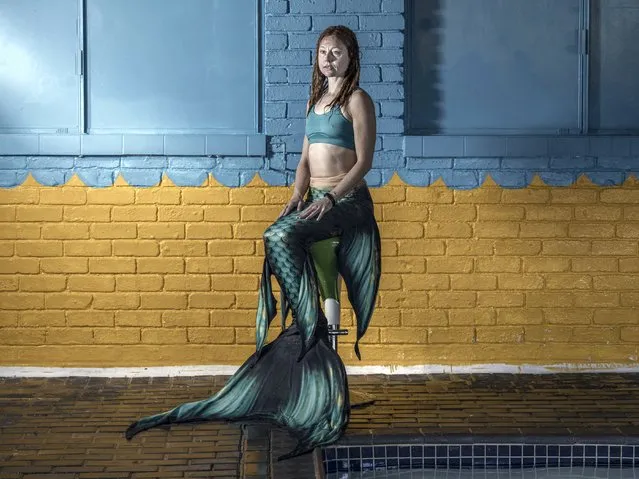
Izelle Nair, 39, the instructor at the Merschool poses for a portrait in her mermaid attire at the centre in Kayalami, Midrand, South Africa on June 3, 2022. Mermaiding is a fast growing sport world wide and includes several skills such as monofin swimming, sculling, tricks and breath hold. (Photo by Marco Longari/AFP Photo)
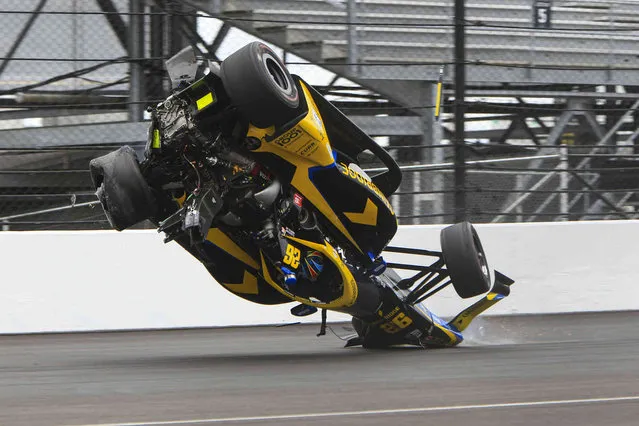
Colton Herta crashes in the first turn during the final practice for the Indianapolis 500 auto race at Indianapolis Motor Speedway in Indianapolis, Friday, May 27, 2022. (Photo by Joe Watts/AP Photo)
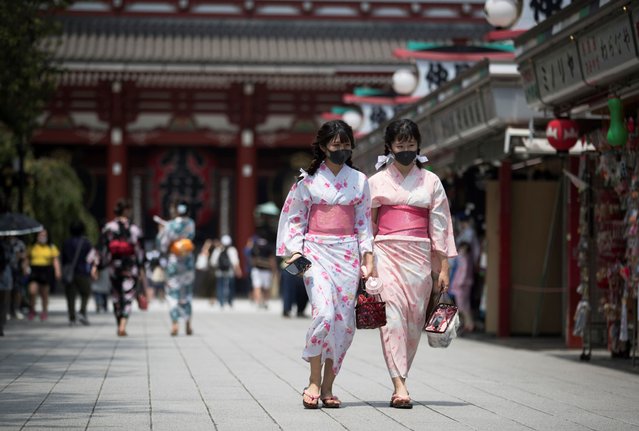
Two women in traditional kimonos wear face masks to help curb the spread of the coronavirus as they visit the Sensoji temple in Tokyo on Friday, August 7, 2020. (Photo by Hiro Komae/AP Photo)
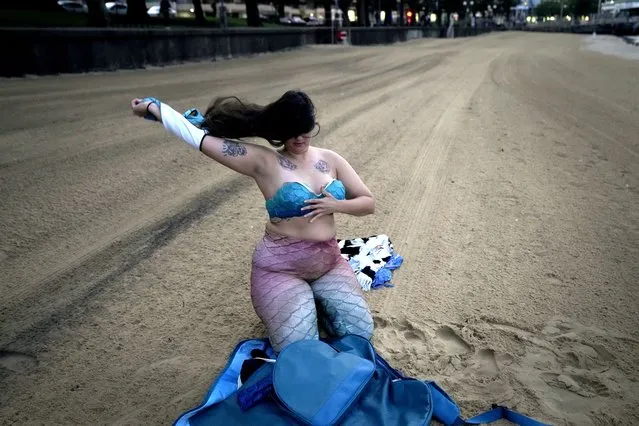
Lauren Metzler, founder of Sydney Mermaids, prepares for a swim at Manly Cove Beach in Sydney, Australia, Thursday, May 26, 2022. There is a strong need, especially after COVID-related lockdowns, to simply play and enjoy creativity, Metzler says. (Photo by Mark Baker/AP Photo)
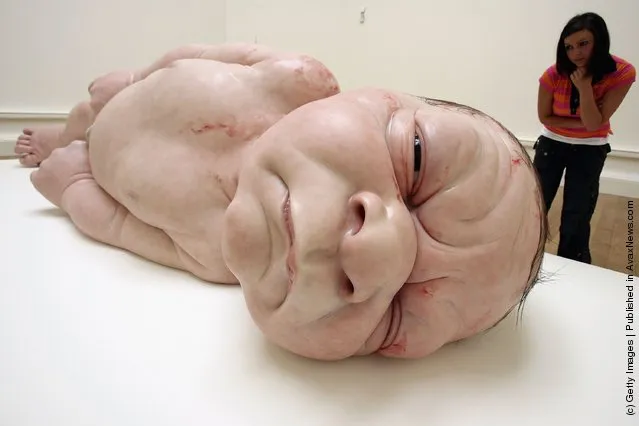
A visitors to the National Galleries of Scotland view the work “A girl” of sculptor Ron Mueck on August 4, 2006 Edinburgh in Scotland. (Photo by Jeff J Mitchell/Getty Images)