Loading...
Done
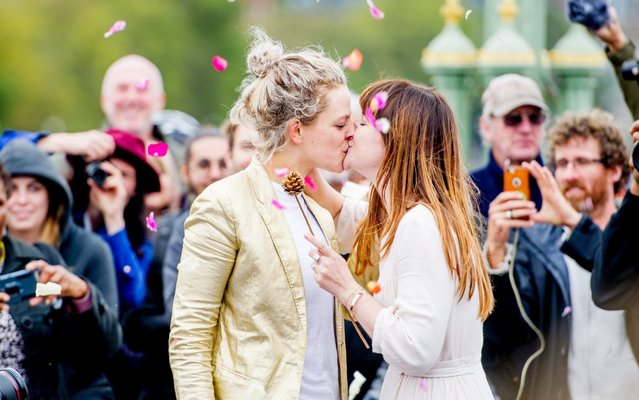
An Extinction Rebellion environmental activist couple getting married at an action site they are calling “The Beacon” on Westminster Bridge on October 7, 2019 in London, England. Primarily made up of London based activists the site is one of 12 situated around key Government locations in central London as actions are also predicted to occur in unto 70 cities around the world. The group aim to occupy the areas in central London for up to two weeks through non violent protest with an estimated 8 times as many people as their April protests which saw over 1,200 people arrested. (Photo by Ollie Millington/Getty Images)

An Extinction Rebellion environmental activist couple getting married at an action site they are calling “The Beacon” on Westminster Bridge on October 7, 2019 in London, England. Primarily made up of London based activists the site is one of 12 situated around key Government locations in central London as actions are also predicted to occur in unto 70 cities around the world. The group aim to occupy the areas in central London for up to two weeks through non violent protest with an estimated 8 times as many people as their April protests which saw over 1,200 people arrested. (Photo by Ollie Millington/Getty Images)
Details
10 Oct 2019 00:05:00
People drink in the street in the Soho area of London, on April 12, 2021 as coronavirus restrictions are eased across the country in step two of the government's roadmap out of England's third national lockdown. Britons on Monday toasted a significant easing of coronavirus restrictions, with early morning pints – and much-needed haircuts – as the country took a tentative step towards the resumption of normal life. Businesses including non-essential retail, gyms, salons and outdoor hospitality were all able to open for the first time in months in the second step of the government's roadmap out of lockdown. (Photo by Tolga Akmen/AFP Photo)

People drink in the street in the Soho area of London, on April 12, 2021 as coronavirus restrictions are eased across the country in step two of the government's roadmap out of England's third national lockdown. Britons on Monday toasted a significant easing of coronavirus restrictions, with early morning pints – and much-needed haircuts – as the country took a tentative step towards the resumption of normal life. Businesses including non-essential retail, gyms, salons and outdoor hospitality were all able to open for the first time in months in the second step of the government's roadmap out of lockdown. (Photo by Tolga Akmen/AFP Photo)
Details
13 Apr 2021 08:02:00
A dhobi, or a washerman washes cloths on the banks of the River Gomti in Lucknow, India, Saturday, September 12, 2020. Dhobis are traditional laundry workers who wash clothes by hand and dry them in the sun, an occupation which has been in existence for generations. Most cities in India have a Dhobi Ghat, or washermen's area, where the city's pile of clothes is laundered. This practice is still popular in India, despite of modern technology. Around 1,000 families work in Lucknow's Dhobi Ghat. However, in light of the novel coronavirus, their wages have decreased drastically. With each family earning around US$100-200 per month. (Photo by Rajesh Kumar Singh/AP Photo)

A dhobi, or a washerman washes cloths on the banks of the River Gomti in Lucknow, India, Saturday, September 12, 2020. Dhobis are traditional laundry workers who wash clothes by hand and dry them in the sun, an occupation which has been in existence for generations. Most cities in India have a Dhobi Ghat, or washermen's area, where the city's pile of clothes is laundered. This practice is still popular in India, despite of modern technology. Around 1,000 families work in Lucknow's Dhobi Ghat. However, in light of the novel coronavirus, their wages have decreased drastically. With each family earning around US$100-200 per month. (Photo by Rajesh Kumar Singh/AP Photo)
Details
25 Sep 2020 00:03:00
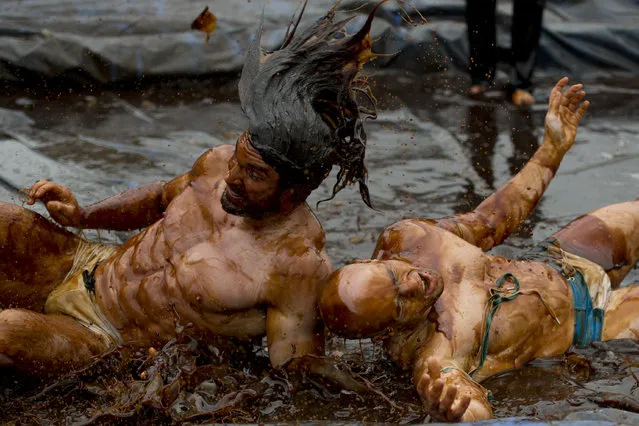
Competitors take part in the 8th annual World Gravy Wrestling Championships at the Rose n Bowl Pub in Bacup, north west England on August 31, 2015. Contestants must participate in fancy dress and wrestle in a pool of Lancashire Gravy for 2 minutes whilst being scored for a variety of wrestling moves. (Photo by Oli Scarff/AFP Photo)

Competitors take part in the 8th annual World Gravy Wrestling Championships at the Rose n Bowl Pub in Bacup, north west England on August 31, 2015. Contestants must participate in fancy dress and wrestle in a pool of Lancashire Gravy for 2 minutes whilst being scored for a variety of wrestling moves. (Photo by Oli Scarff/AFP Photo)
Details
01 Sep 2015 15:30:00
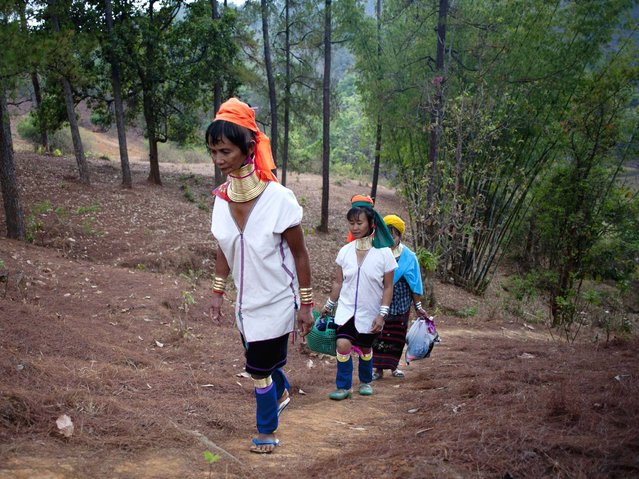
One of the theories says that the coils originate from the desire to look more attractive by exaggerating sexual dimorphism, as women have more slender necks than men. (Photo by Ye Aung Thu/AFP Photo)

This photo taken on April 16, 2014 shows ethnic Kayan women wearing traditional clothes and bronze rings around tbeir neck in Panpet village, Demoso township in Kayah state, eastern Myanmar. Some ethnic Kayan women, also known as Padaung, begin wearing the bronze rings on their neck and legs from a young age. Usually they start wearing six to ten rings when they are five to ten-years-old and then they put on one more ring a year for years after then. (Photo by Ye Aung Thu/AFP Photo)
Details
23 Apr 2014 08:56:00
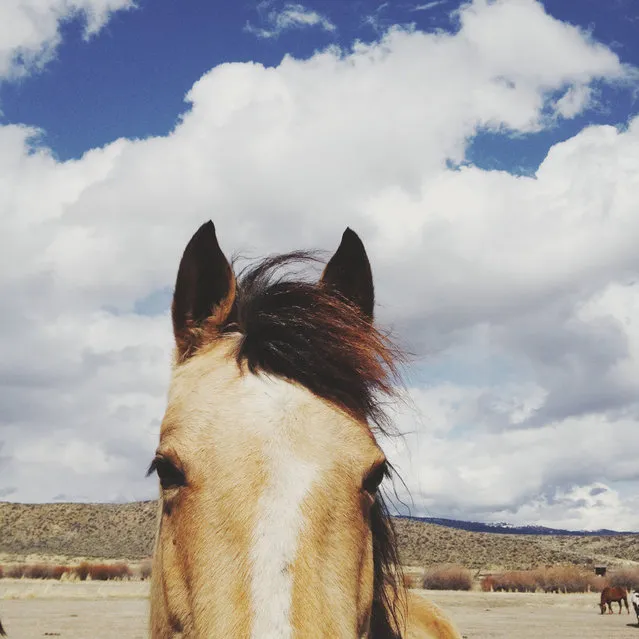
Professional iPhone Photographer Kevin Russ

Kevin Russ, a photographer & image moderator for iStockphoto, grew up in Arroyo Grande, California. In 2003, he made the move to Portland, planning to study at Multnomah Bible College. Finding the workload to be minimal, Kevin invested in a camera, filling his free time and finding himself instantly smitten with the craft. A year and a half later, photography had evolved into his full-time job. However, after 4 years of consistent portrait work, Kevin became burnt out and took a step back from photography altogether. Two years later, he picked up the camera again and now spends the majority of his time on the road, exploring & photographing the rustic landscapes & wildlife he encounters.
Details
04 Jun 2014 16:57:00
Albertus in the church of St George in Burgrain, Germany. Incredibly, some of the skeletons, which took up to five years to decorate, were even found hidden away in lock-ups and containers. (Photo by Paul Koudounaris/BNPS)

A relic hunter dubbed “Indiana Bones” has lifted the lid on a macabre collection of 400-year-old jewel-encrusted skeletons unearthed in churches across Europe. Art historian Paul Koudounaris has hunted down and photographed dozens of gruesome skeletons in some of the world's most secretive religious establishments. Photo: Albertus in the church of St George in Burgrain, Germany. Incredibly, some of the skeletons, which took up to five years to decorate, were even found hidden away in lock-ups and containers. (Photo by Paul Koudounaris/BNPS)
Details
08 Sep 2013 07:20:00
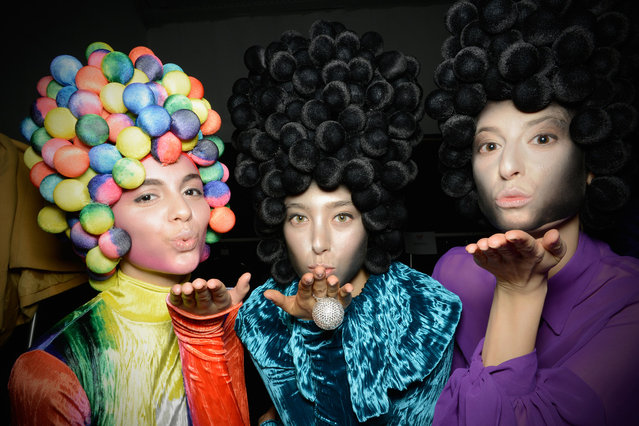
Models blow kisses backstage at the Red Beard show during MBFWI presented by American Express Fall/Winter 2014 on March 13, 2014 in Istanbul, Turkey. (Photo by S. Alemdar/Getty Images for IMG)

Models blow kisses backstage at the Red Beard show during MBFWI presented by American Express Fall/Winter 2014 on March 13, 2014 in Istanbul, Turkey. (Photo by S. Alemdar/Getty Images for IMG)
Details
15 Mar 2014 10:30:00