Loading...
Done
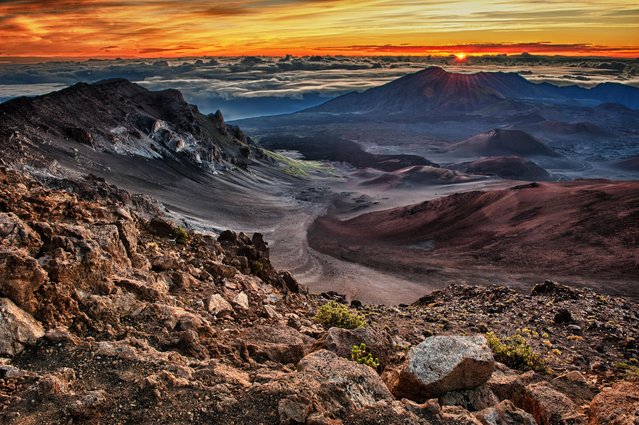
Sunrise over Haleakala Crater, Haleakala National Park, Maui, Hawaii on April 26th, 2011. (Photo by Robert Bush/Alamy Stock Photo)

Sunrise over Haleakala Crater, Haleakala National Park, Maui, Hawaii on April 26th, 2011. (Photo by Robert Bush/Alamy Stock Photo)
Details
20 Apr 2017 09:06:00
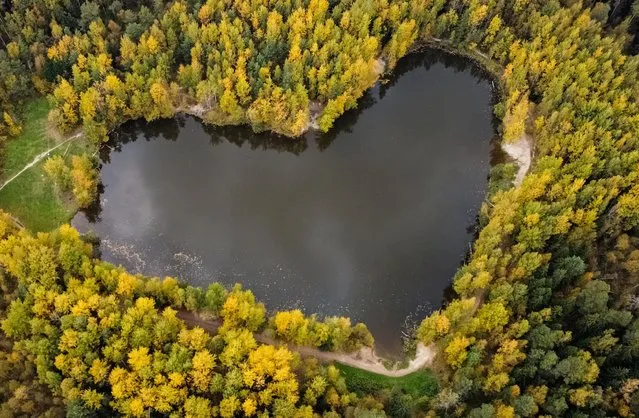
A lake in a shape of a heart is seen surrounded by autumn-coloured trees outside Balashikha, Moscow region, Russia on October 4, 2021. (Photo by Maxim Shemetov/Reuters)

A lake in a shape of a heart is seen surrounded by autumn-coloured trees outside Balashikha, Moscow region, Russia on October 4, 2021. (Photo by Maxim Shemetov/Reuters)
Details
05 Nov 2021 08:53:00
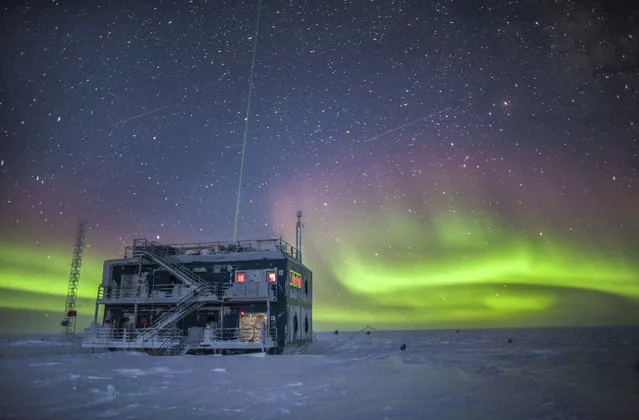
This undated photo provided by NOAA in May 2018 shows aurora australis near the South Pole Atmospheric Research Observatory in Antarctica. When a hole in the ozone formed over Antarctica, countries around the world in 1987 agreed to phase out several types of ozone-depleting chemicals called chlorofluorocarbons (CFCs). Production was banned, emissions fell and the hole shriveled. But according to a study released on Wednesday, May 16, 2018, scientists say since 2013, there’s more of a banned CFC going into the atmosphere. (Photo by Patrick Cullis/NOAA via AP Photo)

This undated photo provided by NOAA in May 2018 shows aurora australis near the South Pole Atmospheric Research Observatory in Antarctica. When a hole in the ozone formed over Antarctica, countries around the world in 1987 agreed to phase out several types of ozone-depleting chemicals called chlorofluorocarbons (CFCs). Production was banned, emissions fell and the hole shriveled. But according to a study released on Wednesday, May 16, 2018, scientists say since 2013, there’s more of a banned CFC going into the atmosphere. (Photo by Patrick Cullis/NOAA via AP Photo)
Details
15 Aug 2018 00:05:00
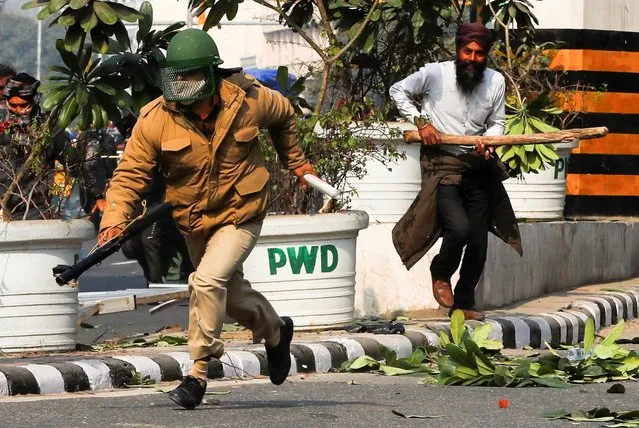
A farmer runs behind a police officer during a protest against farm laws introduced by the government, in New Delhi, India, January 26, 2021. (Photo by Adnan Abidi/Reuters)

A farmer runs behind a police officer during a protest against farm laws introduced by the government, in New Delhi, India, January 26, 2021. Tens of thousands of farmers drove a convoy of tractors into the Indian capital as the nation celebrated Republic Day on Tuesday in the backdrop of agricultural protests that have grown into a rebellion and rattled the government. (Photo by Adnan Abidi/Reuters)
Details
27 Jan 2021 10:29:00
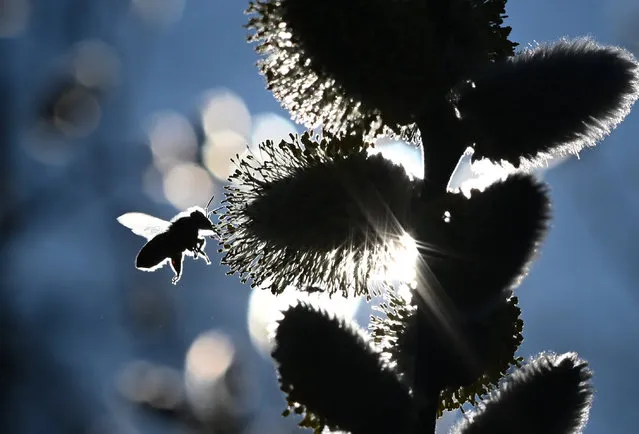
A bee approaching the flowers of a willow in Otzberg, Germany on February 28, 2021. Willow catkins are a protected species and one of the first sources of food for insects in early spring. (Photo by Arne Dedert/DPA)

A bee approaching the flowers of a willow in Otzberg, Germany on February 28, 2021. Willow catkins are a protected species and one of the first sources of food for insects in early spring. (Photo by Arne Dedert/DPA)
Details
10 Apr 2021 05:48:00
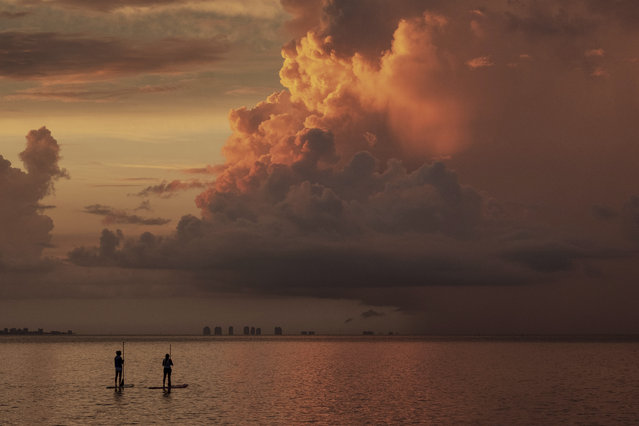
Two paddle boarders stop to watch the sunrise on a stormy morning in Sanibel, Fla., Thursday, August 15, 2019. (Photo by J. David Ake/AP Photo)

Two paddle boarders stop to watch the sunrise on a stormy morning in Sanibel, Fla., Thursday, August 15, 2019. (Photo by J. David Ake/AP Photo)
Details
07 Oct 2019 00:03:00
Members of the Krewe of Joan of Arc parade as Twelfth Night kicks off Carnival season, in New Orleans, Louisiana, on January 6, 2025. (Photo by Eduardo Munoz/Reuters)

Members of the Krewe of Joan of Arc parade as Twelfth Night kicks off Carnival season, in New Orleans, Louisiana, on January 6, 2025. (Photo by Eduardo Munoz/Reuters)
Details
18 Jan 2025 04:12:00
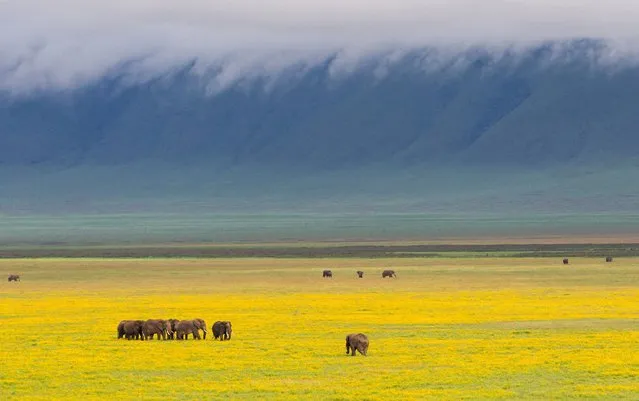
Ngorongoro Crater (Tanzania). At 610m deep and 260 sq km, this is the largest unflooded caldera in the world. A blue-green vision from above it's a haven for engangered wildlife and Maasai livestock. The crater was formed three million years ago when a giant volcano, which could have been as high as Kilimanjaro, exploded and collapsed. The caldera formed the concentric fractures in the crust cracked down to a magma reservoir deep underground. (Photo by John Bryant/Getty Images)

Ngorongoro Crater (Tanzania). At 610m deep and 260 sq km, this is the largest unflooded caldera in the world. A blue-green vision from above it's a haven for engangered wildlife and Maasai livestock. The crater was formed three million years ago when a giant volcano, which could have been as high as Kilimanjaro, exploded and collapsed. The caldera formed the concentric fractures in the crust cracked down to a magma reservoir deep underground. (Photo by John Bryant/Getty Images)
Details
28 Mar 2014 08:08:00