Loading...
Done
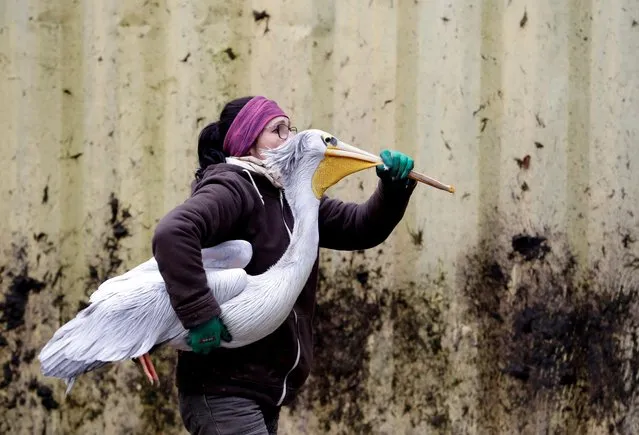
A zoo keeper carries a pelican to move it to its winter enclosure at Dvur Kralove Zoo in Dvur Kralove nad Labem, Czech Republic November 5, 2019. (Photo by David W. Cerny/Reuters)

A zoo keeper carries a pelican to move it to its winter enclosure at Dvur Kralove Zoo in Dvur Kralove nad Labem, Czech Republic on November 5, 2019. (Photo by David W. Cerny/Reuters)
Details
10 Nov 2019 00:03:00
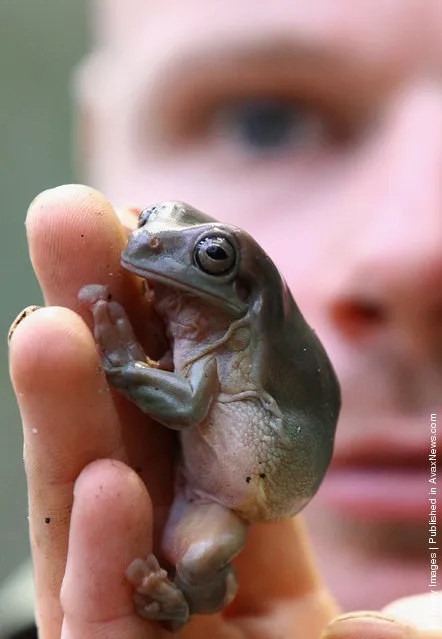
Zoo keeper Ross Poulter holds a White's Tree Frog in Edinburgh Zoo's new tropical forest zone

Zoo keeper Ross Poulter holds a White's Tree Frog in Edinburgh Zoo's new tropical forest zone on September 9, 2011 in Edinburgh, Scotland. The Brilliant Birds Exhibit which brings together beautiful and rare birds from all over the world is now more colourful and unusual, with the unveiling of the zoo's new tropical forest zone bringing together a collection of vertebrates, invertebrates and amphibians for the very first time. (Photo by Jeff J Mitchell/Getty Images)
Details
10 Sep 2011 12:10:00
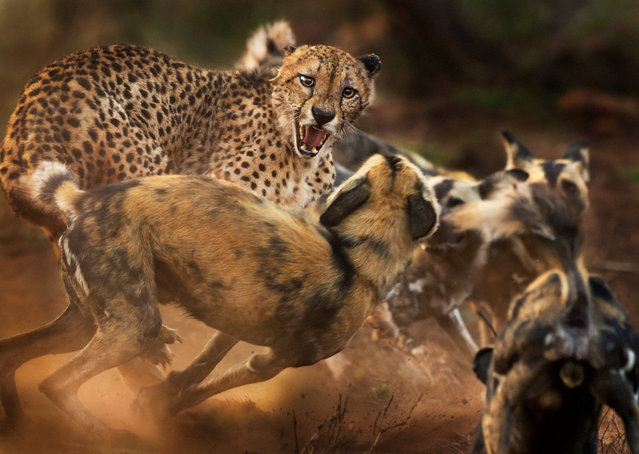
A lone male cheetah is set upon by a pack of African wild dogs. Peter Haygarth had been following the dogs as they hunted in Zimanga Private Game Reserve in KwaZulu-Natal, South Africa. On first encountering the cheetah, the dogs were wary, but as the rest of the pack arrived, their confidence grew and they began to encircle the cat. Peter kept his focus on the cat’s face. In a few minutes the spat was over as the cheetah fled. (Behaviour: mammals category). (Photo by Peter Haygarth)

A lone male cheetah is set upon by a pack of African wild dogs. Peter Haygarth had been following the dogs as they hunted in Zimanga Private Game Reserve in KwaZulu-Natal, South Africa. On first encountering the cheetah, the dogs were wary, but as the rest of the pack arrived, their confidence grew and they began to encircle the cat. Peter kept his focus on the cat’s face. In a few minutes the spat was over as the cheetah fled. (Behaviour: mammals category). (Photo by Peter Haygarth)
Details
10 Sep 2019 00:03:00
Gloria Grahame in state of undress in a scene from the film “Naked Alibi”, 1954. (Photo by Universal/Getty Images)

Gloria Grahame in state of undress in a scene from the film “Naked Alibi”, 1954. (Photo by Universal/Getty Images)
Details
18 Jan 2018 06:32:00
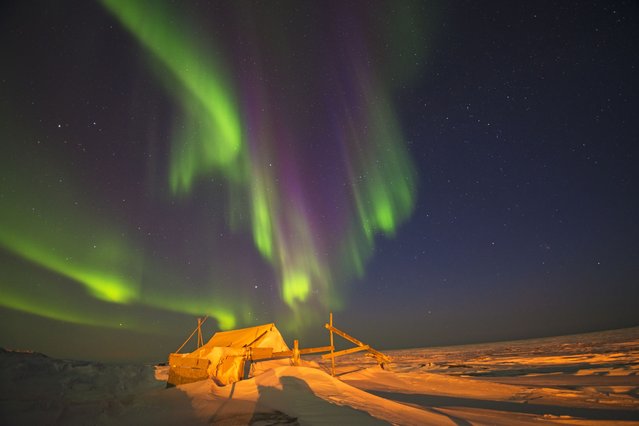
Northern lights (Aurora borealis) glow brightly over an Inupiaq fish camp along the arctic coast in North Slope, Alaska. (Photo by Steven Kazlowski/Barcroft Media)

Northern lights (Aurora borealis) glow brightly over an Inupiaq fish camp along the arctic coast in North Slope, Alaska. (Photo by Steven Kazlowski/Barcroft Media)
Details
28 Aug 2013 11:46:00
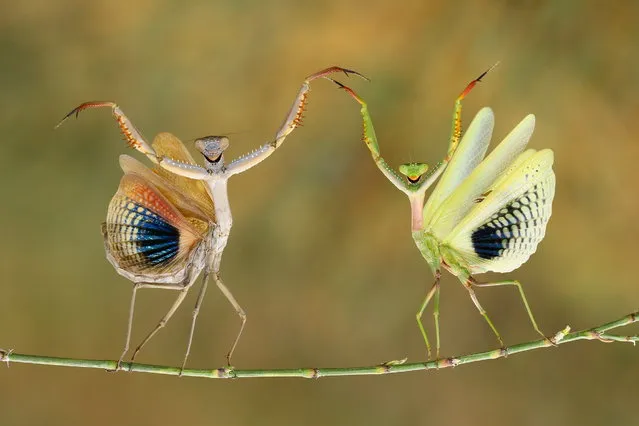
“Show Time”. It's a normal behavior of mantis. They're doing defence. When they're afraid of; raising their arms and spreading their wings. They looks like smiling dancer. Photo location: Nicosia, Cyprus. (Photo and caption by Hasan Baglar/National Geographic Photo Contest)

“Show Time”. It's a normal behavior of mantis. They're doing defence. When they're afraid of; raising their arms and spreading their wings. They looks like smiling dancer. Photo location: Nicosia, Cyprus. (Photo and caption by Hasan Baglar/National Geographic Photo Contest)
Details
28 Oct 2014 13:01:00
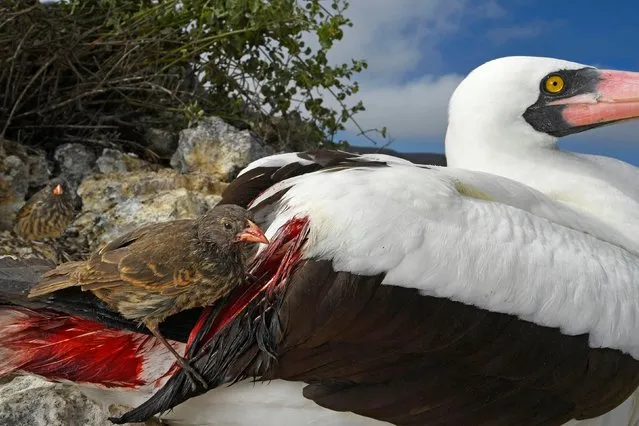
Bloodthirsty by Thomas P Peschak, Germany/South Africa — winner, Behaviour: birds. When rations run short on Wolf Island, in the remote northern Galápagos, the sharp-beaked ground finches become vampires. Their sitting targets are Nazca boobies and other large birds. The finches rely on a scant diet of seeds and insects, which regularly dries up, so they drink blood to survive. ‘I’ve seen more than half a dozen finches drinking from a single Nazca booby,’ says Tom. Rather than leave their nests the boobies tolerate the vampires, and the blood loss doesn’t seem to cause permanent harm. (Photo by Thomas P Peschak/2018 Wildlife Photographer of the Year)

Bloodthirsty by Thomas P. Peschak, Germany/South Africa — winner, Behaviour: birds. When rations run short on Wolf Island, in the remote northern Galápagos, the sharp-beaked ground finches become vampires. Their sitting targets are Nazca boobies and other large birds. The finches rely on a scant diet of seeds and insects, which regularly dries up, so they drink blood to survive. ‘I’ve seen more than half a dozen finches drinking from a single Nazca booby,’ says Tom. Rather than leave their nests the boobies tolerate the vampires, and the blood loss doesn’t seem to cause permanent harm. (Photo by Thomas P. Peschak/2018 Wildlife Photographer of the Year)
Details
19 Oct 2018 00:05:00
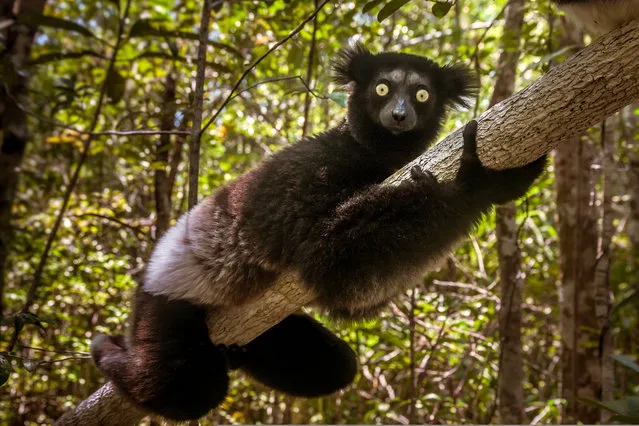
The secretive indri (Indri indri) of Madagascar, the largest living lemur. It is also critically endangered and highly evolutionarily distinct with no close relatives, which makes its branch one of most precarious on the mammal evolutionary tree. In the likely event that the indri goes extinct, we will lose 19m years of unique evolutionary history from the mammal tree of life. (Photo by Pierre-Yves Babelon/Aarhus University)

The secretive indri (Indri indri) of Madagascar, the largest living lemur. It is also critically endangered and highly evolutionarily distinct with no close relatives, which makes its branch one of most precarious on the mammal evolutionary tree. In the likely event that the indri goes extinct, we will lose 19m years of unique evolutionary history from the mammal tree of life. (Photo by Pierre-Yves Babelon/Aarhus University)
Details
18 Nov 2018 00:02:00