Loading...
Done
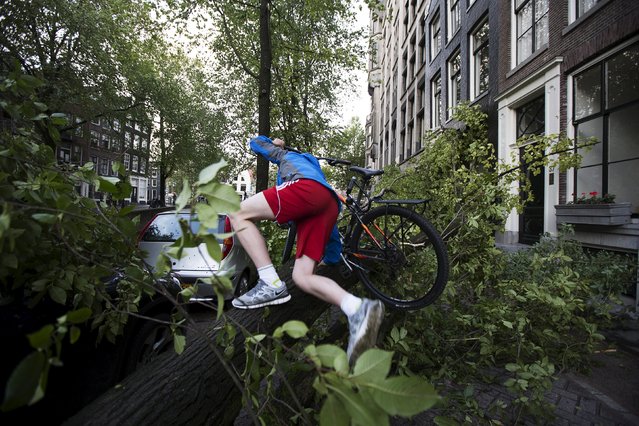
A cyclist climbs over a tree fallen atop a car after a heavy storm in Amsterdam, the Netherlands, July 25, 2015. One person was killed as the most severe July storm ever recorded in the Netherlands swept across the country on Saturday, delaying flights and disrupting road and rail traffic. (Photo by Cris Toala Olivares/Reuters)

A cyclist climbs over a tree fallen atop a car after a heavy storm in Amsterdam, the Netherlands, July 25, 2015. One person was killed as the most severe July storm ever recorded in the Netherlands swept across the country on Saturday, delaying flights and disrupting road and rail traffic. Dozens of flights were delayed at Amsterdam's Schiphol Airport and authorities warned travellers not to take to the road as gale-force winds and rain lashed the country, prompting the meteorological service to issue a “Code Red” warning. (Photo by Cris Toala Olivares/Reuters)
Details
26 Jul 2015 11:05:00
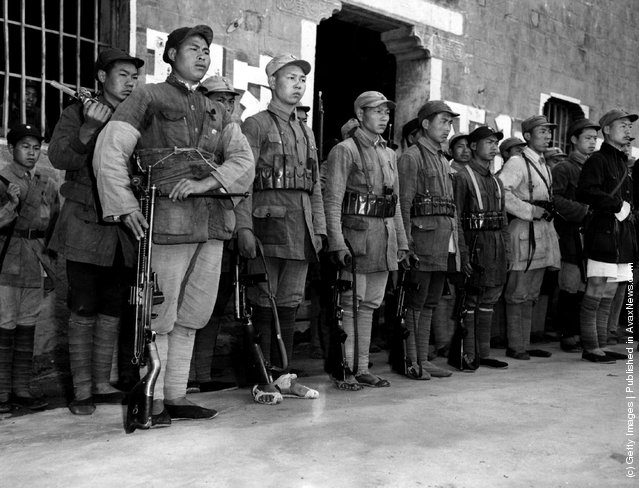
1946: Members of the Communist New Fourth Army on parade. Note how the modern equipment contrasts with the shoeless soldiers in the foreground

Members of the Communist New Fourth Army on parade. Note how the modern equipment contrasts with the shoeless soldiers in the foreground. (Photo by Hulton Archive/Getty Images). 6th July 1946
Details
28 Sep 2011 11:57:00
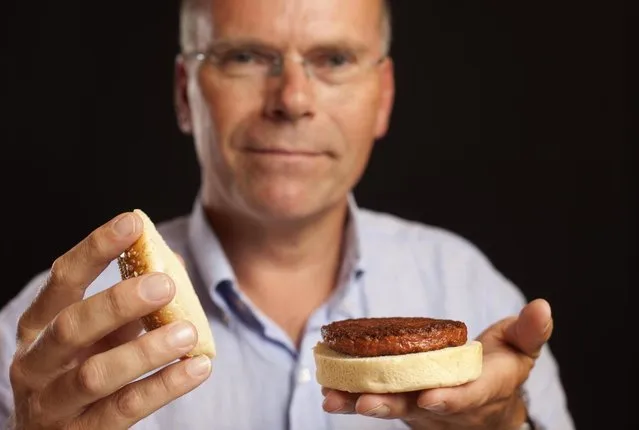
In this handout image provided by Ogilvy, a burger made from cultured beef, which has been developed by Professor Mark Post of Maastricht University in the Netherlands (pictured) is shown to the media during a press conference on August 5, 2013 in London, England. Cultured Beef could help solve the coming food crisis and combat climate change with commercial production of Cultured Beef beginning within ten to twenty years. (Photo by David Parry via Getty Images)

In this handout image provided by Ogilvy, a burger made from cultured beef, which has been developed by Professor Mark Post of Maastricht University in the Netherlands (pictured) is shown to the media during a press conference on August 5, 2013 in London, England. The in-vitro burger, cultured from cattle stem cells, the first example of what its creator says could provide an answer to global food shortages and help combat climate change, was fried in a pan and tasted by two volunteers. The burger is the result of years of research by Dutch scientist Mark Post, a vascular biologist at the University of Maastricht, who is working to show how meat grown in petri dishes might one day be a true alternative to meat from livestock.The meat in the burger has been made by knitting together around 20,000 strands of protein that has been cultured from cattle stem cells in Post's lab. (Photo by David Parry)
Details
06 Aug 2013 08:48:00
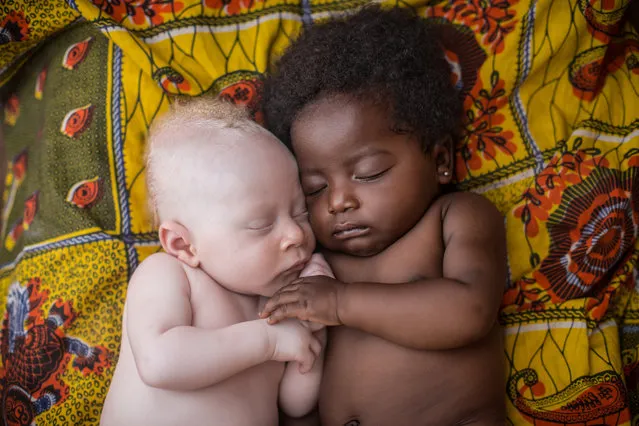
“Basunga”. Basunga (3 weeks-old newborn with albinism) is happily sleeping with his cousin. For now, he does not yet realize the difficulties he will face to integrate into the Congolese society as a PWA. The success of his integration will greatly depends of how he accepts himself and his skin condition a and how educated he will be. Photo location: Kinshasa, Congo RDC. (Photo and caption by Patricia Willocq/National Geographic Photo Contest)

“Basunga”. Basunga (3 weeks-old newborn with albinism) is happily sleeping with his cousin. For now, he does not yet realize the difficulties he will face to integrate into the Congolese society as a PWA. The success of his integration will greatly depends of how he accepts himself and his skin condition a and how educated he will be. Photo location: Kinshasa, Congo RDC. (Photo and caption by Patricia Willocq/National Geographic Photo Contest)
Details
09 Dec 2013 06:38:00
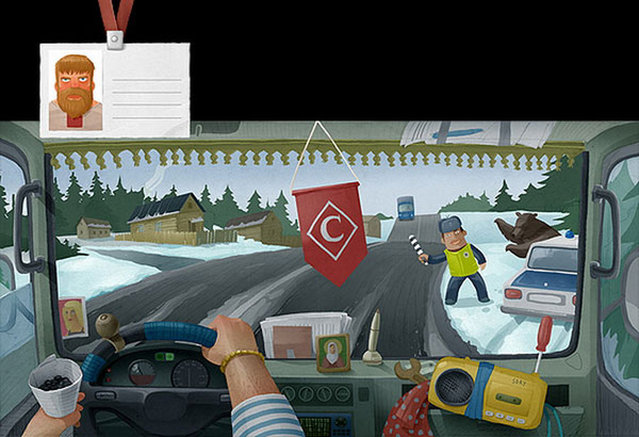
Truck Drivers Around The World Andrey Gordeev Imagination

Andrey Gordeev is Russian artist who has found amazing idea how to create something different and out of the box. He decided to imagine how it would look if he would be traveling all around the world and then, he put that on paper.
Details
26 Jan 2013 12:54:00
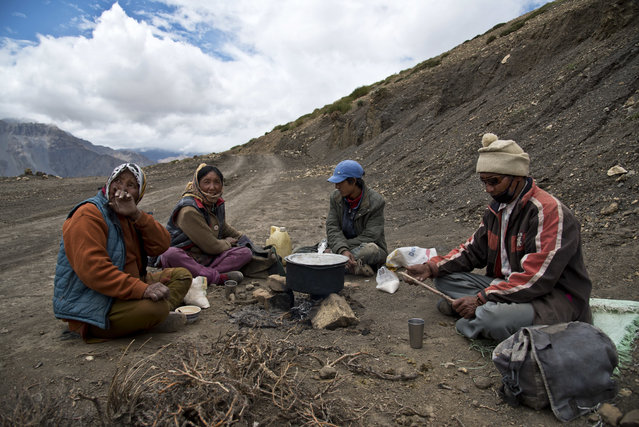
In this August 17, 2016, photo, from left to right, Chhering Chodom, 60, Tashi Yangzom, 50, Lobsang Chhering, 27, and Dorje Tandup, 58, drink milk tea on the side of the road. For centuries, the sleepy valley nestled in the Indian Himalayas remained a hidden Buddhist enclave forbidden to outsiders. Enduring the harsh year-round conditions of the high mountain desert, the people of Spiti Valley lived by a simple communal code – share the Earth's bounty, be hospitable to neighbors, and eschew greed and temptation at all turns. That's all starting to change, for better or worse. Since India began allowing its own citizens as well as outsiders to visit the valley in the early 1990s, tourism and trade have boomed. And the marks of modernization, such as solar panels, asphalt roads and concrete buildings, have begun to appear around some of the villages that dot the remote landscape at altitudes above 4,000 meters (13,000 feet). (Photo by Thomas Cytrynowicz/AP Photo)

In this August 17, 2016, photo, from left to right, Chhering Chodom, 60, Tashi Yangzom, 50, Lobsang Chhering, 27, and Dorje Tandup, 58, drink milk tea on the side of the road. For centuries, the sleepy valley nestled in the Indian Himalayas remained a hidden Buddhist enclave forbidden to outsiders. Enduring the harsh year-round conditions of the high mountain desert, the people of Spiti Valley lived by a simple communal code – share the Earth's bounty, be hospitable to neighbors, and eschew greed and temptation at all turns. That's all starting to change, for better or worse. (Photo by Thomas Cytrynowicz/AP Photo)
Details
15 Sep 2016 09:22:00


Greetings, sickly monkeys! Planet Nibiru is near already. Confess, parasites! Love you! Yours truly, Avax
Details
16 May 2012 15:07:00
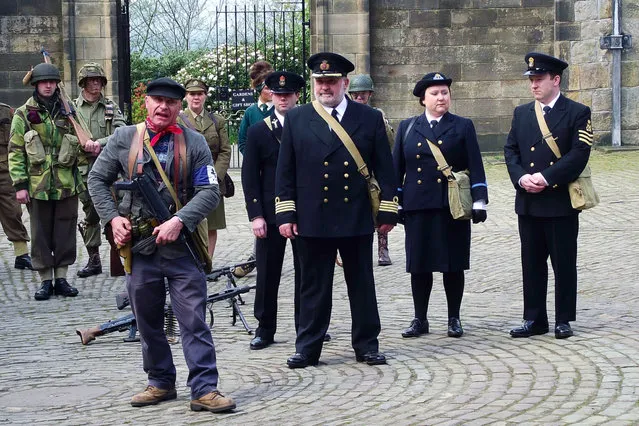
Hoghton Towers 1940

Living History comes to Hoghton Tower with the sights and sounds of the 1940's.
Details
28 May 2012 01:40:00