Loading...
Done
Surreal Photos By Robert Jahns A.K.A. Nois7

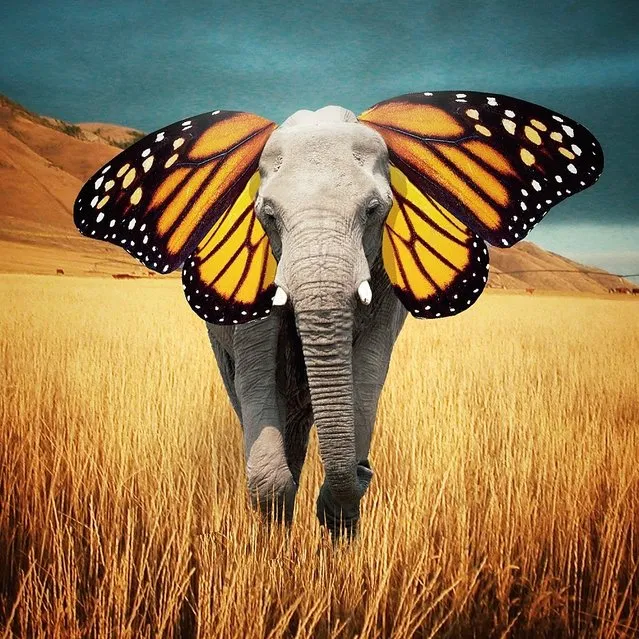
A not-so-famous photographer Robert Jahns can do impossible things with common photos. He takes two pictures and joins them into a single composition. Thanks to this creative idea, which is based on the combination of contrasts, ordinary photos become interesting and attractive. Jahns combines several pictures into one seamless scene. A leafless crown of the tree, layered onto deer antlers, creates a real and natural continuation of the deer`s head. Likewise, a rollercoaster with an overview of the city frightens us by being very realistic. (Photo by Robert Jahns A.K.A. Nois7)
Details
21 Jan 2015 13:07:00
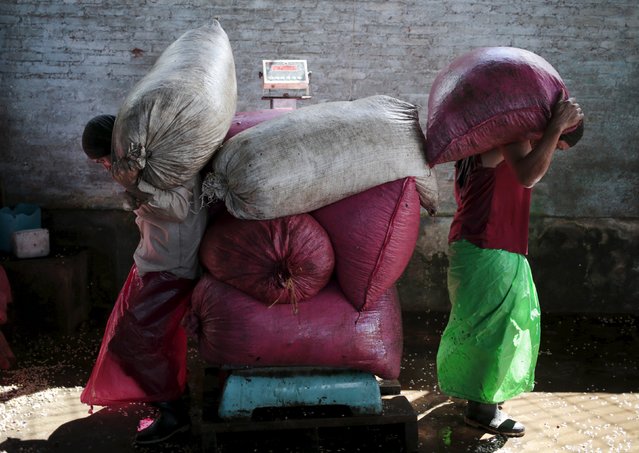
Workers carry sacks of coffee beans at a warehouse at the Nogales farm in Jinotega, Nicaragua January 7, 2016. (Photo by Oswaldo Rivas/Reuters)

Workers carry sacks of coffee beans at a warehouse at the Nogales farm in Jinotega, Nicaragua January 7, 2016. Soaring temperatures in Central America due to climate change are forcing farmers to pull up coffee trees and replace them with cocoa, spurring a revival in the cultivation of a crop once so essential to the region's economy. (Photo by Oswaldo Rivas/Reuters)
Details
20 Jan 2016 08:00:00
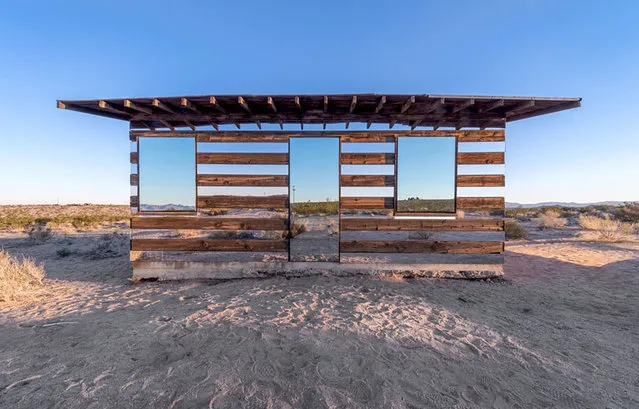
House Of Mirror In The Californian Desert, USA

In the desert near Joshua Tree, California, there stands a 70-year-old homestead cabin that isn’t all there. The ethereal cabin is part of an outdoor art installation by artist Phillip K. Smith III called Lucid Homestead. To give the cabin its striking appearance, the artist replaced strips of the wall with mirrors and the windows with mirrored panels that light up at night. The building reflects the desert sun and environment around it, making it seem like an airy and transparent space
Details
17 Dec 2013 11:13:00
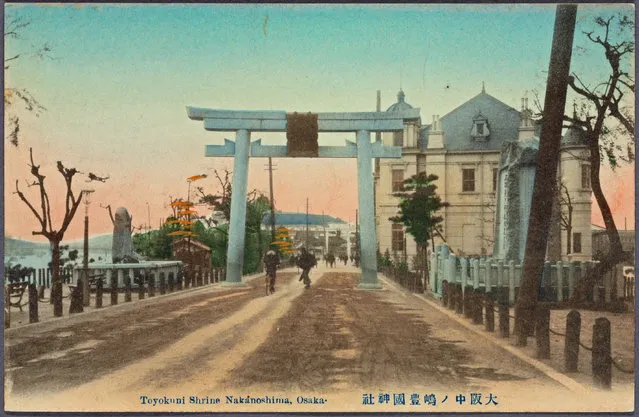
Toyokuni Shrine Nakanoshima, Osaka, Japan. (Photo by New York Public Library/Caters News)

These timeless postcards offer an eye-opening glimpse into life in Japan in the early 20th century. Taken from hand-colored photographs, the postcards showcase the still beauty of the country, depicting a nation on the cusp of modernization. The images feature solemn fishermen, bustling streets, temples and shrines: a country yet to be influenced by Western culture. The tinting effect brings out the rich colors of the natural surroundings, with trees, flowers and cherry blossoms jumping from the original black-and-white images. Here: Toyokuni Shrine Nakanoshima, Osaka, Japan. (Photo by New York Public Library/Caters News)
Details
02 Apr 2016 09:33:00
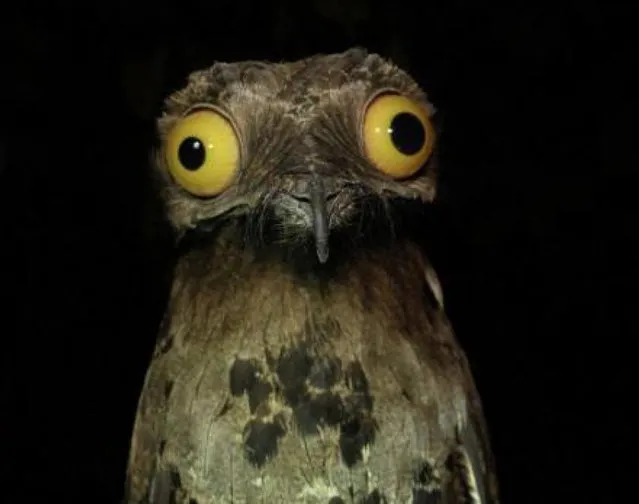
Nightjars And Pooto Bird

Potoos (family Nyctibiidae) are a group of near passerine birds related to the nightjars and frogmouths. They are sometimes called Poor-me-ones, after their haunting calls. There are seven species in one genus, Nyctibius, in tropical Central and South America.
These are nocturnal insectivores which lack the bristles around the mouth found in the true nightjars. They hunt from a perch like a shrike or flycatcher. During the day they perch upright on tree stumps, camouflaged to look like part of the stump. The single spotted egg is laid directly on the top of a stump.
Details
20 Jan 2014 14:34:00
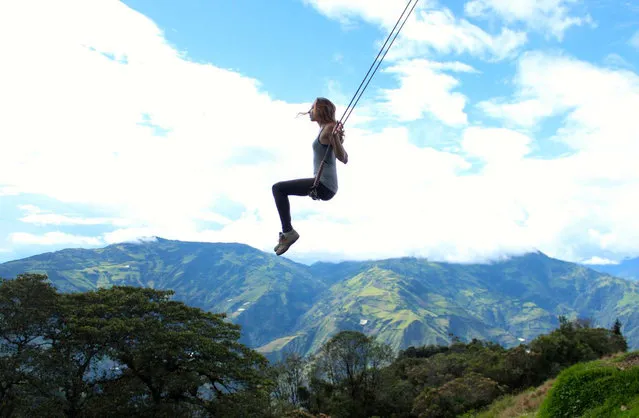
The Crazy Swing At Casa Del Arbol in Ecuador

Located at La Casa Del Arbol or “The Treehouse” in Baños, Ecuador, this small house was built for the stunning view on the Tungurahua Volcano it offers. But the real attraction is the swing attached to one of the tree's branches. It is far from your average swing, and it is surnamed the "Swing at the End of the World" for a good reason. Located off a giant cliff at over 2,600 meters above sea level and with absolutely no safety features, this swing promises a serious thrill to whoever is brave enough to ride it.
Details
10 Mar 2014 13:49:00


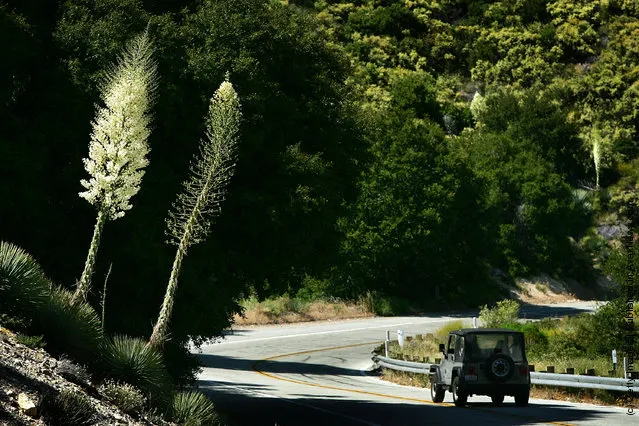
“Yucca is a genus of perennial shrubs and trees in the agave family, Agavaceae. Its 40-50 species are notable for their rosettes of evergreen, tough, sword-shaped leaves and large terminal panicles of white or whitish flowers. They are native to the hot and dry (arid) parts of North America, Central America, South America, and the Caribbean. Early reports of the species were confused with the cassava (Manihot esculenta). Consequently, Linnaeus mistakenly derived the generic name from the Carib word for the latter, yuca. It is also colloquially known in the midwest United States as “Ghosts in the graveyard”, as it is commonly found growing in rural graveyards and when in bloom the flowers appear as an apparition floating.” – Wikipedia

Photo: A yucca standing among flowers bursts forth a very large stalk of flowers as a heavy wildflower bloom on June 21, 2005 in the Angeles National Forest northwest of La Canada, California. (Photo by David McNew/Getty Images)
Details
29 Mar 2011 07:31:00
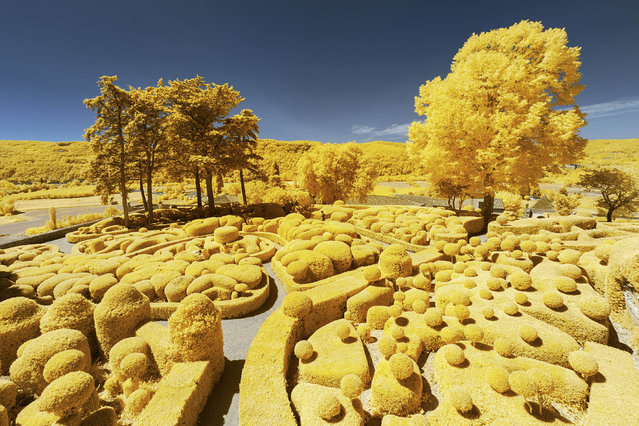
While this has meant creating large collection of shots, Ferrer said that he only selected about 50 works for the public’s eyes so far. (Photo by Pierre-Louis Ferrer/Caters News Agency)

Photographer Pierre-Louis Ferrer shows viewers the beauty of France in a whole new light, shooting the country in beautiful infrared. Ferrer’s images are as enchanting as they are intriguing, displaying a whole new variation of color in shrubs, grass and trees, as well as famous landmarks. In some of Ferrer’s works, the foliage is an eye-catching canary yellow – a stark contrast to the more normal shades in the remainder of the images. In other works, whole forests glow red, giving the French countryside an otherworldly look. (Photo by Pierre-Louis Ferrer/Caters News Agency)
Details
04 Oct 2018 00:05:00