Loading...
Done
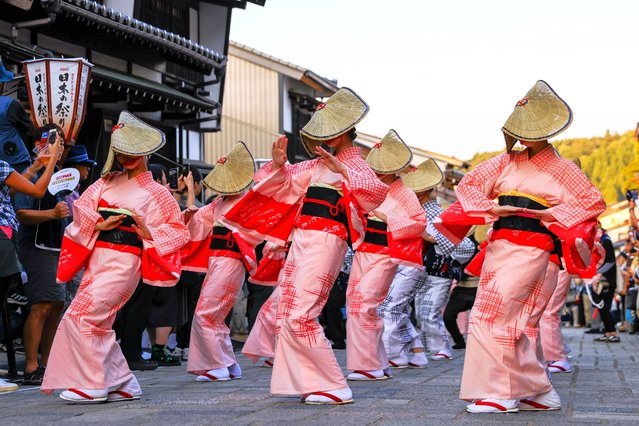
Women wearing braided straw hats dance as the Owara Kaze-no-Bon dance festival begins on September 1, 2025 in Toyama, Japan. The festival, believed to have more than 300 years history, continues till September 3. (Photo by The Asahi Shimbun via Getty Images)

Women wearing braided straw hats dance as the Owara Kaze-no-Bon dance festival begins on September 1, 2025 in Toyama, Japan. The festival, believed to have more than 300 years history, continues till September 3. (Photo by The Asahi Shimbun via Getty Images)
Details
20 Sep 2025 03:35:00
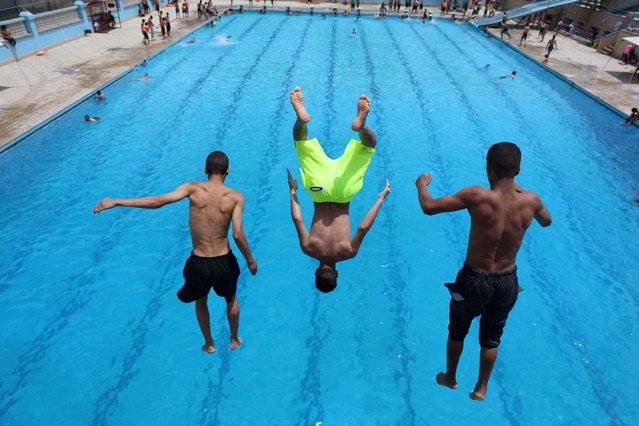
People jump into a swimming pool seeking relief from the summer heat, in Sanaa, Yemen on August 7, 2025. (Photo by Khaled Abdullah/Reuters)

People jump into a swimming pool seeking relief from the summer heat, in Sanaa, Yemen on August 7, 2025. (Photo by Khaled Abdullah/Reuters)
Details
22 Sep 2025 03:26:00
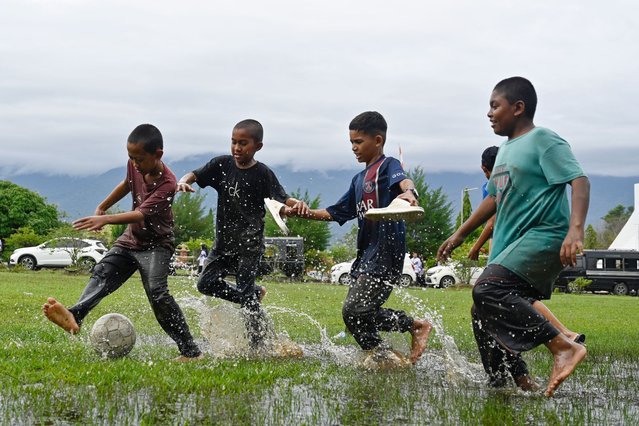
Youths play football in a flooded field following rain in Jantho, Aceh province on November 24, 2025. (Photo by Chaideer Mahyuddin/AFP Photo)

Youths play football in a flooded field following rain in Jantho, Aceh province on November 24, 2025. (Photo by Chaideer Mahyuddin/AFP Photo)
Details
17 Dec 2025 10:18:00
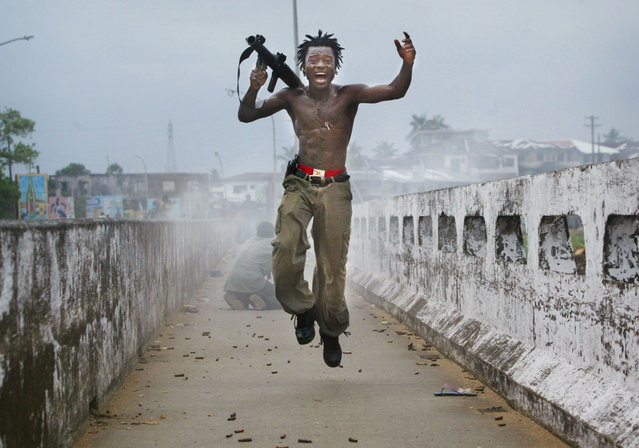
Chris Hondros Retrospective Part1

Chris Hondros, a Getty Images photographer, was fatally wounded on April 20, 2011, in a mortar attack by government forces while covering the civil war in Libya. Hondros' work is woven in our history as he covered everything from politics to marathons. A new film will focus on his life as told through his images. Here's a look at some of his finest and final work. Some of these images are graphic in nature
Details
23 Aug 2013 12:18:00
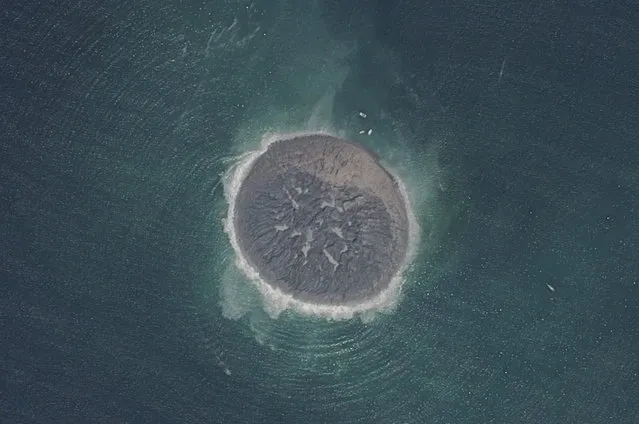
This handout picture taken by Pleiades satellite and released on September 27, 2013 shows a small island of mud and rock created by the huge earthquake that hit southwest Pakistan has fascinated locals but experts – who found methane gas rising from it – say it is unlikely to last long

This handout picture taken by Pleiades satellite and released on September 27, 2013 shows a small island of mud and rock created by the huge earthquake that hit southwest Pakistan has fascinated locals but experts – who found methane gas rising from it – say it is unlikely to last long. The 7.7-magnitude quake struck on September 25 in Baluchistan's remote Awaran district, killing at least 271 people and affecting hundreds of thousands. The island is about 60 to 70 feet (18 to 21 metres) high, up to 300 feet wide and up to 120 feet long and sits about 650 feet from the coast. (Photo by AFP Photo/CNES/Distribution Astrium Services)
Details
01 Oct 2013 08:23:00
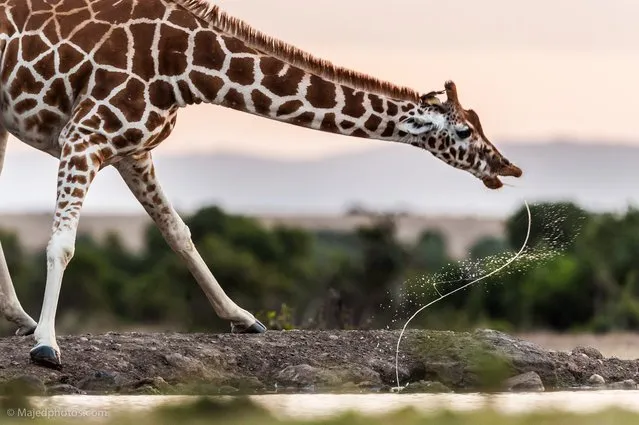
“We just want to move to search to the Leopard at that morning but we found a group of giraffes come toward a small lake and start drinking it was a nice moment when the Giraffe finish from drinking and leave a letters S with motion in the air”. (Photo and caption by Majed Ali)

National Geographic invites photographers from around the world to enter the 2013 National Geographic Photography Contest. The grand-prize winner will receive $10,000 (USD) and a trip to National Geographic headquarters in Washington, D.C., to participate in the annual National Geographic Photography Seminar in January 2014. Photo: “We just want to move to search to the Leopard at that morning but we found a group of giraffes come toward a small lake and start drinking it was a nice moment when the Giraffe finish from drinking and leave a letters “S” with motion in the air”. (Photo and caption by Majed Ali/National Geographic Photography Contest)
Details
15 Nov 2013 14:34:00
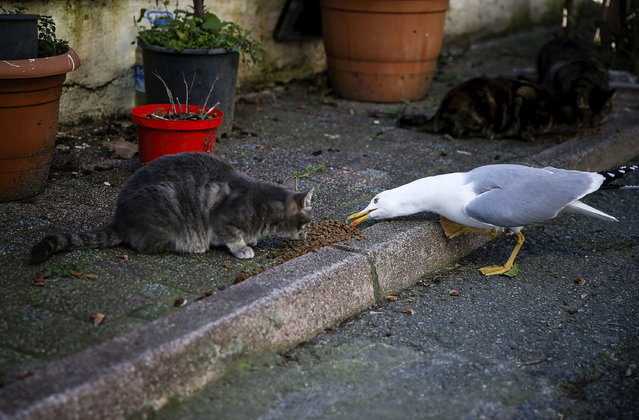
A cat and a seagull feeding on a street in Heybeliada, the second largest of the Prince Islands in the Sea of Marmara, near Istanbul, Turkey on February 01, 2017. (Photo by Sebnem Coskun/Anadolu Agency/Getty Images)

A cat and a seagull feeding on a street in Heybeliada, the second largest of the Prince Islands in the Sea of Marmara, near Istanbul, Turkey on February 01, 2017. (Photo by Sebnem Coskun/Anadolu Agency/Getty Images)
Details
05 Feb 2017 01:01:00
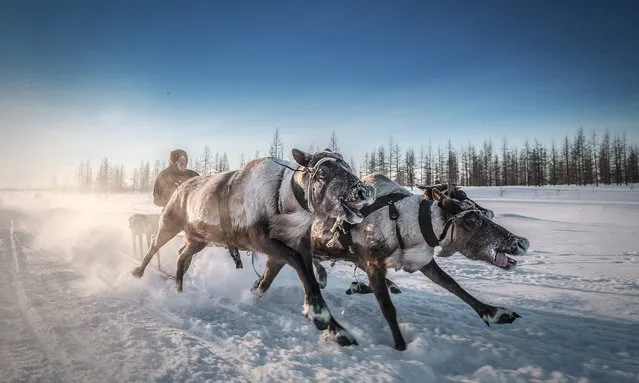
Take me away, deer, Russia. The Nenet people of Arctic Russia use reindeer and sledges as a prime mode of transport. The animals’ navigational ability means that in severe conditions they are sometimes the only hope of survival. (Photo by Kamil Nureev/Smithsonian Photo Contest)

Take me away, deer, Russia. The Nenet people of Arctic Russia use reindeer and sledges as a prime mode of transport. The animals’ navigational ability means that in severe conditions they are sometimes the only hope of survival. (Photo by Kamil Nureev/Smithsonian Photo Contest)
Details
06 Mar 2017 00:05:00