Loading...
Done
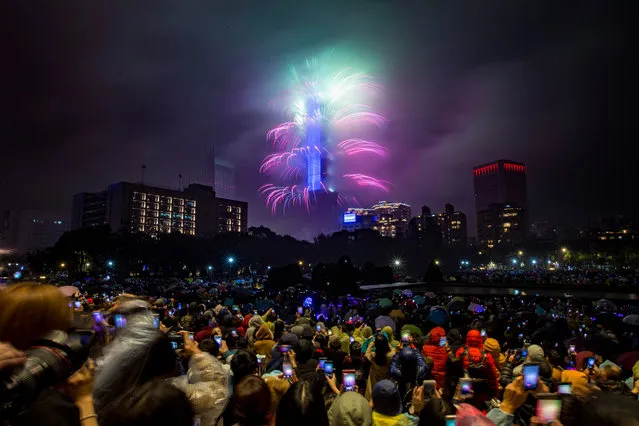
Fireworks and light effects illuminate the night sky from the Taipei 101 skyscraper during New Year's Eve celebrations in Taipei, Taiwan, 01 January 2019. (Photo by Ritchie B. Tongo/EPA/EFE/Rex Features/Shutterstock)

Fireworks and light effects illuminate the night sky from the Taipei 101 skyscraper during New Year's Eve celebrations in Taipei, Taiwan, 01 January 2019. (Photo by Ritchie B. Tongo/EPA/EFE/Rex Features/Shutterstock)
Details
02 Jan 2019 00:01:00
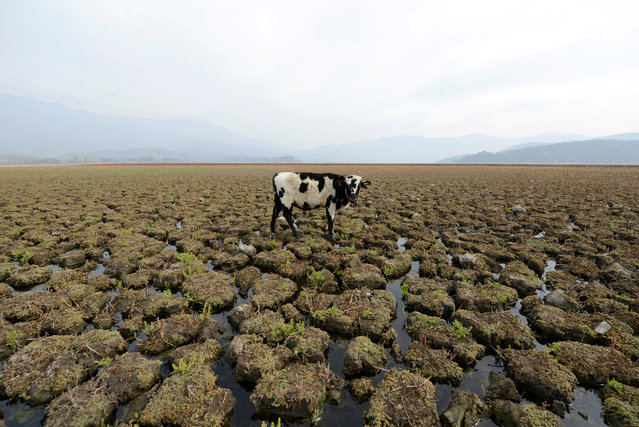
A cow is seen on land that used to be under water, at the Aculeo Lagoon in Paine, Chile, May 14, 2018. (Photo by Matias Delacroix/Reuters)

A cow is seen on land that used to be under water, at the Aculeo Lagoon in Paine, Chile, May 14, 2018. (Photo by Matias Delacroix/Reuters)
Details
04 Jan 2019 00:01:00
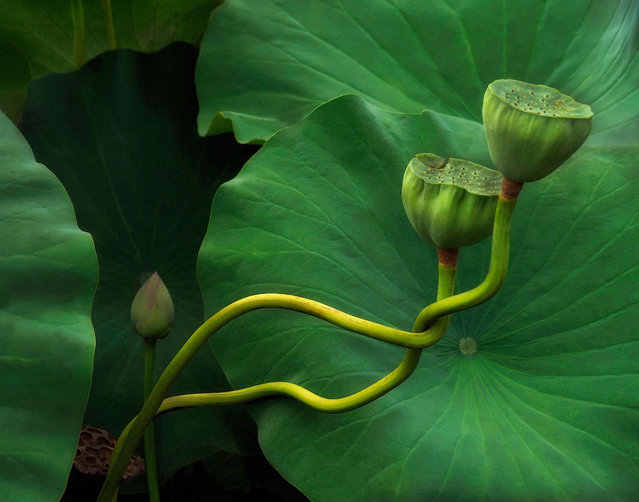
First place, The Beauty of Plants. “There are many stages of lotus growth on display at the Aquatic Gardens, but to come across twotwisted dancing stems of nelumbo nucifera was unexpected and quite magical”. (Photo by Kathleen Furey/The Guardian)

First place, The Beauty of Plants. “There are many stages of lotus growth on display at the Aquatic Gardens, but to come across twotwisted dancing stems of nelumbo nucifera was unexpected and quite magical”. (Photo by Kathleen Furey/The Guardian)
Details
13 Mar 2019 00:03:00
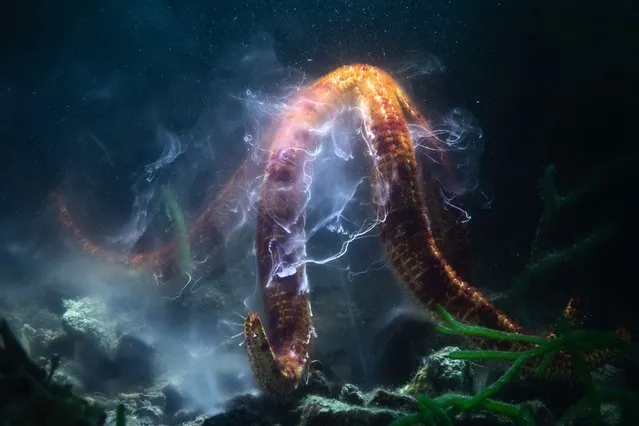
Shooting star by Tony Wu, US/Japan. Winner, underwater. The electrifying reproductive dance of a giant sea star. As the surrounding water filled with sperm and eggs from spawning sea stars, Wu faced several challenges. Stuck in a small, enclosed bay with only a macro lens for photographing small subjects, he backed up to squeeze the undulating sea star into his field of view. The dancing posture of spawning sea stars rising and swaying may help release eggs and sperm, or may help sweep the eggs and sperm into the currents where they fertilise together in the water. Kinko Bay, Japan. (Photo by Tony Wu/Wildlife Photographer of the Year)

Shooting star by Tony Wu, US/Japan. Winner, underwater. The electrifying reproductive dance of a giant sea star. As the surrounding water filled with sperm and eggs from spawning sea stars, Wu faced several challenges. Stuck in a small, enclosed bay with only a macro lens for photographing small subjects, he backed up to squeeze the undulating sea star into his field of view. The dancing posture of spawning sea stars rising and swaying may help release eggs and sperm, or may help sweep the eggs and sperm into the currents where they fertilise together in the water. Kinko Bay, Japan. (Photo by Tony Wu/Wildlife Photographer of the Year)
Details
15 Oct 2022 03:50:00
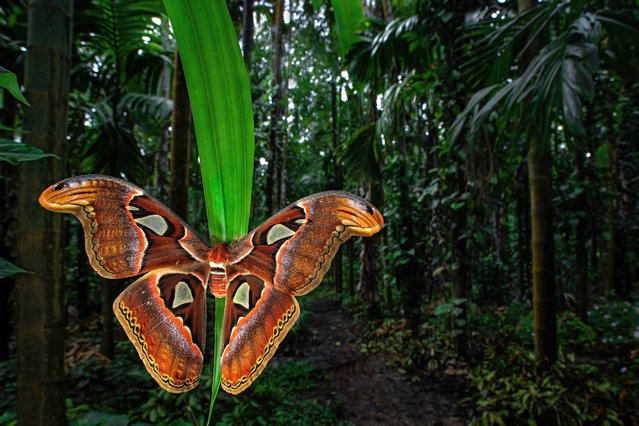
A huge atlas moth, with a wingspan of more than 9in, photographed on an areca nut plantation in Sirsi, India. (Photo by Uday Hegde/Close Up Photographer of the Year)

A huge atlas moth, with a wingspan of more than 9in, photographed on an areca nut plantation in Sirsi, India. (Photo by Uday Hegde/Close Up Photographer of the Year)
Details
09 Jan 2023 06:04:00
Astronomy Photographer Of The Year 2013 Part2

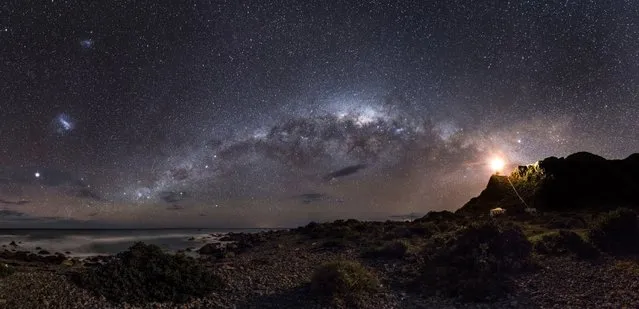
The Royal Observatory just announced its Astronomy Photographer Of The Year 2013 winners. Australian photographer Mark Gee was chosen among a thousand amateur and professional photographers around the globe to win the top title. His work is part of an exhibition of the winning photographers, which opened on Sept. 19 at the Royal Observatory Greenwich. The Royal Observatory shared with us the winners and notable mentions of the competition. Their descriptions of the prizewinners can be found below the images.
Details
05 Oct 2013 12:23:00
A woman holds a champagne bottle during New Year's celebrations in Bucharest, Romania, Wednesday, January 1, 2014. Tens of thousands of Romanians took to the streets of the Romanian capital to join parties and watch fireworks. (Photo by Vadim Ghirda/AP Photo)

A woman holds a champagne bottle during New Year's celebrations in Bucharest, Romania, Wednesday, January 1, 2014. Tens of thousands of Romanians took to the streets of the Romanian capital to join parties and watch fireworks. (Photo by Vadim Ghirda/AP Photo)
Details
01 Jan 2014 11:03:00
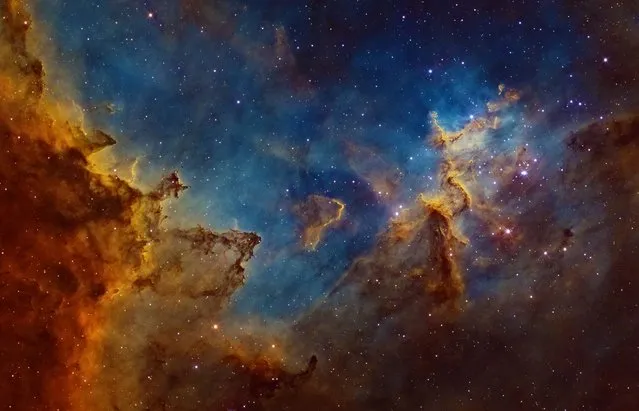
Centre of the Heart Nebula by Ivan Eder (Hungary). Situated 7500 light years away in the ‘W’-shaped constellation of Cassiopeia, the Heart Nebula is a vast region of glowing gas, energized by a cluster of young stars at its centre. The image depicts the central region, where dust clouds are being eroded and moulded into rugged shapes by the searing cosmic radiation. (Photo by Ivan Eder)

The competition, which is run by the Royal Observatory Greenwich in association with BBC Sky at Night Magazine, is now in its sixth year and has received over 2,500 entries. Photo: Centre of the Heart Nebula by Ivan Eder (Hungary). Situated 7500 light years away in the “W”-shaped constellation of Cassiopeia, the Heart Nebula is a vast region of glowing gas, energized by a cluster of young stars at its centre. The image depicts the central region, where dust clouds are being eroded and moulded into rugged shapes by the searing cosmic radiation. (Photo by Ivan Eder)
Details
03 Jul 2014 11:59:00