Loading...
Done
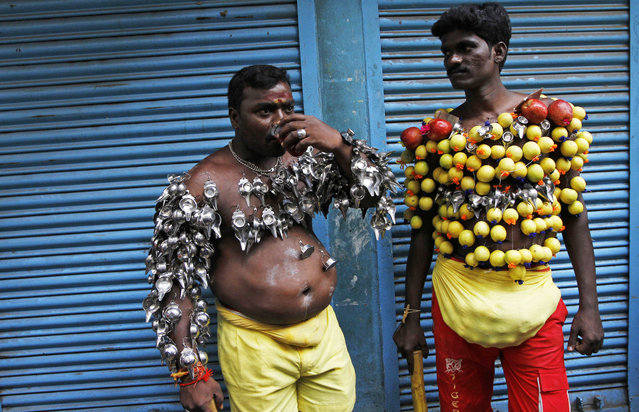
Hindu devotees, their bodies pierced with lemon and paladai, or bowl with a spout mainly used to feed milk to infants, wait to participate in a procession to mark Shivratri, or the night of Shiva, in Chennai, India, Wednesday, February 18, 2015. (Photo by Arun Sankar K./AP Photo)

Hindu devotees, their bodies pierced with lemon and paladai, or bowl with a spout mainly used to feed milk to infants, wait to participate in a procession to mark Shivratri, or the night of Shiva, in Chennai, India, Wednesday, February 18, 2015. Such processions are held as an offering and show of devotion by devotees on the day dedicated to the worship of Lord Shiva, the Hindu god of destruction. (Photo by Arun Sankar K./AP Photo)
Details
21 Feb 2015 11:41:00
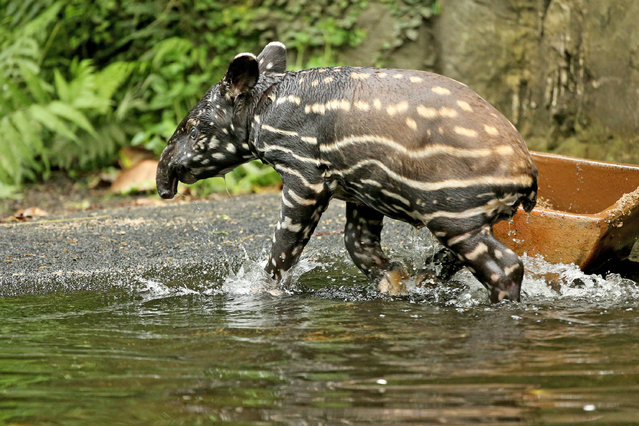
The nearly four-week-old Tapir cub bathes on June 28, 2016 in Gondwanaland at the zoo in Leipzig, Saxony. (Photo by Jan Woitas/DPA)

The nearly four-week-old Tapir cub bathes on June 28, 2016 in Gondwanaland at the zoo in Leipzig, Saxony. (Photo by Jan Woitas/DPA)
Details
03 Jul 2016 10:36:00
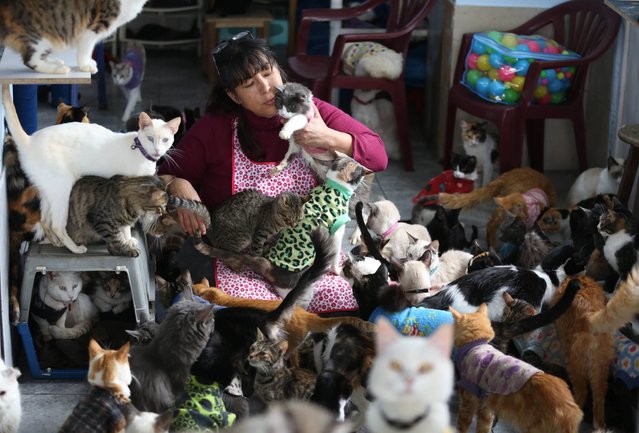
In this August 2, 2014 photo, Maria Torero, plays with a group of 175 cats with leukemia in her home in Lima, Peru. Torero says caring for cats with feline leukemia is her responsibility. Anybody else can care for healthy animals. (Photo by Martin Mejia/AP Photo)

“At her job, Maria Torero cares for sick human beings. At home, she lavishes love on slowly dying cats – 175 of them at last count. The 45-year-old nurse has turned her two-story, eight-room apartment into a hospice for cats with feline leukemia, scattering it with scores of feeding dishes and at least two dozen boxes litter boxes. Some have suggested she shelter healthy cats instead. “That's not my role”, she told The Associated Press. “I'm a nurse. My duty is to the cats that nobody cares about”. She said that “people don't adopt adult cats, especially if they are terminally ill”. – Franklin Briceno via Associated Press. (Photo by Martin Mejia/AP Photo)
Details
24 Aug 2014 09:28:00
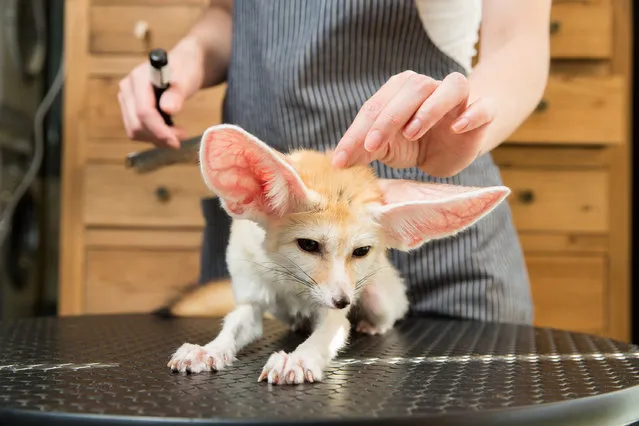
A fennec fox (Vulpes zerda) is groomed in a pet store in central Beijing. Native to the Sahara in North Africa, the species became a popular pet after being depicted as a character in Disney’s 2016 animated movie Zootopia. Individuals can cost between $2,000–$3,000. (Photo by Sean Gallagher/The Guardian)

A dramatic rise in owning exotic pets in China is fuelling global demand for threatened species. The growing trade in alligators, snakes, monkeys, crocodiles and spiders is directly linked to species loss in some of the world’s most threatened ecosystems. Here: A fennec fox (Vulpes zerda) is groomed in a pet store in central Beijing. Native to the Sahara in North Africa, the species became a popular pet after being depicted as a character in Disney’s 2016 animated movie Zootopia. Individuals can cost between $2,000–$3,000. (Photo by Sean Gallagher/The Guardian)
Details
23 Sep 2017 08:04:00
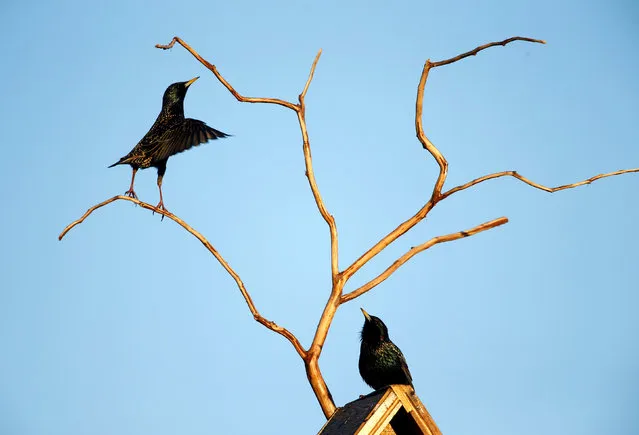
Starlings are seen at their nesting box in a private garden in the town of Bobruisk, Belarus, April 8, 2018. (Photo by Vasily Fedosenko/Reuters)

Starlings are seen at their nesting box in a private garden in the town of Bobruisk, Belarus, April 8, 2018. (Photo by Vasily Fedosenko/Reuters)
Details
15 Apr 2018 00:03:00
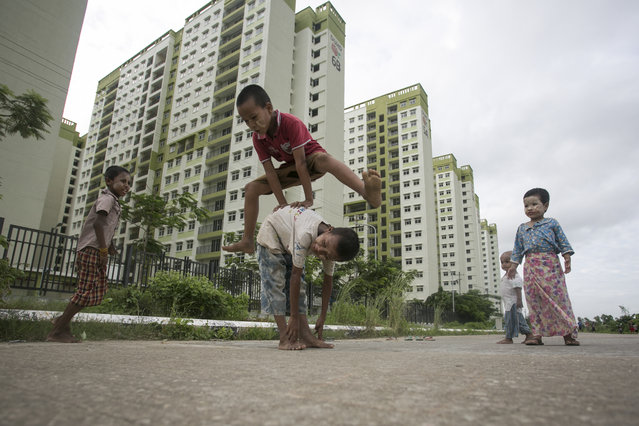
Children play near an apartment complex on the outskirts of Yangon, Myanmar on July 29, 2019. (Photo by Sai Aung Main/AFP Photo)

Children play near an apartment complex on the outskirts of Yangon, Myanmar on July 29, 2019. (Photo by Sai Aung Main/AFP Photo)
Details
10 Aug 2019 00:01:00
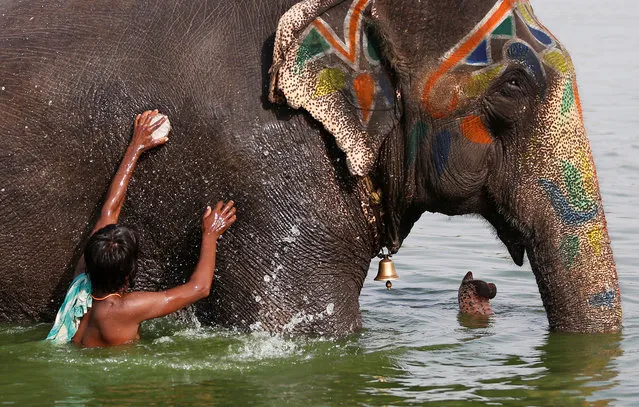
A mahout bathes his elephant in the river Sabarmati on a hot summer day in Ahmedabad, India May 21, 2017. (Photo by Amit Dave/Reuters)

A mahout bathes his elephant in the river Sabarmati on a hot summer day in Ahmedabad, India May 21, 2017. (Photo by Amit Dave/Reuters)
Details
31 May 2017 06:42:00
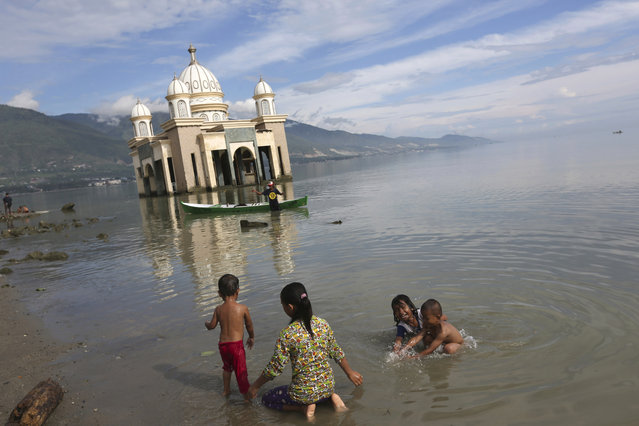
In this Wednesday, April 3, 2019, photo, children play in the water on a beach as a mosque collapsed during the Sept. 28, 2018, earthquake is seen in the background in Palu, Central Sulawesi, Indonesia. The earthquake spawned a large localized tsunami that wiped out coastal areas, while liquefaction caused by the shaking turned entire neighborhoods into rivers of sludge. The disaster killed thousands of people, making it the world’s deadliest seismic event in 2018. (Photo by Tatan Syuflana/AP Photo)

In this Wednesday, April 3, 2019, photo, children play in the water on a beach as a mosque collapsed during the Sept. 28, 2018, earthquake is seen in the background in Palu, Central Sulawesi, Indonesia. The earthquake spawned a large localized tsunami that wiped out coastal areas, while liquefaction caused by the shaking turned entire neighborhoods into rivers of sludge. The disaster killed thousands of people, making it the world’s deadliest seismic event in 2018. (Photo by Tatan Syuflana/AP Photo)
Details
04 May 2019 00:05:00