Loading...
Done
A cleric and a woman pray behind a closed door of Masoume shrine in the city of Qom, some 80 miles (125 kilometers) south of the capital Tehran, Iran, Monday, March 16, 2020. On Monday, Iran closed the Masoume shrine, a major pilgrimage site in the city of Qom, the epicenter of the country's new coronavirus outbreak. Authorities were already restricting access and barring pilgrims from kissing or touching the shrine, but it had remained open. (Photo by AP Photo)

A cleric and a woman pray behind a closed door of Masoume shrine in the city of Qom, some 80 miles (125 kilometers) south of the capital Tehran, Iran, Monday, March 16, 2020. On Monday, Iran closed the Masoume shrine, a major pilgrimage site in the city of Qom, the epicenter of the country's new coronavirus outbreak. Authorities were already restricting access and barring pilgrims from kissing or touching the shrine, but it had remained open. (Photo by AP Photo)
Details
23 Mar 2020 00:01:00
Visitors enjoy food at a table bounded by a banner with a character fast food restaurant Kentucky Fried Chicken, in Jakarta, Indonesia, on June 23, 2020. The display banner is useful for limiting physical distance for visitors who eat on the spot. The Indonesian government has imposed a new set of regulations known as “new normal”, which will be implemented in stages starting in early June for some provinces. (Photo by Jefta Images/Barcroft Media via Getty Images)

Visitors enjoy food at a table bounded by a banner with a character fast food restaurant Kentucky Fried Chicken, in Jakarta, Indonesia, on June 23, 2020. The display banner is useful for limiting physical distance for visitors who eat on the spot. The Indonesian government has imposed a new set of regulations known as “new normal”, which will be implemented in stages starting in early June for some provinces. (Photo by Jefta Images/Barcroft Media via Getty Images)
Details
25 Jun 2020 00:07:00
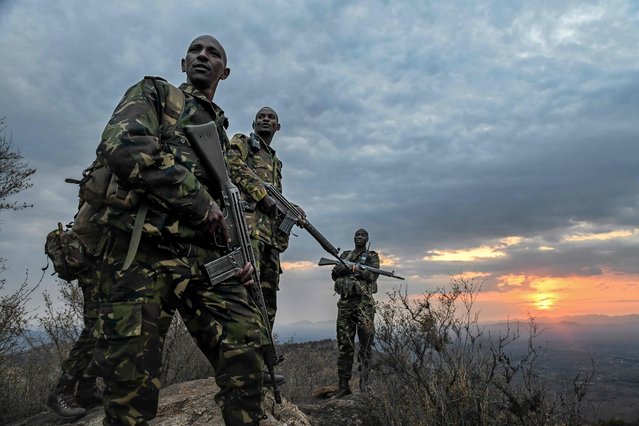
Armed officers of Lewa Wildlife Conservancy's (LWC) anti-poaching unit look out from a ridge at dawn in Meru, on July 31, 2021, as they wind up their nightly security patrol against poaching and illegal incursions into the conservancy. Despite the global condemnation of poaching and the resources that have been mobilised to safeguard endangered wildlife, well-funded and well-equipped poaching groups continue to pose a real threat to Africa’s wildlife. (Photo by Tony Karumba/AFP Photo)

Armed officers of Lewa Wildlife Conservancy's (LWC) anti-poaching unit look out from a ridge at dawn in Meru, on July 31, 2021, as they wind up their nightly security patrol against poaching and illegal incursions into the conservancy. Despite the global condemnation of poaching and the resources that have been mobilised to safeguard endangered wildlife, well-funded and well-equipped poaching groups continue to pose a real threat to Africa’s wildlife. (Photo by Tony Karumba/AFP Photo)
Details
19 Aug 2021 09:19:00
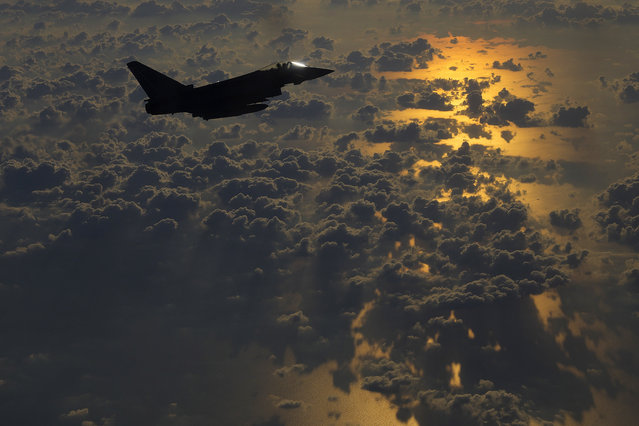
A British RAF Typhoon aircraft escorts a C130 transport plane on its way to Jordan for an airdrop of paratroopers from the U.K.'s 16th Air Assault Brigade as part of an exercise conducted jointly with Jordanian soldiers on Wednesday, June 23, 2021. (Photo by Petros Karadjias/AP Photo)

A British RAF Typhoon aircraft escorts a C130 transport plane on its way to Jordan for an airdrop of paratroopers from the U.K.'s 16th Air Assault Brigade as part of an exercise conducted jointly with Jordanian soldiers on Wednesday, June 23, 2021. (Photo by Petros Karadjias/AP Photo)
Details
27 Aug 2021 08:26:00
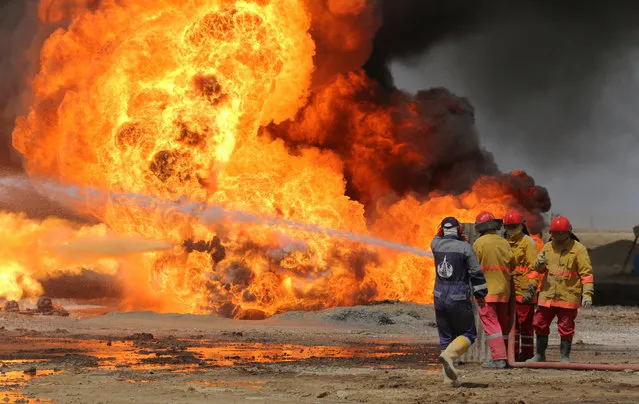
Iraqi firefighters try to stop the fire of burning oil wells in Kirkuk, northern Iraq, 02 June 2016. Two Khabbaz oil field wells in Kirkuk Province, northern Iraq, exploded by suspected insurgents, a security official said. (Photo by EPA/Stringer)

Iraqi firefighters try to stop the fire of burning oil wells in Kirkuk, northern Iraq, 02 June 2016. Two Khabbaz oil field wells in Kirkuk Province, northern Iraq, exploded by suspected insurgents, a security official said. (Photo by EPA/Stringer)
Details
24 May 2018 00:01:00
Television personality Farrah Abraham (C) enjoys adult entertainment as she hosts the VIP Back Door Key party at the Crazy Horse III Gentlemen's Club on August 4, 2017 in Las Vegas, Nevada. The newly launched VIP membership program offers patrons exclusive entrance to the club through the back door. (Photo by Bryan Steffy/WireImage)

Television personality Farrah Abraham (C) enjoys adult entertainment as she hosts the VIP Back Door Key party at the Crazy Horse III Gentlemen's Club on August 4, 2017 in Las Vegas, Nevada. The newly launched VIP membership program offers patrons exclusive entrance to the club through the back door. (Photo by Bryan Steffy/WireImage)
Details
22 Jul 2018 00:05:00
A model showcases Jaton designs during the Fashion x Art at NGV Runway at the Ian Potter Centre on November 16, 2021 in Melbourne, Australia. (Photo by Daniel Pockett/Getty Images)

A model showcases Jaton designs during the Fashion x Art at NGV Runway at the Ian Potter Centre on November 16, 2021 in Melbourne, Australia. (Photo by Daniel Pockett/Getty Images)
Details
18 Nov 2021 08:38:00
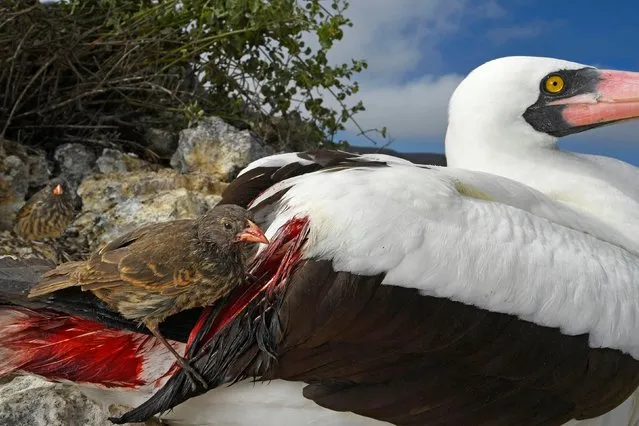
Bloodthirsty by Thomas P Peschak, Germany/South Africa — winner, Behaviour: birds. When rations run short on Wolf Island, in the remote northern Galápagos, the sharp-beaked ground finches become vampires. Their sitting targets are Nazca boobies and other large birds. The finches rely on a scant diet of seeds and insects, which regularly dries up, so they drink blood to survive. ‘I’ve seen more than half a dozen finches drinking from a single Nazca booby,’ says Tom. Rather than leave their nests the boobies tolerate the vampires, and the blood loss doesn’t seem to cause permanent harm. (Photo by Thomas P Peschak/2018 Wildlife Photographer of the Year)

Bloodthirsty by Thomas P. Peschak, Germany/South Africa — winner, Behaviour: birds. When rations run short on Wolf Island, in the remote northern Galápagos, the sharp-beaked ground finches become vampires. Their sitting targets are Nazca boobies and other large birds. The finches rely on a scant diet of seeds and insects, which regularly dries up, so they drink blood to survive. ‘I’ve seen more than half a dozen finches drinking from a single Nazca booby,’ says Tom. Rather than leave their nests the boobies tolerate the vampires, and the blood loss doesn’t seem to cause permanent harm. (Photo by Thomas P. Peschak/2018 Wildlife Photographer of the Year)
Details
19 Oct 2018 00:05:00