Loading...
Done
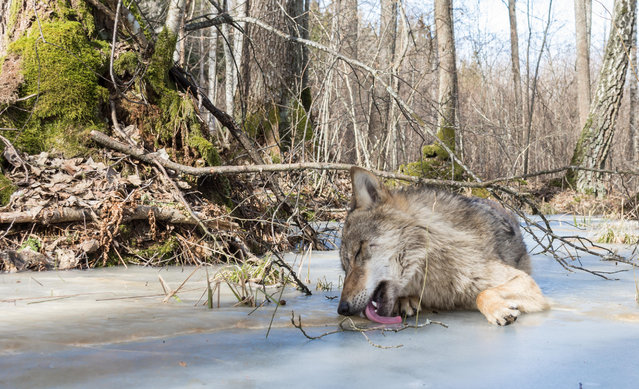
A thirsty timber wolf, Lithuania. (Photo by Erikas Plucas/Alamy Stock Photo)

A thirsty timber wolf, Lithuania, 2018. (Photo by Erikas Plucas/Alamy Stock Photo)
Details
08 Apr 2018 00:03:00
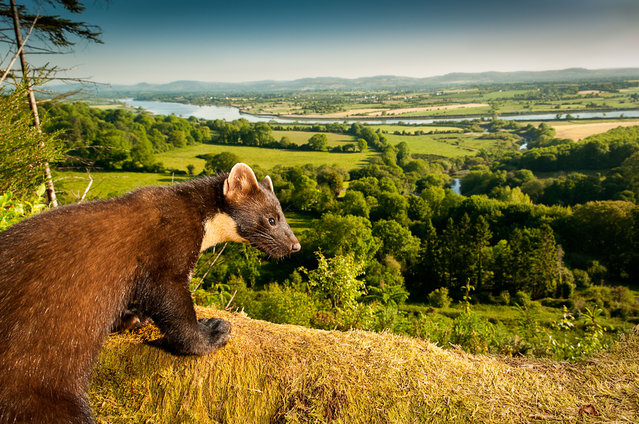
A pine marten – one of a few wild mammals doing well in Britain (although they number just 3,700). A fifth of the country’s wild mammals are at high risk of extinction, research shows. (Photo by Maurice Flynn/The Mammal Society)

A pine marten – one of a few wild mammals doing well in Britain (although they number just 3,700). A fifth of the country’s wild mammals are at high risk of extinction, research shows. (Photo by Maurice Flynn/The Mammal Society)
Details
08 Jul 2018 00:01:00
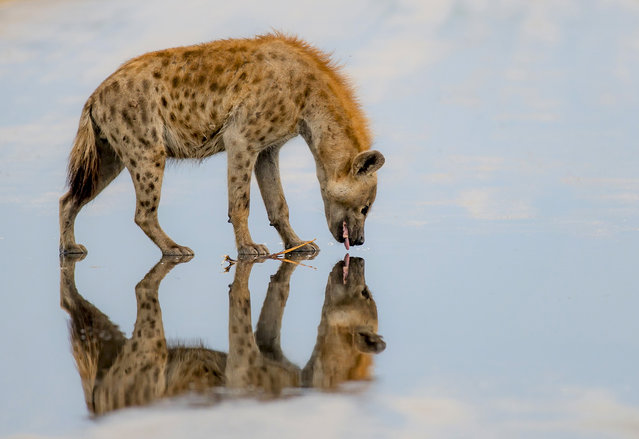
A hyena kisses his own reflection while appearing to walk on water. (Photo by Jake De Wet/Caters News Agency)

A hyena kisses his own reflection while appearing to walk on water. (Photo by Jake De Wet/Caters News Agency)
Details
07 Oct 2018 00:03:00
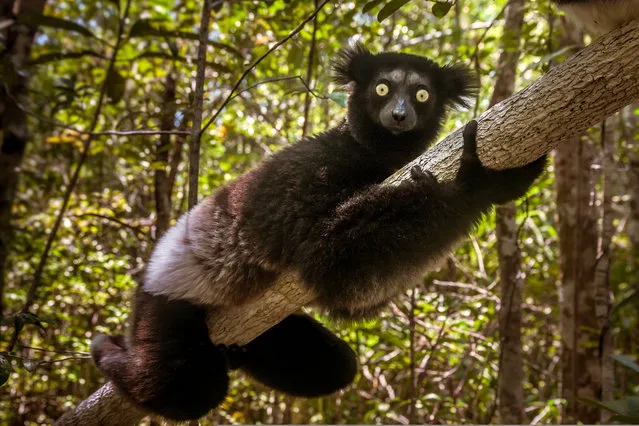
The secretive indri (Indri indri) of Madagascar, the largest living lemur. It is also critically endangered and highly evolutionarily distinct with no close relatives, which makes its branch one of most precarious on the mammal evolutionary tree. In the likely event that the indri goes extinct, we will lose 19m years of unique evolutionary history from the mammal tree of life. (Photo by Pierre-Yves Babelon/Aarhus University)

The secretive indri (Indri indri) of Madagascar, the largest living lemur. It is also critically endangered and highly evolutionarily distinct with no close relatives, which makes its branch one of most precarious on the mammal evolutionary tree. In the likely event that the indri goes extinct, we will lose 19m years of unique evolutionary history from the mammal tree of life. (Photo by Pierre-Yves Babelon/Aarhus University)
Details
18 Nov 2018 00:02:00
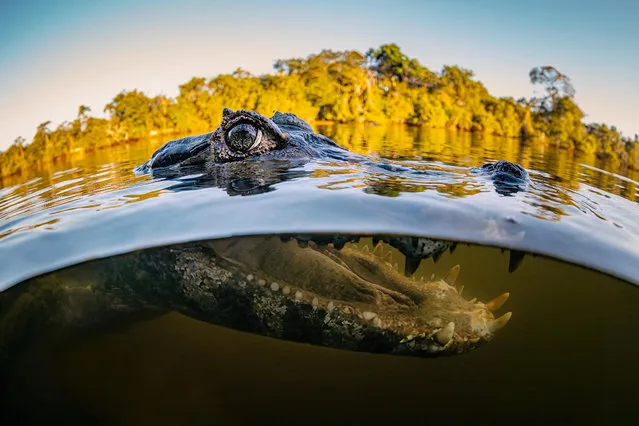
A caiman in the Pantanal region of Brazil in 2021. They are used to seeing humans, allowing the photographer, Leighton Lum, a close-up shot. (Photo by Leighton Lum/Caters News Agency)

A caiman in the Pantanal region of Brazil in 2021. They are used to seeing humans, allowing the photographer, Leighton Lum, a close-up shot. (Photo by Leighton Lum/Caters News Agency)
Details
02 Sep 2021 02:14:00
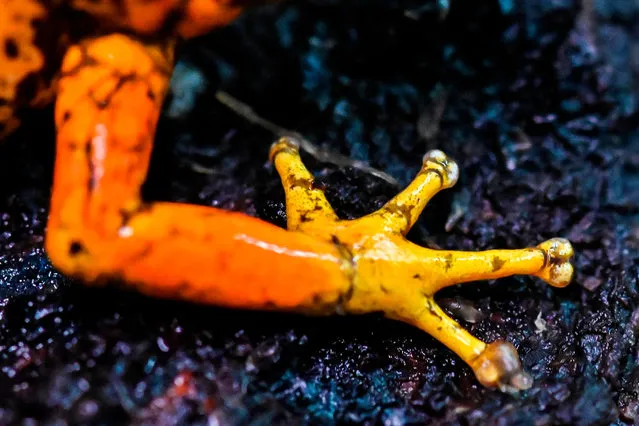
A leg of a “diablito” frog (Oophaga sylvatica) is photographed in a laboratory at a laboratory in the zoo of Cali, Colombia, on July 19, 2019. Colombia is the second country with the largest number of amphibians in the world after Brazil. More than 40% of amphibian species worldwide are in danger of extinction. (Photo by Luis Robayo/AFP Photo)

A leg of a “diablito” frog (Oophaga sylvatica) is photographed in a laboratory at a laboratory in the zoo of Cali, Colombia, on July 19, 2019. Colombia is the second country with the largest number of amphibians in the world after Brazil. More than 40% of amphibian species worldwide are in danger of extinction. (Photo by Luis Robayo/AFP Photo)
Details
28 Nov 2020 00:03:00
A red squirrel and a woodpecker having an “argument” over some nuts in a woodland near Lockerbie, Dumfries and Galloway in Johnsfield, England in September 2020. (Photo by Karen Crawford/South West News Service)

A red squirrel and a woodpecker having an “argument” over some nuts in a woodland near Lockerbie, Dumfries and Galloway in Johnsfield, England in September 2020. (Photo by Karen Crawford/South West News Service)
Details
24 Jan 2021 09:52:00
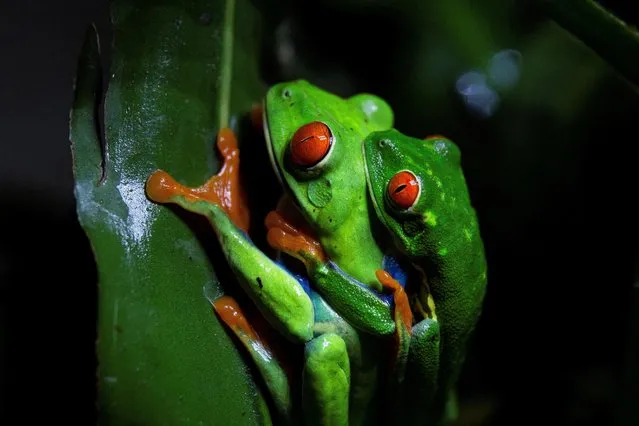
Two Red-eyed Tree frogs (Agalychnis callidryas) mate at “Exotic Fauna” breeding zoo, where exotic animals are reproduced to be marketed as pets in U.S., Canada and Asia, in Ticuantepe, on the outskirts of Managua, Nicaragua on July 17, 2022. (Photo by Maynor Valenzuela/Reuters)

Two Red-eyed Tree frogs (Agalychnis callidryas) mate at “Exotic Fauna” breeding zoo, where exotic animals are reproduced to be marketed as pets in U.S., Canada and Asia, in Ticuantepe, on the outskirts of Managua, Nicaragua on July 17, 2022. (Photo by Maynor Valenzuela/Reuters)
Details
09 Mar 2024 07:10:00