Loading...
Done
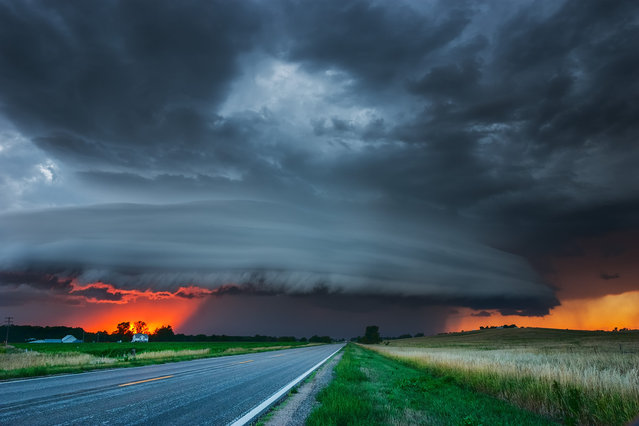
Vivid sunset under severe storm in central Nebraska August 17, 2005. (Photo by Mike Hollingshead)

Storm chasing photographer Mike Hollingshead makes a living following the worst storms in America, from snarling tornadoes chewing up the Kansas farmland to supercell thunderstorms massing over the Dakotas. His style is to get right in the path of the storm. While he says it’s less scary than you think – because most of the storm consists of heavy rain – it’s still extremely stressful. Photo: Vivid sunset under severe storm in central Nebraska August 17, 2005. (Photo by Mike Hollingshead)
Details
13 Aug 2014 11:25:00
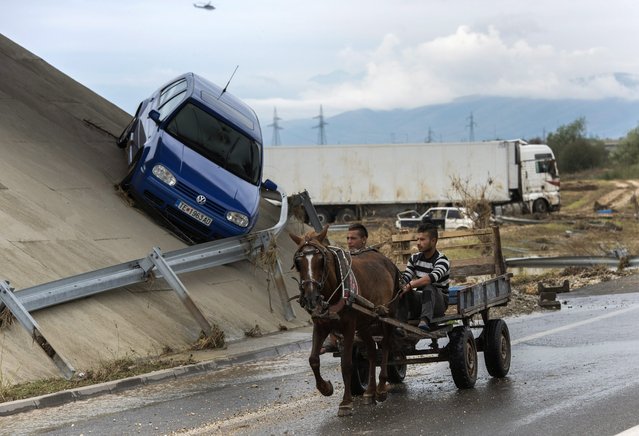
A damaged vehicle is seen next to the ring road, around Skopje, near the village of Stajkovci, Skopje, The Former Yugoslav Republic of Macedonia, 08 August 2016. At least 21 people have died and more than 100 are injured in the heavy rain storm that hit the Macedonian capital Skopje late Saturday night causing severe damage to the roads and house infrastructure. More than 80 vehicles were hit by landslides at Skopje's ring road. The highway remains closed. The government announced a 15-day state of emergency in the Skopje and Tetovo region. (Photo by Georgi Licovski/EPA)

A damaged vehicle is seen next to the ring road, around Skopje, near the village of Stajkovci, Skopje, The Former Yugoslav Republic of Macedonia, 08 August 2016. At least 21 people have died and more than 100 are injured in the heavy rain storm that hit the Macedonian capital Skopje late Saturday night causing severe damage to the roads and house infrastructure. More than 80 vehicles were hit by landslides at Skopje's ring road. The highway remains closed. The government announced a 15-day state of emergency in the Skopje and Tetovo region. (Photo by Georgi Licovski/EPA)
Details
09 Aug 2016 13:00:00
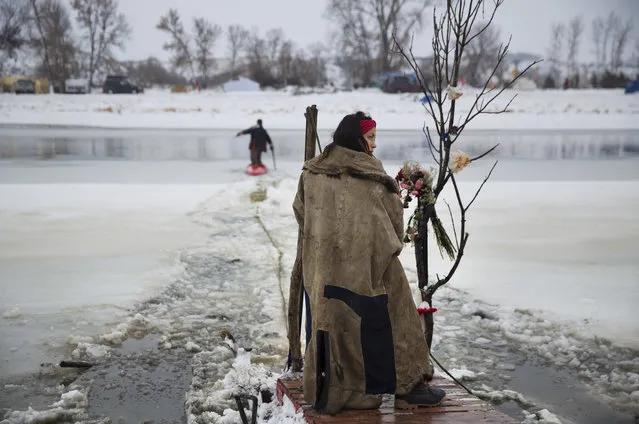
In this Thursday, December 1, 2016 photo, Cat Bigney, part of the Oglala Native American tribe, waits on the shore of the Cannonball river for travelers to arrive by canoe at the Oceti Sakowin camp where people have gathered to protest the Dakota Access oil pipeline in Cannon Ball, N.D. So far, those at the camp have shrugged off the heavy snow, icy winds and frigid temperatures. But if they defy next week's government deadline to abandon the camp, demonstrators know the real deep freeze lies ahead. Life-threatening wind chills and towering snow drifts could mean the greatest challenge is simple survival. (Photo by David Goldman/AP Photo)

In this Thursday, December 1, 2016 photo, Cat Bigney, part of the Oglala Native American tribe, waits on the shore of the Cannonball river for travelers to arrive by canoe at the Oceti Sakowin camp where people have gathered to protest the Dakota Access oil pipeline in Cannon Ball, N.D. So far, those at the camp have shrugged off the heavy snow, icy winds and frigid temperatures. But if they defy next week's government deadline to abandon the camp, demonstrators know the real deep freeze lies ahead. Life-threatening wind chills and towering snow drifts could mean the greatest challenge is simple survival. (Photo by David Goldman/AP Photo)
Details
06 Dec 2016 10:22:00
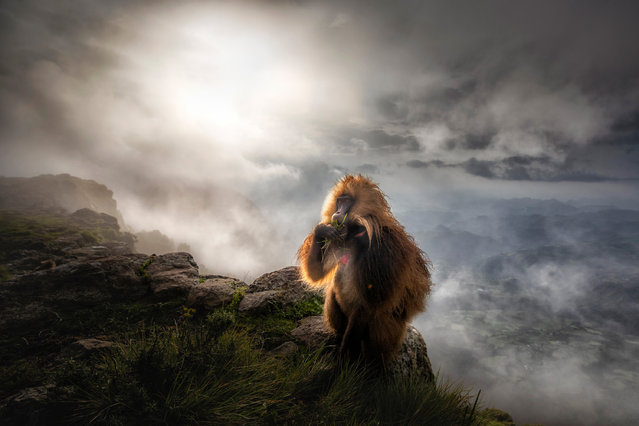
Highly commended, mammals: Gelada after the storm – Marco Gaiotti (Italy). “Gelada baboons are the only monkey species in the world that feed on grasses. They are native to the tableland of Ethiopia. Every morning large family groups wander from their sleeping places in the steep rock face, up to 1,000 metres high, to the feeding grounds at the tablelands. This image clearly depicts their feeding strategy: they pull out bunches of grass, sort the stalks and then lift them to their mouth. This shot was taken towards the end of the rainy season after a heavy storm”. (Photo by Marco Gaiotti/2019 GDT European Wildlife Photographer of the Year)

Highly commended, mammals: Gelada after the storm – Marco Gaiotti (Italy). “Gelada baboons are the only monkey species in the world that feed on grasses. They are native to the tableland of Ethiopia. Every morning large family groups wander from their sleeping places in the steep rock face, up to 1,000 metres high, to the feeding grounds at the tablelands. This image clearly depicts their feeding strategy: they pull out bunches of grass, sort the stalks and then lift them to their mouth. This shot was taken towards the end of the rainy season after a heavy storm”. (Photo by Marco Gaiotti/2019 GDT European Wildlife Photographer of the Year)
Details
31 Oct 2019 00:03:00
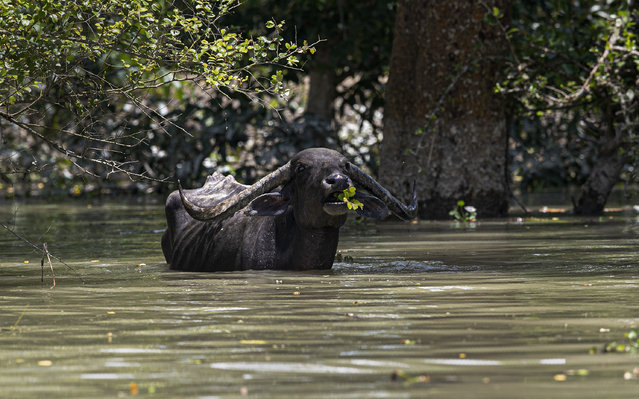
A wild water buffalo eats tree branches standing in flood water at the Pobitora wildlife sanctuary in Pobitora, Morigaon district, Assam, India, Thursday, July 16, 2020. (Photo by Anupam Nath/AP Photo)

A wild water buffalo eats tree branches standing in flood water at the Pobitora wildlife sanctuary in Pobitora, Morigaon district, Assam, India, Thursday, July 16, 2020. Floods and landslides triggered by heavy monsoon rains have killed dozens of people in this northeastern region. The floods also inundated most of Kaziranga National Park, home to an estimated 2,500 rare one-horned rhinos. (Photo by Anupam Nath/AP Photo)
Details
18 Jul 2020 00:01:00


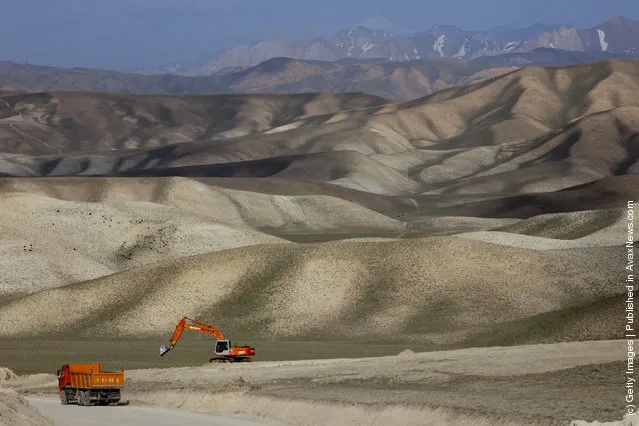
Heavy equipment works along the still under construction Bamiyan-Yakawlang road June 10, 2011 in Yakawlang, Afghanistan. The 69 Million US$ project is supported by the Government of Japan and World Bank. The 90K road project was started three years ago and is slated to be finished within another year. This new road means faster travel from Bamiyan to Afghanistan's only national park, Band-e-Amir. This is in of the safest parts of the country and the hope is to expand tourism in the region. (Photo by Paula Bronstein/Getty Images)
Details
11 Jun 2011 12:32:00
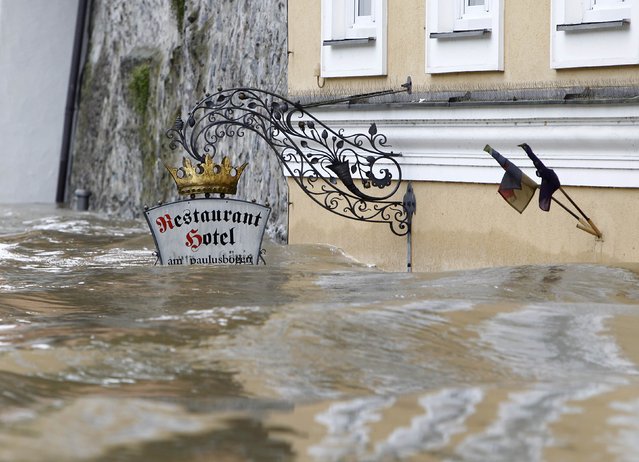
The sign above the door of restaurant and hotel 'Am Paulusbogen' is partially submerged in the flooded centre of the Bavarian town of Passau, about 200 km (124 miles) north-east of Munich June 3, 2013. Torrential rain in the south and south-east of Germany caused heavy flooding over the weekend, forcing people to evacuate their homes. (Photo by Michaela Rehle/Reuters)

The sign above the door of restaurant and hotel “Am Paulusbogen” is partially submerged in the flooded centre of the Bavarian town of Passau, about 200 km (124 miles) north-east of Munich June 3, 2013. (Photo by Michaela Rehle/Reuters)
Details
05 Jun 2013 08:43:00
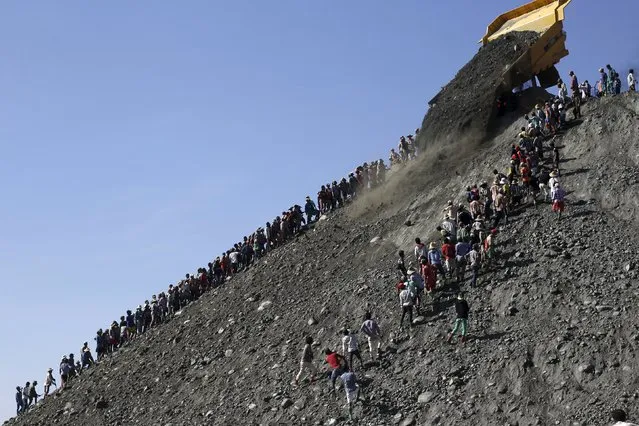
Miners search for jade stones at a mine dump at a Hpakant jade mine in Kachin state, Myanmar November 25, 2015. (Photo by Soe Zeya Tun/Reuters)

Miners search for jade stones at a mine dump at a Hpakant jade mine in Kachin state, Myanmar November 25, 2015. Using heavy earth-excavators and explosives, miners have been tearing into Myanmar's northern hills in recent months, in a rush to excavate more jade from the world's richest deposits of the gemstone before a new government takes office next year. (Photo by Soe Zeya Tun/Reuters)
Details
18 Dec 2015 08:03:00