Loading...
Done
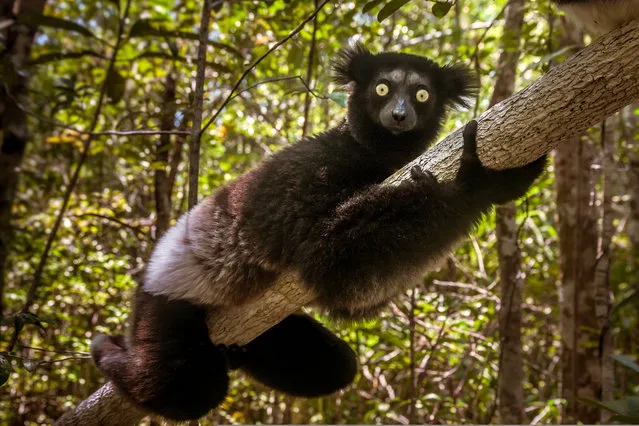
The secretive indri (Indri indri) of Madagascar, the largest living lemur. It is also critically endangered and highly evolutionarily distinct with no close relatives, which makes its branch one of most precarious on the mammal evolutionary tree. In the likely event that the indri goes extinct, we will lose 19m years of unique evolutionary history from the mammal tree of life. (Photo by Pierre-Yves Babelon/Aarhus University)

The secretive indri (Indri indri) of Madagascar, the largest living lemur. It is also critically endangered and highly evolutionarily distinct with no close relatives, which makes its branch one of most precarious on the mammal evolutionary tree. In the likely event that the indri goes extinct, we will lose 19m years of unique evolutionary history from the mammal tree of life. (Photo by Pierre-Yves Babelon/Aarhus University)
Details
18 Nov 2018 00:02:00
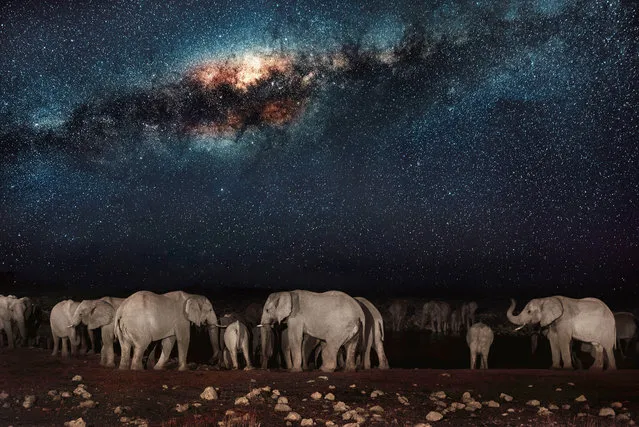
This watering hole is the social hub of the veldt; the scrubby grasslands that stretch across Namibia. The scorched earth supports sometimes fragile populations of magnificent wildlife – from endangered predators to plentiful herds of game. But these gentle giraffes and elephants need to be careful: lions don’t sleep at night, they hunt! The spectacular starscape above southern Africa is unchanged since explorers first mapped the continent. The photographer, Pietro Olivetta from Italy, said he had to be patient to capture these shots – but it was worth the wait. (Photo by Pietro Olivetta/Caters News)

This watering hole is the social hub of the veldt; the scrubby grasslands that stretch across Namibia. The scorched earth supports sometimes fragile populations of magnificent wildlife – from endangered predators to plentiful herds of game. But these gentle giraffes and elephants need to be careful: lions don’t sleep at night, they hunt! The spectacular starscape above southern Africa is unchanged since explorers first mapped the continent. The photographer, Pietro Olivetta from Italy, said he had to be patient to capture these shots – but it was worth the wait. (Photo by Pietro Olivetta/Caters News)
Details
20 Feb 2017 00:05:00
A thirsty timber wolf, Lithuania. (Photo by Erikas Plucas/Alamy Stock Photo)

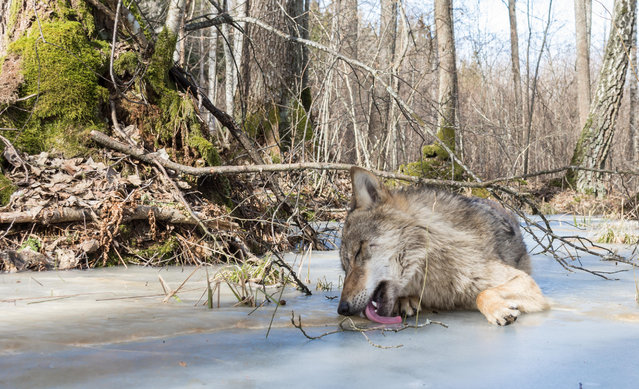
A thirsty timber wolf, Lithuania, 2018. (Photo by Erikas Plucas/Alamy Stock Photo)
Details
08 Apr 2018 00:03:00
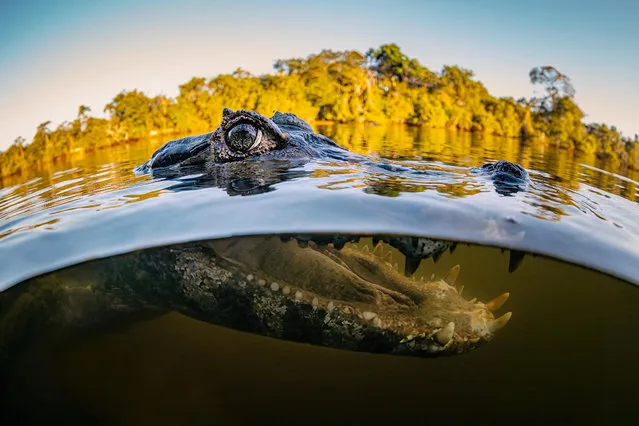
A caiman in the Pantanal region of Brazil in 2021. They are used to seeing humans, allowing the photographer, Leighton Lum, a close-up shot. (Photo by Leighton Lum/Caters News Agency)

A caiman in the Pantanal region of Brazil in 2021. They are used to seeing humans, allowing the photographer, Leighton Lum, a close-up shot. (Photo by Leighton Lum/Caters News Agency)
Details
02 Sep 2021 02:14:00
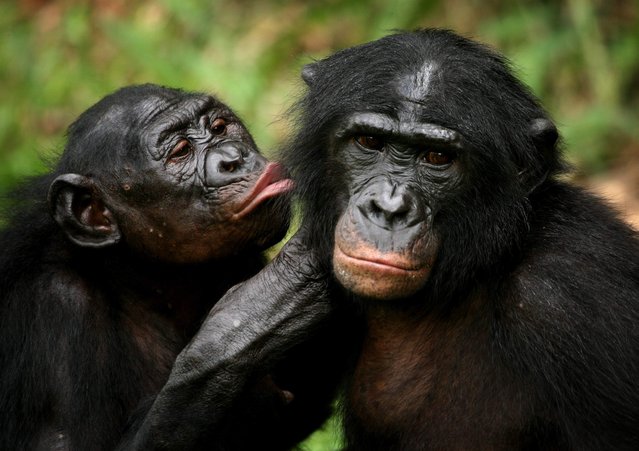
Bonobo apes, primates unique to Congo and humankind's closest relative, groom one another at a sanctuary just outside the capital Kinshasa, Congo on October 31, 2006. (Photo by Finbarr O'Reilly/Reuters)

Bonobo apes, primates unique to Congo and humankind's closest relative, groom one another at a sanctuary just outside the capital Kinshasa, Congo on October 31, 2006. (Photo by Finbarr O'Reilly/Reuters)
Details
08 Feb 2017 00:01:00
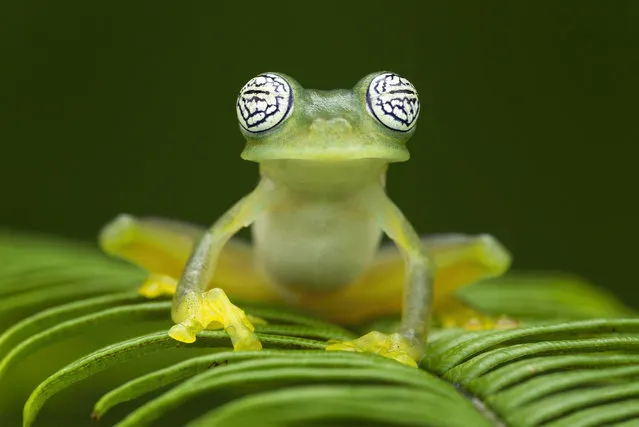
A ghost glass frog in the Chocó rainforest, Ecuador in November 2020. The marbled swirling “hypnotising” eyes are thought to be helpful in attracting a mate. (Photo by David Weiller/WENN)

A ghost glass frog in the Chocó rainforest, Ecuador in November 2020. The marbled swirling “hypnotising” eyes are thought to be helpful in attracting a mate. (Photo by David Weiller/WENN)
Details
19 May 2022 04:36:00
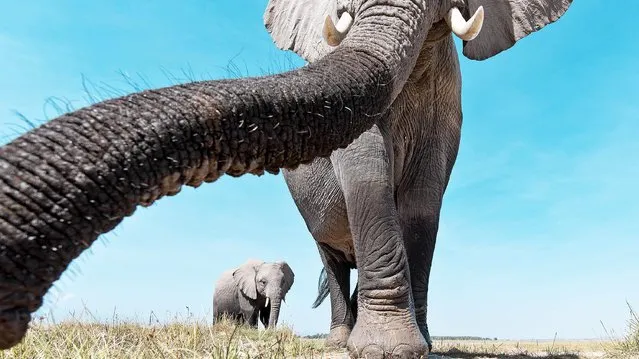
An elephant in Amboseli National Park in Kenya, June 2021. Gurcharan Roopra, 42, a Nairobi-born engineer-turned-wildlife photographer, has dedicated the past four years of his career to photographing these animals. He spends hours in his workshop camouflaging and encasing his equipment with protective gear before laying his camera in the path of lions, elephants, rhino, zebra and buffalo. (Photo by Gurcharan Roopra/Mercury Press)

An elephant in Amboseli National Park in Kenya, June 2021. Gurcharan Roopra, 42, a Nairobi-born engineer-turned-wildlife photographer, has dedicated the past four years of his career to photographing these animals. He spends hours in his workshop camouflaging and encasing his equipment with protective gear before laying his camera in the path of lions, elephants, rhino, zebra and buffalo. (Photo by Gurcharan Roopra/Mercury Press)
Details
24 Feb 2024 08:48:00
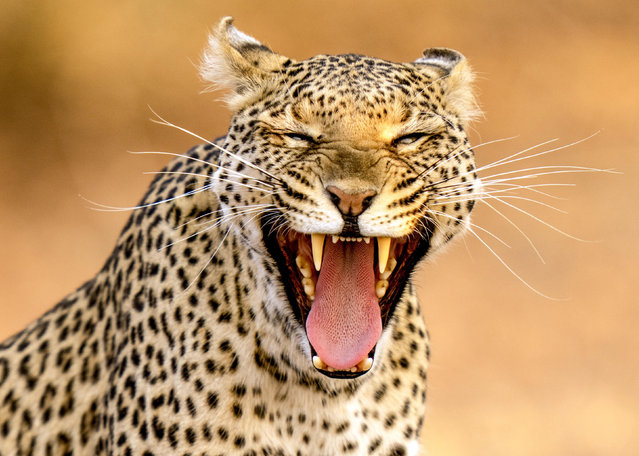
A yawning leopard appears to be laughing instead at Chobe National Park in Botswana in January 2023. (Photo by Nick Dale/Solent News & Photo Agency)

A yawning leopard appears to be laughing instead at Chobe National Park in Botswana in January 2023. (Photo by Nick Dale/Solent News & Photo Agency)
Details
06 Sep 2024 04:09:00