Loading...
Done
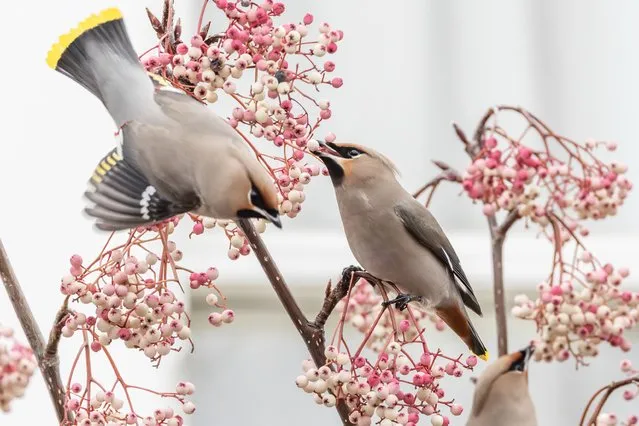
Waxwings in Balham south London on December 31, 2023. There has been a huge influx of this erruptive species this year. This probably due to severe storms and a shortage of food in their native Scandinavia in the Autumn. (Photo by Jack Hill/The Times)

Waxwings in Balham south London on December 31, 2023. There has been a huge influx of this erruptive species this year. This probably due to severe storms and a shortage of food in their native Scandinavia in the Autumn. (Photo by Jack Hill/The Times)
Details
25 Jan 2024 10:02:00
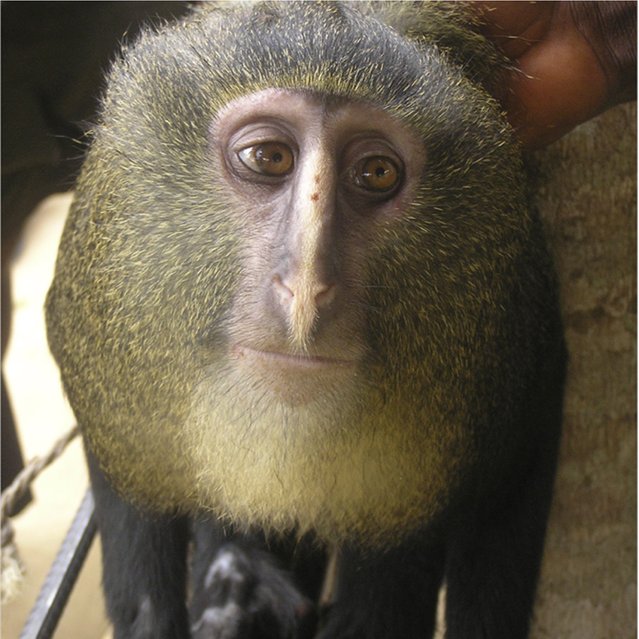
A new species of monkey found in the Democratic Republic of the Congo and identified as Lesula (Cercopithecus lomamiensis) is seen in this undated photograph from an article published September 12, 2012 in the science journal PLOS One. (Photo by Hart J. A., Detwiler K. M., Gilbert C. C./Reuters)

A new species of monkey found in the Democratic Republic of the Congo and identified as Lesula (Cercopithecus lomamiensis) is seen in this undated photograph from an article published September 12, 2012 in the science journal PLOS One. The monkey was first seen in 2007 by researchers John and Terese Hart of the Peabody Museum of Natural History at Yale Research Project. The finding of C. lomamiensis represents only the second new species of African monkey to be discovered in the past 28 years, according to the research article. (Photo by Hart J. A., Detwiler K. M., Gilbert C. C./Reuters)
Details
27 Sep 2012 08:17:00
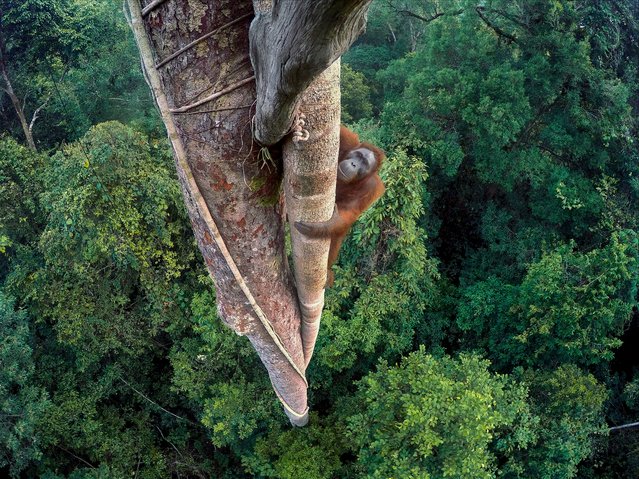
“Entwined Lives”. Tim Laman, US Winner, Wildlife photographer of the year. A young male orangutan makes the 30-metre climb up the thickest root of the strangler fig high above the canopy in Gunung Palung national park, one of the few protected orangutan strongholds in Indonesian Borneo. Laman had to do three days of climbing to position several GoPro cameras that he could trigger remotely. This shot was the one he had long visualised, looking down on the orangutan within its forest home. (Photo by Tim Laman/2016 Wildlife Photographer of the Year)

“Entwined Lives”. Tim Laman, US Winner, Wildlife photographer of the year. A young male orangutan makes the 30-metre climb up the thickest root of the strangler fig high above the canopy in Gunung Palung national park, one of the few protected orangutan strongholds in Indonesian Borneo. Laman had to do three days of climbing to position several GoPro cameras that he could trigger remotely. This shot was the one he had long visualised, looking down on the orangutan within its forest home. (Photo by Tim Laman/2016 Wildlife Photographer of the Year)
Details
19 Oct 2016 12:08:00
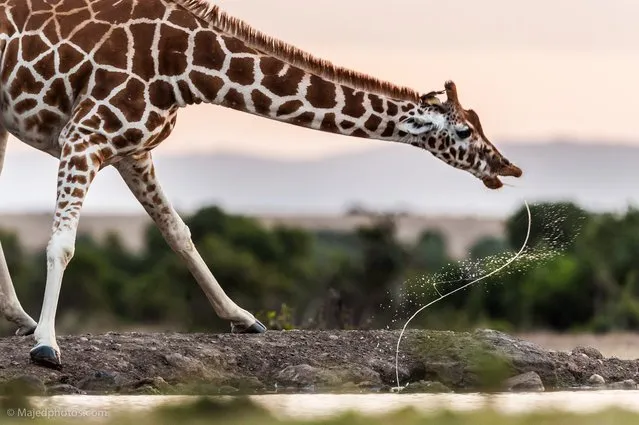
“We just want to move to search to the Leopard at that morning but we found a group of giraffes come toward a small lake and start drinking it was a nice moment when the Giraffe finish from drinking and leave a letters S with motion in the air”. (Photo and caption by Majed Ali)

National Geographic invites photographers from around the world to enter the 2013 National Geographic Photography Contest. The grand-prize winner will receive $10,000 (USD) and a trip to National Geographic headquarters in Washington, D.C., to participate in the annual National Geographic Photography Seminar in January 2014. Photo: “We just want to move to search to the Leopard at that morning but we found a group of giraffes come toward a small lake and start drinking it was a nice moment when the Giraffe finish from drinking and leave a letters “S” with motion in the air”. (Photo and caption by Majed Ali/National Geographic Photography Contest)
Details
15 Nov 2013 14:34:00
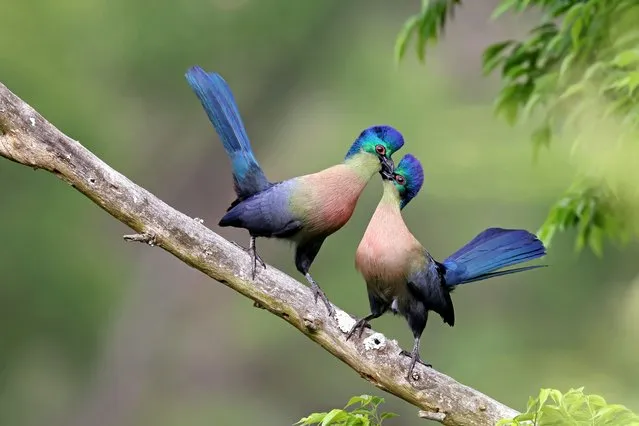
Portrait category, bronze award winner. Purple-crested Turaco Gallirex porphyreolophus. Lower Mpushini, near Pietermaritzburg, KwaZulu-Natal, South Africa. (Photo by Richard Flack/Bird Photographer of the Year 2022)

Portrait category, bronze award winner. Purple-crested Turaco Gallirex porphyreolophus. Lower Mpushini, near Pietermaritzburg, KwaZulu-Natal, South Africa. (Photo by Richard Flack/Bird Photographer of the Year 2022)
Details
12 Sep 2022 03:54:00
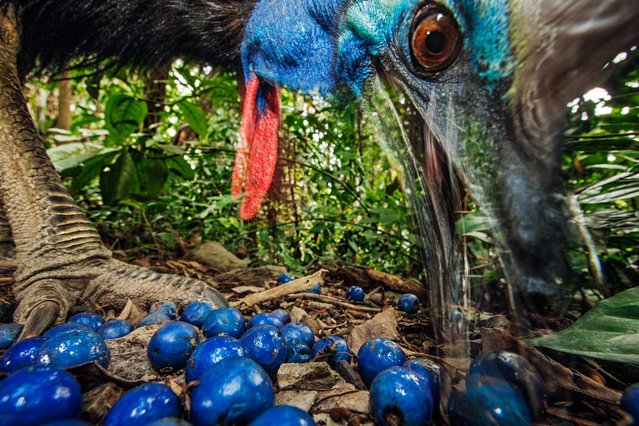
“Cassowaries are large, flightless birds related to emus and (more distantly) to ostriches, rheas, and kiwis”, writes Olivia Judson in the September issue of National Geographic magazine. (Photo by Christian Ziegler/National Geographic)

“Cassowaries are large, flightless birds related to emus and (more distantly) to ostriches, rheas, and kiwis”, writes Olivia Judson in the September issue of National Geographic magazine. How large? People-size: Adult males stand well over five foot five and top 110 pounds. Females are even taller, and can weigh more than 160 pounds. Dangerous when roused, they’re shy and peaceable when left alone. But even birds this big and tough are prey to habitat loss. The dense New Guinea and Australia rain forests where they live have dwindled. Today cassowaries might number 1,500 to 2,000. And because they help shape those same forests – by moving seeds from one place to another – “if they vanish”, Judson writes, “the structure of the forest would gradually change” too. (Photo by Christian Ziegler/National Geographic)

Details
06 Jan 2014 12:21:00
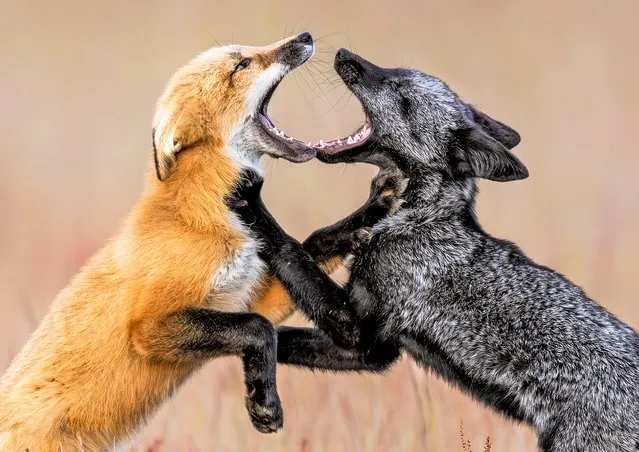
The rabbit population of San Juan Island, brought in to feed lighthouse keepers, got so big that in the 1930s foxes were introduced to kill them. Although they are red foxes, their coats can be orange, silver, black or multi-coloured. Picture date: September 2023. (Photo by Jun Zuo/Solent News)

The rabbit population of San Juan Island, brought in to feed lighthouse keepers, got so big that in the 1930s foxes were introduced to kill them. Although they are red foxes, their coats can be orange, silver, black or multi-coloured. Picture date: September 2023. (Photo by Jun Zuo/Solent News)
Details
08 Oct 2023 04:03:00
A woman offers prayers at a temple during the Chinese New Year celebrations in Yokohama Chinatown, near Tokyo, Japan, 29 January 2025. The celebrations of the Chinese Lunar New Year, or Spring Festival, which falls on 29 January 2025, are held in Yokohama Chinatown, Japan's largest Chinatown. (Photo by Franck Robichon/EPA/EFE)

A woman offers prayers at a temple during the Chinese New Year celebrations in Yokohama Chinatown, near Tokyo, Japan, 29 January 2025. The celebrations of the Chinese Lunar New Year, or Spring Festival, which falls on 29 January 2025, are held in Yokohama Chinatown, Japan's largest Chinatown. (Photo by Franck Robichon/EPA/EFE)
Details
10 Feb 2025 04:36:00