Loading...
Done
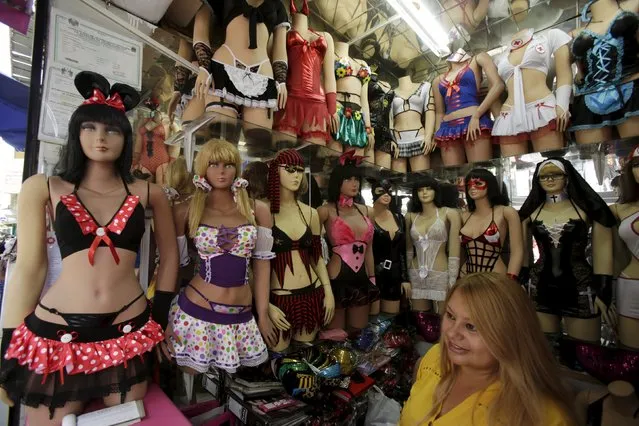
Businesswoman and vendor Sonia Maria Paypay sells clothing at a stand at the commercial zone of Gamarra in Lima, April 16, 2015. (Photo by Mariana Bazo/Reuters)

Businesswoman and vendor Sonia Maria Paypay sells clothing at a stand at the commercial zone of Gamarra in Lima, April 16, 2015. (Photo by Mariana Bazo/Reuters)
Details
22 Apr 2015 09:50:00
Afghans pass a clothing storein Kabul, Afghanistan, Tuesday, October 12, 2021. (Photo by Ahmad Halabisaz/AP Photo)

Afghans pass a clothing storein Kabul, Afghanistan, Tuesday, October 12, 2021. (Photo by Ahmad Halabisaz/AP Photo)
Details
09 Mar 2022 05:59:00
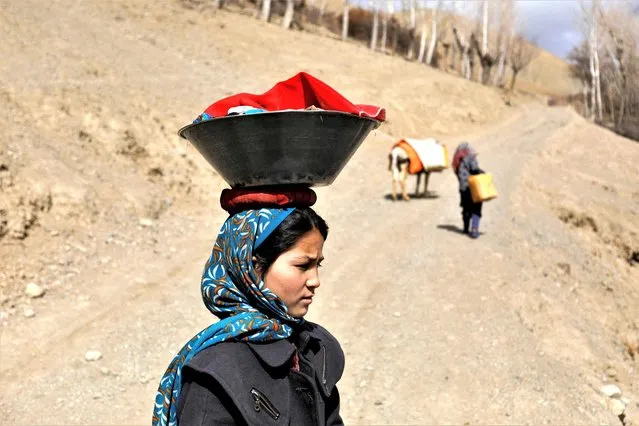
An Afghan girl carries washed clothes on her head in Bamiyan, Afghanistan on March 2, 2023. (Photo by Ali Khara/Reuters)

An Afghan girl carries washed clothes on her head in Bamiyan, Afghanistan on March 2, 2023. (Photo by Ali Khara/Reuters)
Details
11 Mar 2023 03:43:00
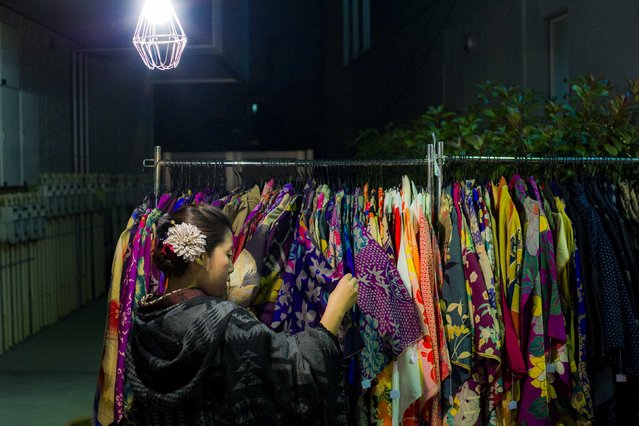
A woman browses through kimonos for sale at Boroichi flea market in Tokyo December 15, 2014. In the 16th century, Boroichi was a place for farmers to buy and sell rags, known as boro, for mending clothes and weaving sandals. Now in its 436th year, the original spirit lingers, with about 700 stands hawking fabric, used clothes and piles of rags. Others sell kitchen tools, pottery, seaweed and spices. (Photo by Thomas Peter/Reuters)

A woman browses through kimonos for sale at Boroichi flea market in Tokyo December 15, 2014. In the 16th century, Boroichi was a place for farmers to buy and sell rags, known as boro, for mending clothes and weaving sandals. Now in its 436th year, the original spirit lingers, with about 700 stands hawking fabric, used clothes and piles of rags. Others sell kitchen tools, pottery, seaweed and spices. About 200,000 people flock to the market, which is only open for four mid-winter days a year – two in December and two in January. (Photo by Thomas Peter/Reuters)
Details
19 Dec 2014 12:50:00
Kosovar Bosnian women help the bride Sellma Demirovic (C) to be dressed with traditional clothes on her wedding day for a traditional ceremony in the village of Donje Ljubinje, Kosovo, 14 August 2021. (Photo by Valdrin Xhemaj/EPA/EFE)

Kosovar Bosnian women help the bride Sellma Demirovic (C) to be dressed with traditional clothes on her wedding day for a traditional ceremony in the village of Donje Ljubinje, Kosovo, 14 August 2021. (Photo by Valdrin Xhemaj/EPA/EFE)
Details
21 Aug 2021 09:22:00
People dressed in national clothes sing songs during the regional harvest festival in the town of Dyatlovo, Belarus, November 13, 2015. (Photo by Vasily Fedosenko/Reuters)

People dressed in national clothes sing songs during the regional harvest festival in the town of Dyatlovo, Belarus, November 13, 2015. (Photo by Vasily Fedosenko/Reuters)
Details
16 Nov 2015 08:05:00
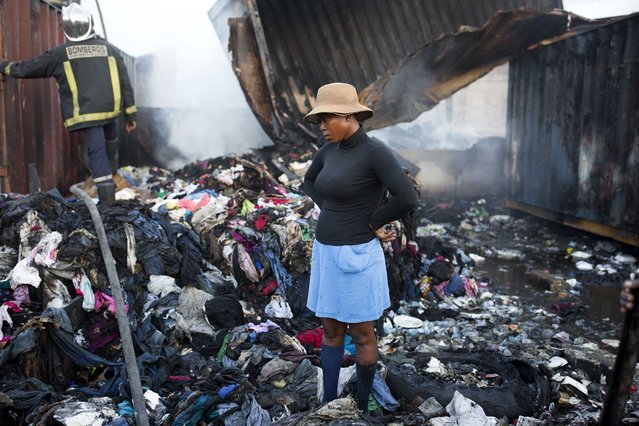
A woman stands in the middle of her fire damaged clothes after a massive fire at a market in Port-au-Prince, Haiti, Monday March 20, 2017. (Photo by Dieu Nalio Chery/AP Photo)

A woman stands in the middle of her fire damaged clothes after a massive fire at a market in Port-au-Prince, Haiti, Monday March 20, 2017. The fire raged at the biggest central market in the center of the Capital. (Photo by Dieu Nalio Chery/AP Photo)
Details
21 Mar 2017 08:04:00
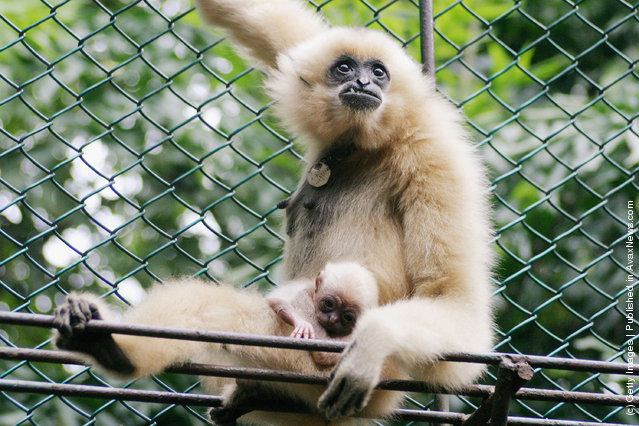
Newborn White-Cheeked Gibbon Nomascus

“Nomascus is the second most speciose genus of gibbons (family Hylobatidae). Originally this genus was a subgenus of Hylobates, and all individuals were considered one species, Hylobates concolor. Species within Nomascus are characterized by 52 chromosomes. Some species are all black, some light with a distinct black tuft of crown fur, and some by distinct, light-colored cheek patches. Nomascus is found from southern China (Yunnan) to southern Vietnam, and also on Hainan Island. One of the genus' species, Nomascus nasutus, has been deemed “the most critically endangered ape species in the world”. All of the species in this genus are endangered or critically endangered”. – Wikipedia

Photo: A newborn White-Cheeked Gibbon clings to its mother in the Nanning Zoo on April 12, 2004 in Nanning, Guangxi province, China. The White-Cheeked Gibbon's natural habitat is Southern China as well as Vietnam and Laos. They are classified as highly endangered and are on the brink of extinction due to poaching and reduction of natural rainforests. (Photo by Getty Images)
Details
12 Aug 2011 11:51:00