Loading...
Done
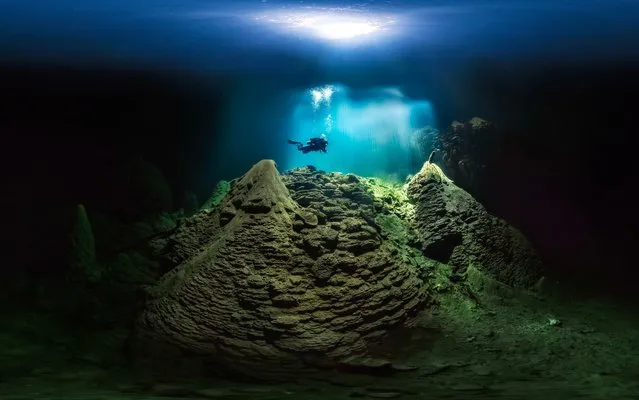
Cave Diver, Anhumas Abyss, Bonito, Brazil: The Anhumas Abyss is an underground cavern with a crystal-clear lake below, more than 260 feet (79 m) deep. A visitor must enter through a narrow opening at the top of the chamber and rappel into the cave. Snorkeling and scuba diving in the lake reveal amazing scenery. Distinctive, conical limestone stalagmites and stalactites occupy the lake and the surrounding area, some reaching 65 feet (20 m) high. “One must rappel about 235 feet (72 m) to get down into this deep lake. The photo was taken at a depth of 50 feet (15 m). It was a challenge to create the image because of the high contrast, plus the diver could not see into the darkness, making communication impossible”. (Photo by Marcio Cabral/Nature’s Best Photography Awards 2017)

Cave Diver, Anhumas Abyss, Bonito, Brazil: The Anhumas Abyss is an underground cavern with a crystal-clear lake below, more than 260 feet (79 m) deep. A visitor must enter through a narrow opening at the top of the chamber and rappel into the cave. Snorkeling and scuba diving in the lake reveal amazing scenery. Distinctive, conical limestone stalagmites and stalactites occupy the lake and the surrounding area, some reaching 65 feet (20 m) high. (Photo by Marcio Cabral/Nature’s Best Photography Awards 2017)
Details
26 Oct 2017 08:10:00
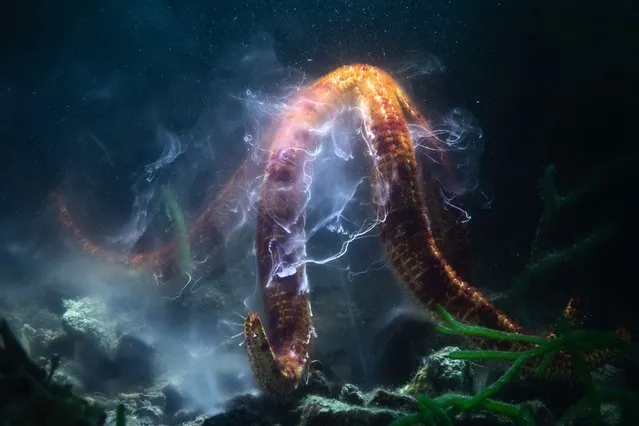
Shooting star by Tony Wu, US/Japan. Winner, underwater. The electrifying reproductive dance of a giant sea star. As the surrounding water filled with sperm and eggs from spawning sea stars, Wu faced several challenges. Stuck in a small, enclosed bay with only a macro lens for photographing small subjects, he backed up to squeeze the undulating sea star into his field of view. The dancing posture of spawning sea stars rising and swaying may help release eggs and sperm, or may help sweep the eggs and sperm into the currents where they fertilise together in the water. Kinko Bay, Japan. (Photo by Tony Wu/Wildlife Photographer of the Year)

Shooting star by Tony Wu, US/Japan. Winner, underwater. The electrifying reproductive dance of a giant sea star. As the surrounding water filled with sperm and eggs from spawning sea stars, Wu faced several challenges. Stuck in a small, enclosed bay with only a macro lens for photographing small subjects, he backed up to squeeze the undulating sea star into his field of view. The dancing posture of spawning sea stars rising and swaying may help release eggs and sperm, or may help sweep the eggs and sperm into the currents where they fertilise together in the water. Kinko Bay, Japan. (Photo by Tony Wu/Wildlife Photographer of the Year)
Details
15 Oct 2022 03:50:00


Greetings, our dear visitors!


Without mincing words we would like to present a feature: Self-Publishing, let's call it Samizdat. :-) Sure we aren't Flickr, StumbleUpon or add_whatever_you_like, we're really small in comparison with these giants but we have constant, very attentive and grateful audience. All we can offer you is a place on the main page and attention of all our visitors to your posts, the things that are hard to achieve on numerous social services. Who knows, maybe tiny and humble indie project like AvaxNews will be much more helpful in searching of your audience than facebook for example. %-)
Details
11 Oct 2013 10:17:00
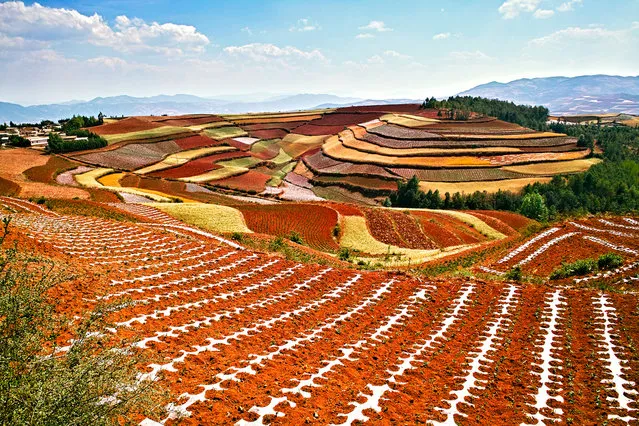
Dongchuan Red Lands, China

Dongchuan is a rural place located in the area of Wumeng Mountains. This place became one of the most favored destination spots for Chinese photographers all because of its red soil. The Wumeng’s scenery was first discovered in mid-90s. The first photographers who came here shot some award-winning photos, which made them keep the location of this place a secret. With time, however, more people found out about this place, making them want to visit these arid mountains. The contrasting red soil, yellow buckwheat, and brilliant blue skies make this place a paradise for photographers.
Details
29 Jan 2015 10:59:00
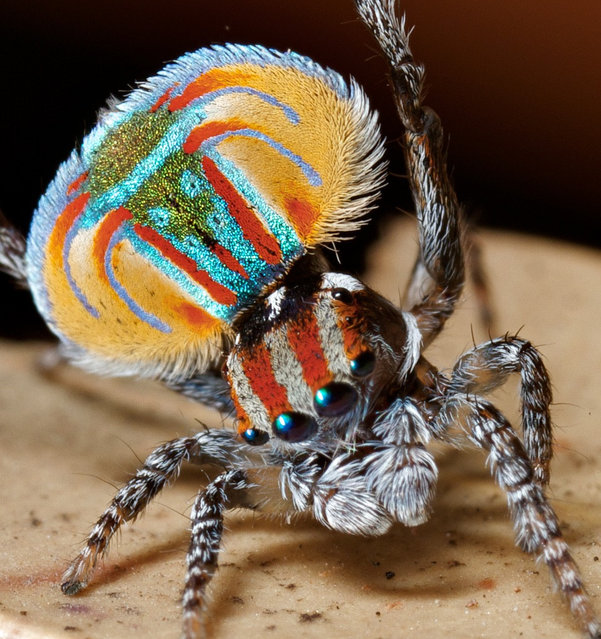
Peacock spider

Jumping spiders are often very colourful spiders. Maratus volans is not an exception. Although tiny, male spiders have an iridescent colouring of red, green and blue.
Details
22 Dec 2012 12:39:00
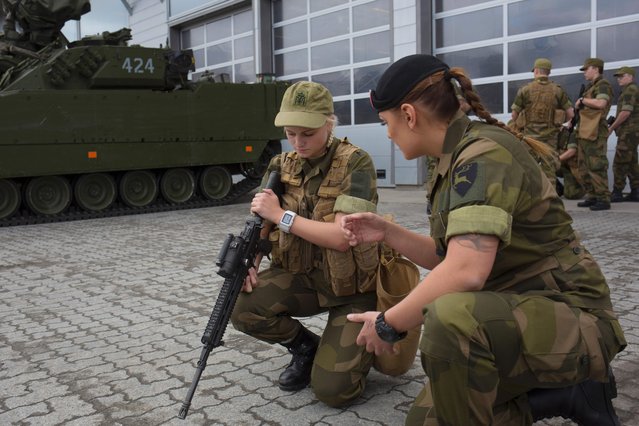
A female army recruit attends a base training at the armored battalion in Setermoen, northern Norway on August 11, 2016. (Photo by Kyrre Lien/AFP Photo)

A female army recruit attends a base training at the armored battalion in Setermoen, northern Norway on August 11, 2016. Norway has become the first NATO member to have compulsory conscription for women as well as men in the army. Recently, the first batch of army recruits joined the ranks in The Armored Battalion in the Norwegian Army located in Setermoen in northern Norway. (Photo by Kyrre Lien/AFP Photo)
Details
26 Aug 2016 10:48:00
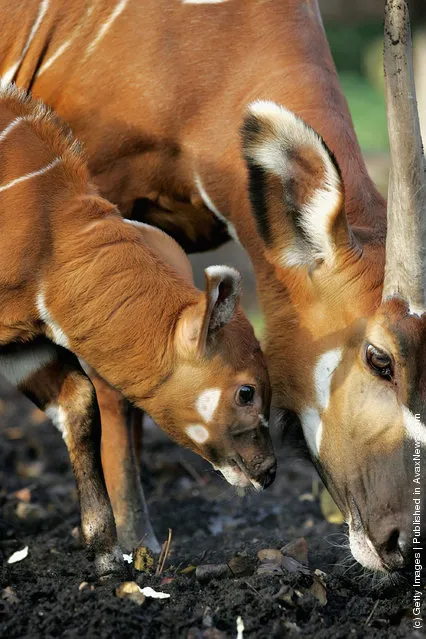
The one month old newborn Bongo Antelope

“The western or lowland bongo is a herbivorous, mostly nocturnal forest ungulate and among the largest of the African forest antelope species. Bongos are characterised by a striking reddish-brown coat, black and white markings, white-yellow stripes and long slightly spiralled horns”. – Wikipedia

Photo: The one month old newborn Bongo Antelope Calf ventures out in the cold with his mother in their enclosure at London Zoo on December 9, 2005 in London, England. (Photo by Christopher Lee/Getty Images)
Details
21 Feb 2012 12:17:00
Lawmakers fight around the rostrum during the first session of Ukraine's newly elected parliament in Kiev, Ukraine, December 13, 2012. (Photo by Sergei Chuzavkov/Associated Press)

Lawmakers fight around the rostrum during the first session of Ukraine's newly elected parliament in Kiev, Ukraine, December 13, 2012. (Photo by Sergei Chuzavkov/Associated Press)
Details
14 Dec 2012 11:28:00