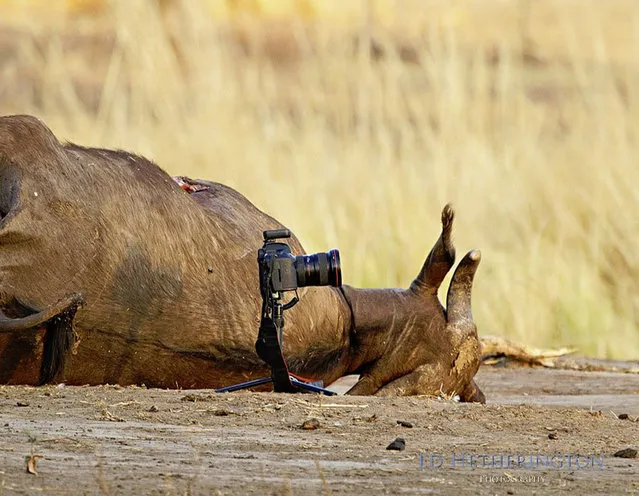
Ed Hetherington was on safari in Zimbabwe with his wife when he decided to set up his camera to get an action shot of a lioness devouring her prey. Instead of chowing down, she took his camera!
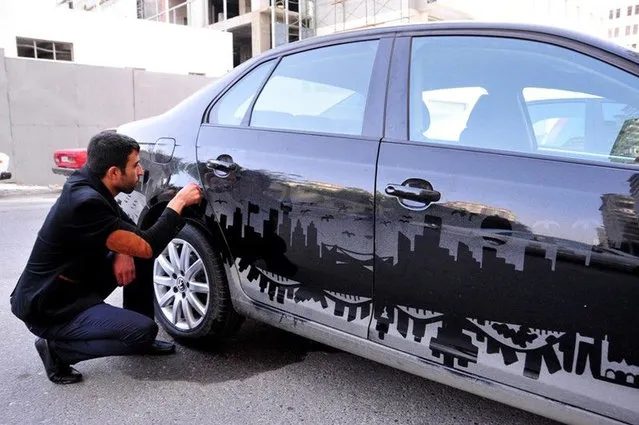
During work hours on one of the busiest streets of Baku, Azerbaijan’s capital, parking attendant Rafael Veyisov wipes off the dust on cars with his fingers, slowly contouring the shapes of tall buildings and flying birds. In his artwork, he generally illustrates real towns to educate people about other countries, but sometimes he also lets his imagination run wild and produces impressive original works. Surprised by his talent, the car owners who regularly leave their vehicles in Rafael’s care, often leave them dirty just to give him an excuse to play around, and take photos of his beautiful artworks.
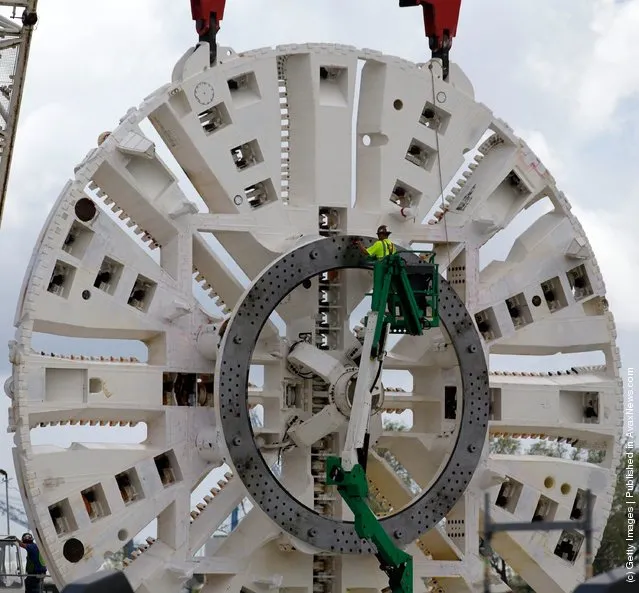
A worker prepares the “Cutter Head” of the Port Tunnel boring machine for attachment to the tunneling machine on September 1, 2011 in Miami, Florida. The $45 million machine is longer than a football field and about as tall as a four-story building and it will carve the twin tunnels connecting Watson Island and Dodge Island. The the new $1 billion Port of Miami tunnel is expected to be completed in May of 2014. (Photo by Joe Raedle/Getty Images)
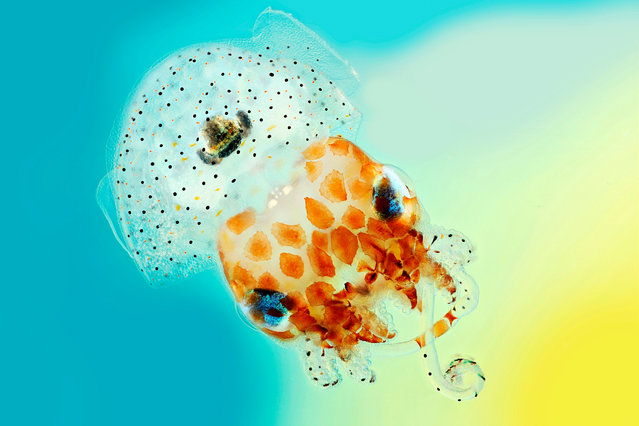
With its huge eyes, comical name and diminutive size, Mark R. Smith’s image of a baby Hawaiian bobtail squid can’t help but raise a smile. A curiously endearing creature, the cephalopod is just 1.5cm across, its mantle cavity bearing more than a passing resemblance to a rather natty shower cap. But it is also a beautiful example of symbiosis – nature’s version of “I’ll scratch your back if you scratch mine” – for on the underside of the squid is a light organ which houses bioluminescent bacteria. The squid offers the bacteria protection and food, while the bacteria emit a glow – a handy trait that the squid uses to offset its silhouette, helping it to evade predators in the depths below. Mark R. Smith’s entry combines several images of a Hawaiian bobtail squid with different focus lengths to create a final picture with greater depth of field than normal. (Photo by Mark R. Smith/Wellcome Images/Macroscopic Solutions)
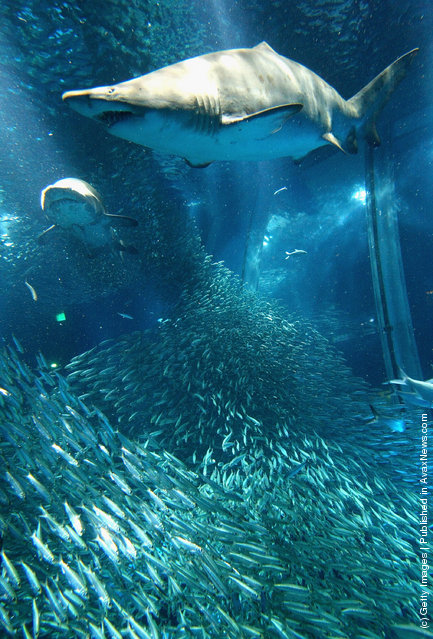
“Yokohama Hakkeijima Sea Paradise is an amusement park consisting of an aquarium, shopping mall, hotel, marina and amusement rides. It is located in Kanazawa-ku, Yokohama, Japan. It opened for business on May 8, 1993”. – Wikipedia
Photo: Shoal of sardines and sharks swim in a tank at Yokohama Hakkeijima Sea Paradise on March 19, 2009 in Yokohama, Japan. (Photo by Junko Kimura/Getty Images)
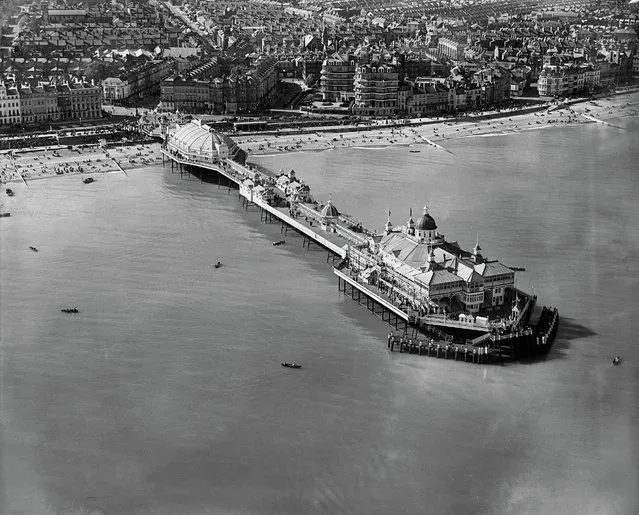
While the lido was described as bringing “modernism to the masses” on the British coast it was just the latest example of a trend that had been developing since Victorian times – transforming seaside towns into resorts for leisure and entertainment. In the latter half of the nineteenth century, the fashion was for local authorities to build great piers stretching from the promenade out into the sea. The Eastbourne Pier, pictured here in May 1931, was erected between 1866 and 1870 to an ingenious design by Eugenius Birch, which saw the structure sitting on special cups allowing the supporting struts to “move” in bad weather. Arranged on the pier's 1,000-foot length were kiosks, a theatre, a ballroom and a camera obscura. 1931. (Photo by Aerofilms Collection via “A History of Britain From Above”)
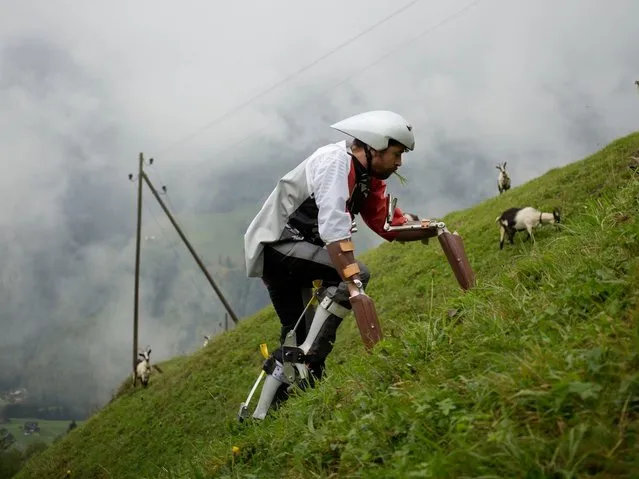
Thomas Thwaites, a 34-year-old researcher from London, has spent the past year creating prosthetics that allow him to roam around on all fours like goat.
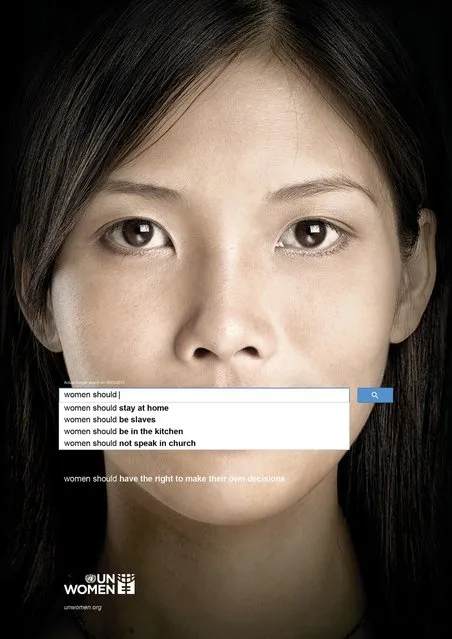
“A series of ads, developed as a creative idea for UN Women by Memac Ogilvy & Mather Dubai, uses genuine Google searches to reveal the widespread prevalence of sexism and discrimination against women. Based on searches dated 9 March, 2013 the ads expose negative sentiments ranging from stereotyping as well as outright denial of women’s rights”. – UN Women. (Photo by Ogilvy & Mather, Dubai, UAE/UN Women)