Loading...
Done
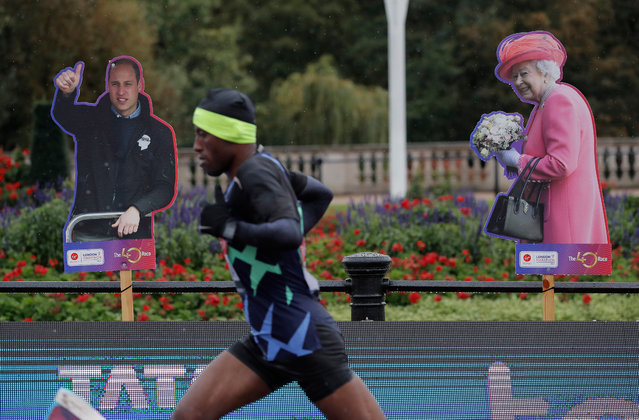
Shura Kitata of Ethiopia runs past cardboard cut-outs of the Duke of Cambridge and the Queen at the London Marathon in London, Britain, 04 October 2020. (Photo by Tom Jenkins/The Guardian)

Shura Kitata of Ethiopia runs past cardboard cut-outs of the Duke of Cambridge and the Queen at the London Marathon in London, Britain, 04 October 2020. (Photo by Tom Jenkins/The Guardian)
Details
12 Oct 2020 00:01:00
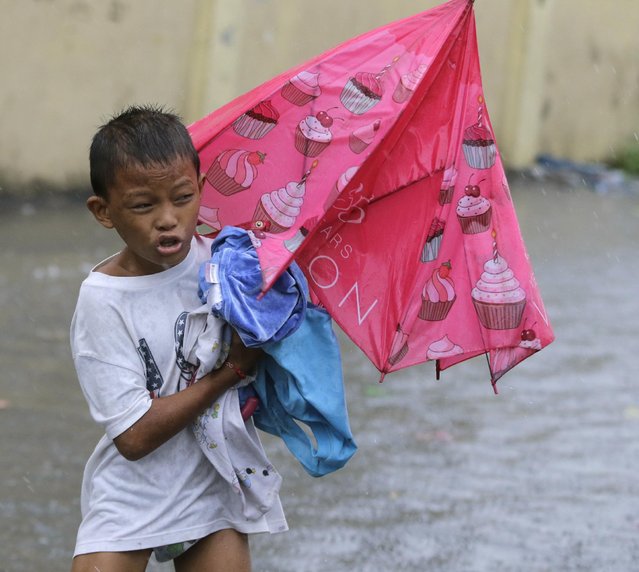
A boy evacuates to safer grounds at the onslaught of Typhoon Rammasun (locally known as Glenda) which battered the city Wednesday, July 16, 2014, in Manila, Philippines. (Photo by Bullit Marquez/AP Photo)

A boy evacuates to safer grounds at the onslaught of Typhoon Rammasun (locally known as Glenda) which battered the city Wednesday, July 16, 2014, in Manila, Philippines. (Photo by Bullit Marquez/AP Photo)
Details
17 Jul 2014 12:05:00
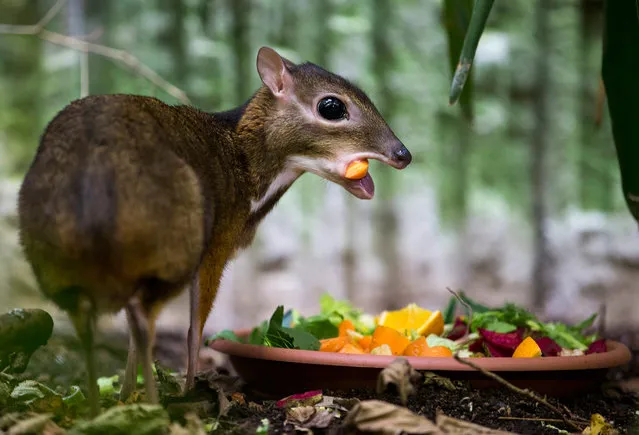
A chevrotain or mouse deer feeds in its enclosure at Zurich Zoo, Zurich, Switzerland, October 17, 2012. (Photo by Patrick B. Kraemer/AP)

A chevrotain or mouse deer feeds in its enclosure at Zurich Zoo, Zurich, Switzerland, October 17, 2012. (Photo by Patrick B. Kraemer/AP)
Details
27 Oct 2012 12:21:00
Construction workers take a lunch break on a steel beam atop the RCA Building at Rockefeller Center, New York, September 29, 1932. In the background is the Chrysler Building. (Photo by AP Photo)

Construction workers take a lunch break on a steel beam atop the RCA Building at Rockefeller Center, New York, September 29, 1932. In the background is the Chrysler Building. (Photo by AP Photo)
Details
01 Oct 2015 08:03:00


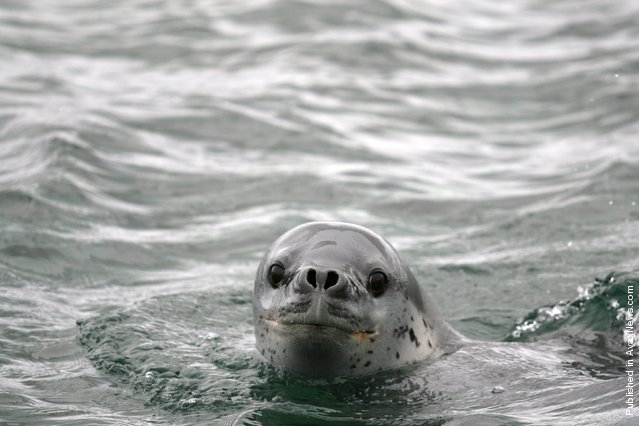
“The leopard seal (Hydrurga leptonyx), also referred to as the sea leopard, is the second largest species of seal in the Antarctic (after the southern elephant seal). It is most common in the southern hemisphere along the coast of Antarctica and on most sub-Antarctic islands, but can also be found on the coasts of southern Australia, Tasmania, South Africa, New Zealand, Lord Howe Island, Tierra del Fuego, the Cook Islands, and the Atlantic coast of South America. It can live twenty-six years, possibly more. Orcas and large sharks are the only natural predators of leopard seals”. – Wikipedia

Photo by: Gilad Rom; Source: Flickr
Details
13 Nov 2011 11:24:00
Cornish students (R) Nina Brooke, 21 and (L) Bonnie Mably, 20, laugh as they pose for a photograph as they try a Cornish pasty that has been baked as part of the World Cornish Pasty Championships at The Eden Project

“A Cornish pasty, sometimes known as a pastie or British pasty in the United States, is a filled pastry case, associated in particular with Cornwall in Great Britain. It is made by placing the uncooked filling on a flat pastry circle, and folding it to wrap the filling, crimping the edge at the side or top to form a seal. The result is a raised semicircular package”. – Wikipedia

Photo: Cornish students (R) Nina Brooke, 21 and (L) Bonnie Mably, 20, laugh as they pose for a photograph as they try a Cornish pasty that has been baked as part of the World Cornish Pasty Championships at The Eden Project on March 3, 2012 in St Austell, England. (Photo by Matt Cardy/Getty Images)
Details
04 Mar 2012 11:49:00
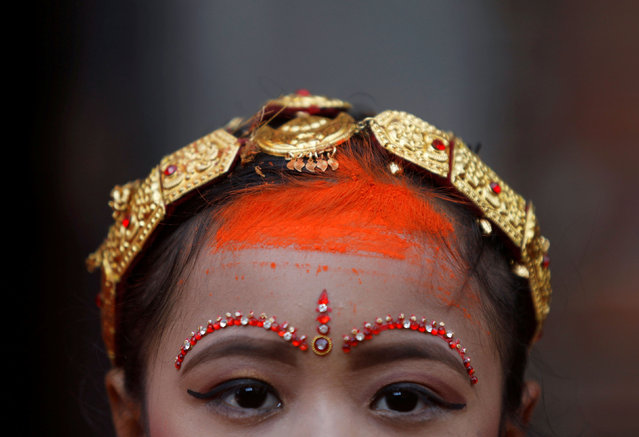
A girl from Newar community is pictured with vermillion powder on her forehead as she takes part at the Ihi ceremony in Bhaktapur, Nepal on December 6, 2019. The two-day ceremony begins with purification rituals and ends with “Kanyadan” (giving away the virgin) of the girl by her father. A Newari girl gets married thrice in her life, first with Bel, the fruit of a wood-apple tree, secondly with the sun, and lastly with her future husband. (Photo by Monika Deupala/Reuters)

A girl from Newar community is pictured with vermillion powder on her forehead as she takes part at the Ihi ceremony in Bhaktapur, Nepal on December 6, 2019. The two-day ceremony begins with purification rituals and ends with “Kanyadan” (giving away the virgin) of the girl by her father. A Newari girl gets married thrice in her life, first with Bel, the fruit of a wood-apple tree, secondly with the sun, and lastly with her future husband. (Photo by Monika Deupala/Reuters)
Details
04 Mar 2020 00:03:00
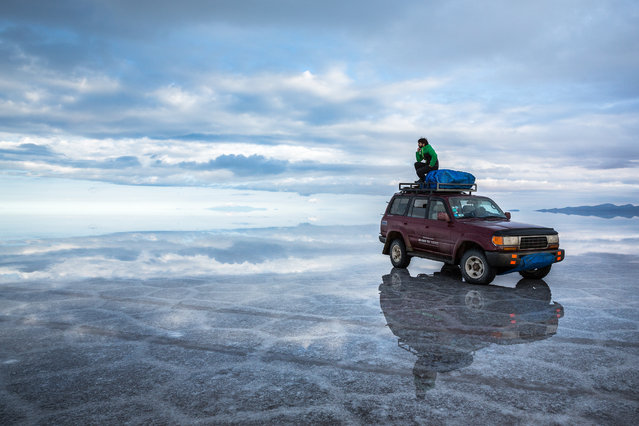
At 10,582 square kilometres, the Bolivian salt flats – otherwise known as Salar de Uyuni – are the largest on the planet and contain between 50 and 70% of the world’s lithium reserves. After exploring Chile and Argentina, photographer Joel Santos decided to travel to Bolivia in January 2017 to check the salt flats off his bucket list. With an electrical storm rolling in, Joel and his two travelling companions were the only souls left on the vast flats and captured the eerie flats without a person in sight. (Photo by Joel Santos/Barcroft Images)

At 10,582 square kilometres, the Bolivian salt flats – otherwise known as Salar de Uyuni – are the largest on the planet and contain between 50 and 70% of the world’s lithium reserves. After exploring Chile and Argentina, photographer Joel Santos decided to travel to Bolivia in January 2017 to check the salt flats off his bucket list. With an electrical storm rolling in, Joel and his two travelling companions were the only souls left on the vast flats and captured the eerie flats without a person in sight. (Photo by Joel Santos/Barcroft Images)
Details
12 Aug 2019 00:03:00