A runner dressed as Spiderman poses before the annual “Sao Silvestre Run”, an international race through the streets of Sao Paulo, Brazil on December 31, 2021. (Photo by Carla Carniel/Reuters)
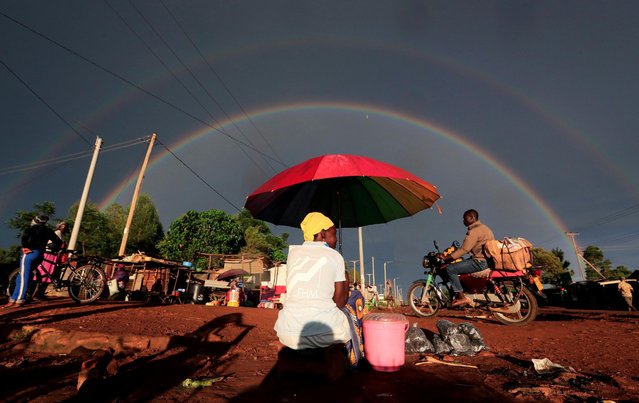
A double rainbow is seen above a woman holding an umbrella and selling snacks along the road in Siaya county, Kenya on May 3, 2020. (Photo by Thomas Mukoya/Reuters)
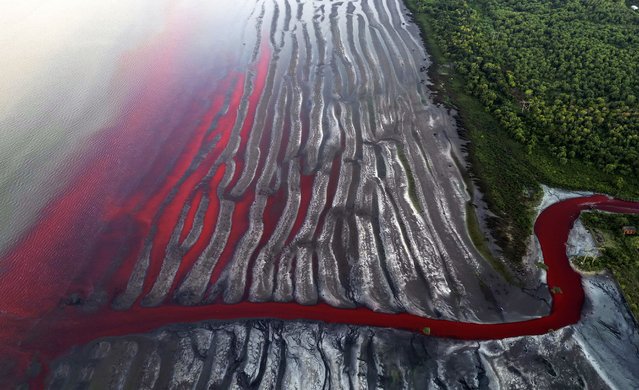
The “Sarandi” stream, dyed red due to unknown contaminants allege residents, flows into the Río de la Plata on the outskirts of Buenos Aires, Argentina, February 6, 2025. (Photo by Rodrigo Abd/AP Photo)
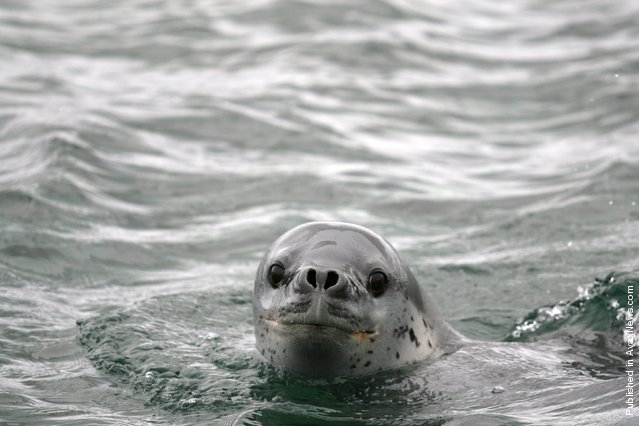
“The leopard seal (Hydrurga leptonyx), also referred to as the sea leopard, is the second largest species of seal in the Antarctic (after the southern elephant seal). It is most common in the southern hemisphere along the coast of Antarctica and on most sub-Antarctic islands, but can also be found on the coasts of southern Australia, Tasmania, South Africa, New Zealand, Lord Howe Island, Tierra del Fuego, the Cook Islands, and the Atlantic coast of South America. It can live twenty-six years, possibly more. Orcas and large sharks are the only natural predators of leopard seals”. – Wikipedia
Newlyweds celebrate their wedding surrounded by friends on Red Square in Moscow on November 11, 2020, amid the ongoing coronavirus disease pandemic. (Photo by Natalia Kolesnikova/AFP Photo)
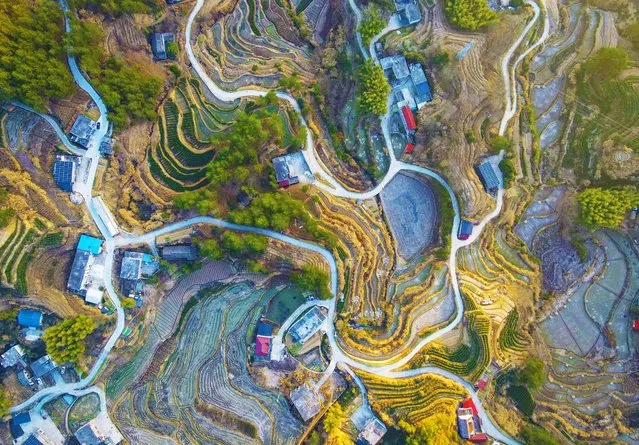
The aerial view shows terraced hills at Helin village in Anqing, in eastern China's Anhui province on January 12, 2024. (Photo by AFP Photo/China Stringer Network)
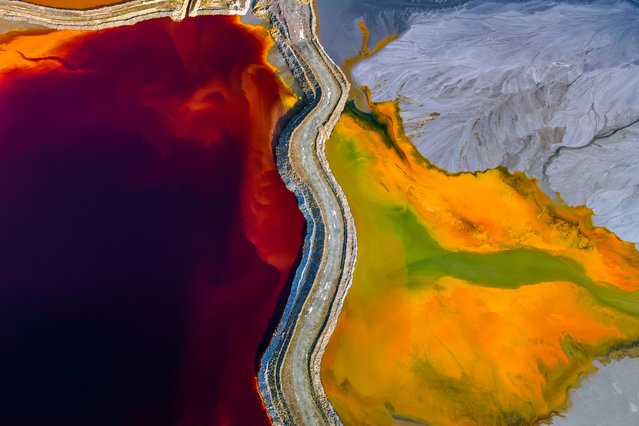
The Rio Tinto river in Spain crosses an ancient mining site which makes the water turn a variety of bright colours. Copper, silver and gold are mined here, as well as iron, which turns the water red. An ochre mix is responsible for the yellow tint of the rest of the river. (Photo by Olivier Jarry-Lancombe/Solent News)