Loading...
Done
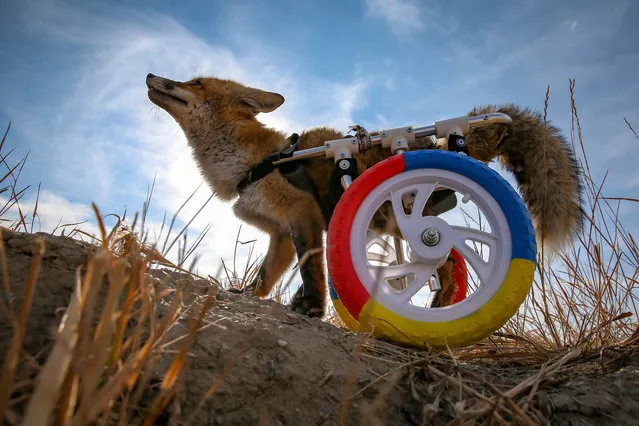
A physically disabled fox walks with its walking wheels wheelchair, developed by an animal lover by Van Yuzuncu Yil University Wildlife Conservation and Rehabilitation Center, after the fox found wounded in the urban countryside in Van, Turkey on December 05, 2020. The fox also received a physical treatment at the center. (Photo by Ozkan Bilgin/Anadolu Agency via Getty Images)

A physically disabled fox walks with its walking wheels wheelchair, developed by an animal lover by Van Yuzuncu Yil University Wildlife Conservation and Rehabilitation Center, after the fox found wounded in the urban countryside in Van, Turkey on December 05, 2020. The fox also received a physical treatment at the center. (Photo by Ozkan Bilgin/Anadolu Agency via Getty Images)
Details
13 Dec 2020 00:03:00
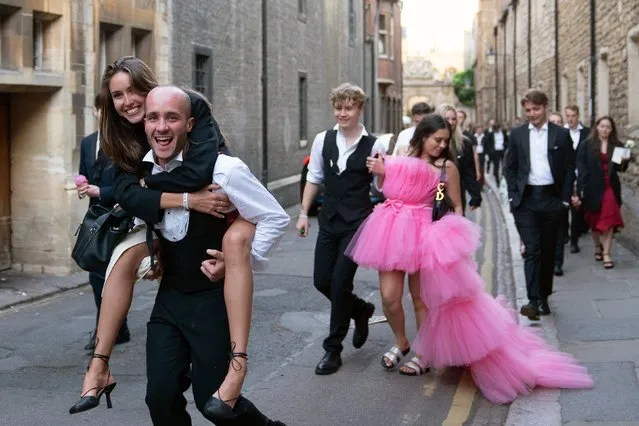
Students from Cambridge University make their way home after celebrating the end of the academic year at a May Ball in Trinity College on Tuesday, June 21, 2022. The first official May Ball in Trinity College's grounds was held in 1866 with the tradition quickly spreading to the other colleges. (Photo by Joe Giddens/PA Images via Getty Images)

Students from Cambridge University make their way home after celebrating the end of the academic year at a May Ball in Trinity College on Tuesday, June 21, 2022. The first official May Ball in Trinity College's grounds was held in 1866 with the tradition quickly spreading to the other colleges. (Photo by Joe Giddens/PA Images via Getty Images)
Details
22 Jun 2022 04:42:00
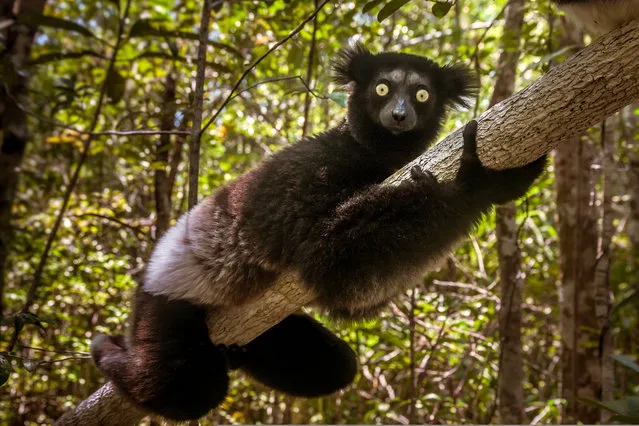
The secretive indri (Indri indri) of Madagascar, the largest living lemur. It is also critically endangered and highly evolutionarily distinct with no close relatives, which makes its branch one of most precarious on the mammal evolutionary tree. In the likely event that the indri goes extinct, we will lose 19m years of unique evolutionary history from the mammal tree of life. (Photo by Pierre-Yves Babelon/Aarhus University)

The secretive indri (Indri indri) of Madagascar, the largest living lemur. It is also critically endangered and highly evolutionarily distinct with no close relatives, which makes its branch one of most precarious on the mammal evolutionary tree. In the likely event that the indri goes extinct, we will lose 19m years of unique evolutionary history from the mammal tree of life. (Photo by Pierre-Yves Babelon/Aarhus University)
Details
18 Nov 2018 00:02:00
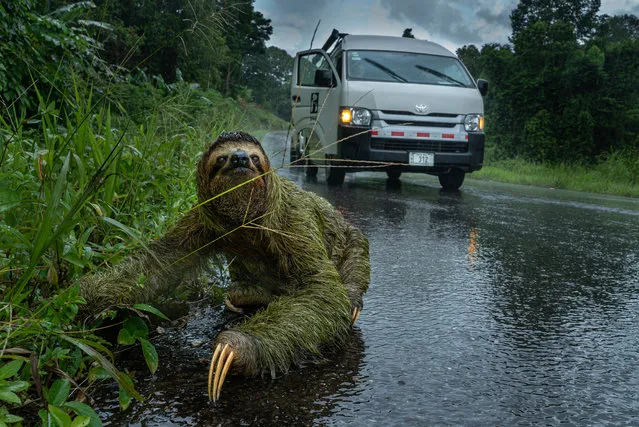
People and Nature category winner: Why did the sloth cross the road? by Andrew Whitworth (Osa Conservation and University of Glasgow), taken in Osa Peninsula, Costa Rica. “I was driving out from the Osa Peninsula, located on the southern Pacific coast of Costa Rica on a dark, stormy day. This female three-toed sloth (Bradypus variegatus) had luckily just about made it across the road, and the drivers of the Toyota on this occasion had spotted her in good time”. (Photo by Andrew Whitworth/2019 British Ecological Society Photography Competition)

People and Nature category winner: Why did the sloth cross the road? by Andrew Whitworth (Osa Conservation and University of Glasgow), taken in Osa Peninsula, Costa Rica. “I was driving out from the Osa Peninsula, located on the southern Pacific coast of Costa Rica on a dark, stormy day. This female three-toed sloth (Bradypus variegatus) had luckily just about made it across the road, and the drivers of the Toyota on this occasion had spotted her in good time”. (Photo by Andrew Whitworth/2019 British Ecological Society Photography Competition)
Details
30 Nov 2019 00:05:00
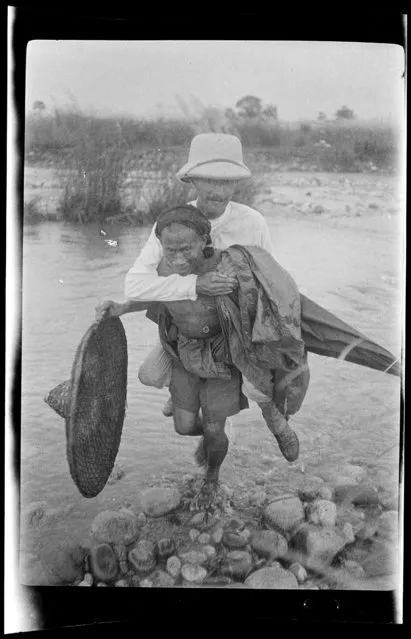
Hillcoat Riding Fu Tu. China, An Xian, 1917-1919. (Photo by Sidney David Gamble)

“Sidney D. Gamble (July 12, 1890 – 1968) was born in Cincinnati, Ohio, to David Berry and Mary Huggins Gamble; grandson of James Gamble, who, with William Procter, founded Procter & Gamble in 1837. in 1912 he graduated magna cum laude from Princeton University with a Bachelor of Literature degree and was elected to Phi Beta Kappa. He visited China for four extended periods, 1908, 1917–1919, 1924–27, and 1931–1932, doing Christian social work for the Y.M.C.A and conducting social surveys. He is now best known for his remarkable and extensive photographs of Peking and North China.” – Wikipedia. (Photo by Sidney David Gamble via Duke University Libraries)

Photo: Hillcoat Riding Fu Tu. China, An Xian, 1917-1919. P.S. All photos are available in high resolution.
Details
16 Aug 2012 11:24:00
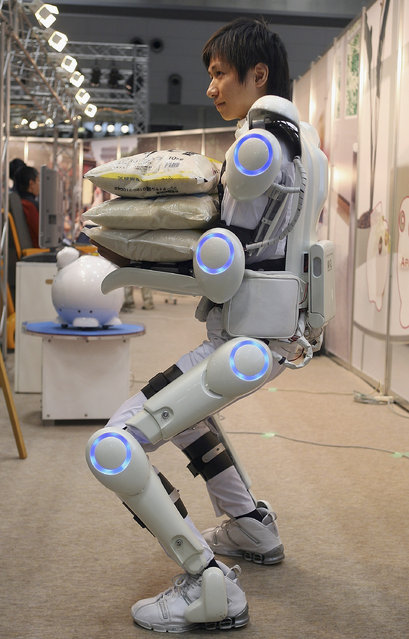
Robot suit "Hybrid Assistive Limb (HAL)" worn by a man developed by University of Tsukuba is seen lifting a 30kg weight during 2005 International Robot Exhibition on November 30, 2005 in Tokyo, Japan. By wearing the power suit, it makes it easier to move and lift heavy things. The Exhibition is on until December 3. (Photo by Koichi Kamoshida)

“A robot suit that can help the elderly or disabled get around was given its global safety certificate in Japan on February 27, 2013, paving the way for its worldwide roll-out”. Photo: Robot suit “Hybrid Assistive Limb (HAL)” worn by a man developed by University of Tsukuba is seen lifting a 30kg weight during 2005 International Robot Exhibition on November 30, 2005 in Tokyo, Japan. By wearing the power suit, it makes it easier to move and lift heavy things. (Photo by Koichi Kamoshida)
Details
11 Mar 2013 11:15:00
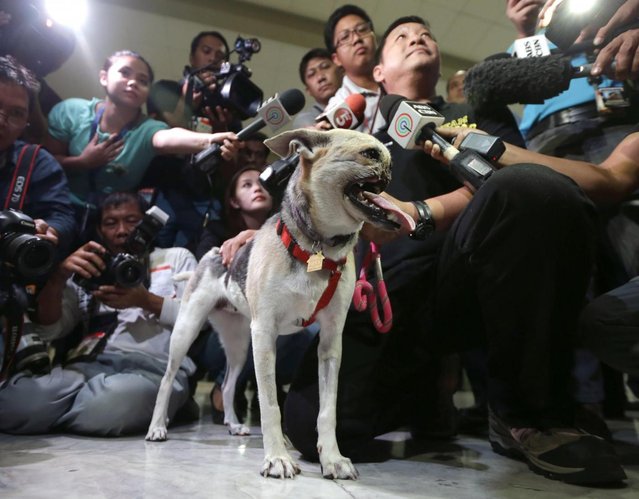
Dr. Anton Lim is interviewed by the media as he holds Kabang, a two-year-old injured mixed breed, upon arrival at the Ninoy Aquino International Airport in Pasay city, south of Manila, Philippines, early Saturday June 8, 2013 from San Francisco, Calif. Kabang lost her snout and upper jaw saving two girls' lives in the Philippines was headed back to its owner following treatment at the University of California, Davis veterinary hospital. (Photo by Bullit Marquez/AP Photo)

Dr. Anton Lim is interviewed by the media as he holds Kabang, a two-year-old injured mixed breed, upon arrival at the Ninoy Aquino International Airport in Pasay city, south of Manila, Philippines, early Saturday June 8, 2013 from San Francisco, Calif. Kabang lost her snout and upper jaw saving two girls' lives in the Philippines was headed back to its owner following treatment at the University of California, Davis veterinary hospital. (Photo by Bullit Marquez/AP Photo)
Details
09 Jun 2013 07:37:00
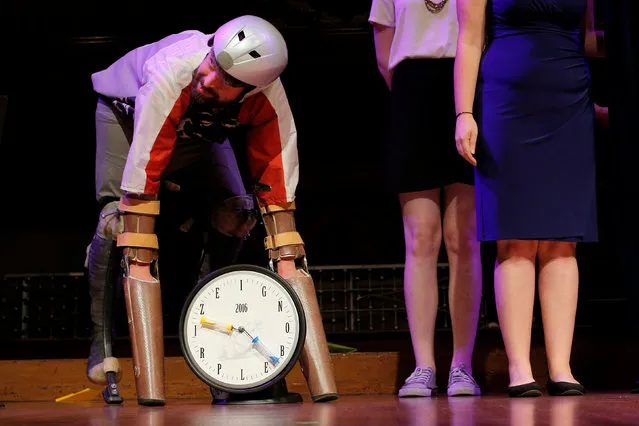
Thomas Thwaites of the United Kingdom accepts the 2016 Ig Nobel Prize in Biology for “creating prosthetic extensions of his limbs that allowed him to move in the manner of, and spend time roaming the hills in the company of, goats” during the 26th First Annual Ig Nobel Prize ceremony at Harvard University in Cambridge, Massachusetts, U.S. September 22, 2016. (Photo by Brian Snyder/Reuters)

Thomas Thwaites of the United Kingdom accepts the 2016 Ig Nobel Prize in Biology for “creating prosthetic extensions of his limbs that allowed him to move in the manner of, and spend time roaming the hills in the company of, goats” during the 26th First Annual Ig Nobel Prize ceremony at Harvard University in Cambridge, Massachusetts, U.S. September 22, 2016. (Photo by Brian Snyder/Reuters)
Details
24 Sep 2016 10:46:00