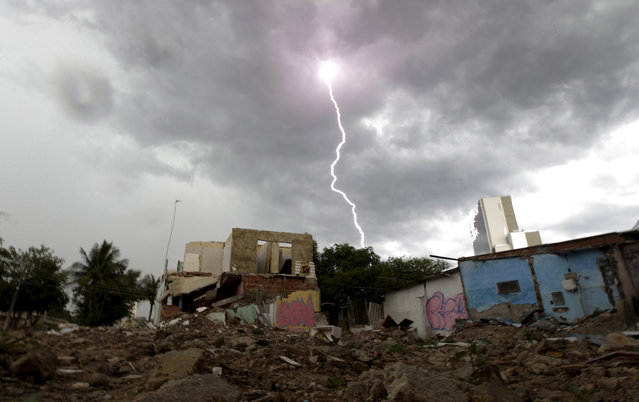
Partially demolished houses stand in the Vila Autodromo slum with the Rio 2016 Olympic Park in the background in Rio de Janeiro, Brazil, February 25, 2016. (Photo by Ricardo Moraes/Reuters)
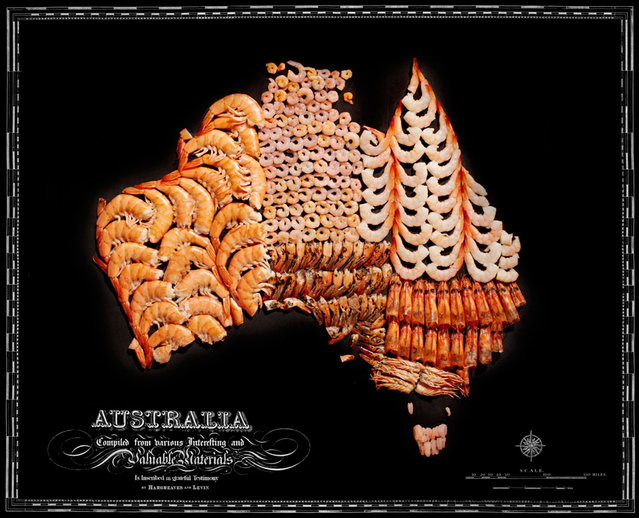
Photographer Henry Hargreaves and artist Caitlin Levin have been working together for about decade. Their shared love for “food, photography, travel, and art” has found an outlet in a series of maps that they have illustrated with food.
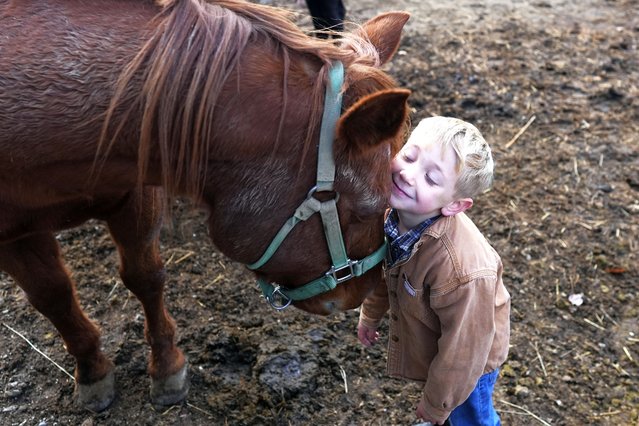
Isaac Young rests his cheek on the family horse Rusty's forehead during farm chores before homeschooling in Sunbury, Ohio, November 12, 2024. (Photo by Carolyn Kaster/AP Photo)
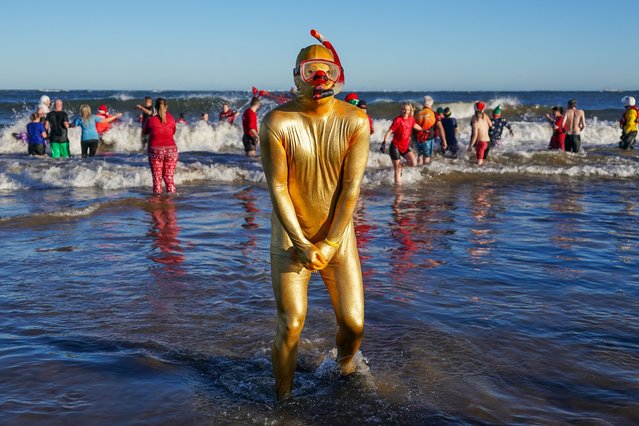
Bathers brave the cold waters of the North Sea as they take part in the annual Boxing Day dip at Redcar Beach on December 26, 2023 in Redcar, England. The event attracts hundreds of people each year, with many wearing fancy dress, who take to the water to help raise money for a number of charities. (Photo by Ian Forsyth/Getty Images)
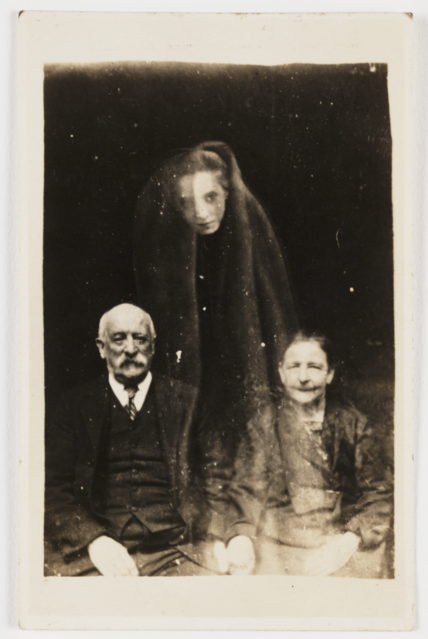
“William Hope (1863 – 8 March 1933) was a pioneer of so-called “spirit photography” (spirit photography is a type of photography whose primary attempt is to capture images of ghosts and other spiritual entities, especially in ghost hunting). Based in Crewe, England, he was a member of the well known spiritualists group, the Crewe Circle”. – Wikipedia
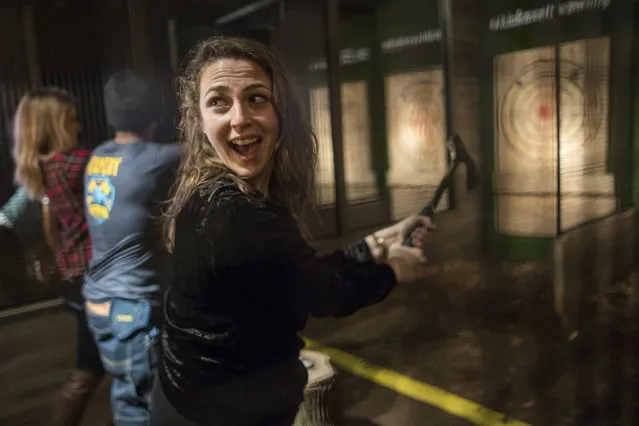
In this Saturday, March 3, 2018, photo, a contestant gets ready to throw a hatchet at a wooden bull's-eye at the Kick Axe Throwing venue in the Brooklyn borough of New York. Kick Axe Throwing is the first bar in New York City to pick up on a nationwide trend of ax throwing, a growing sport that some enthusiasts hope will take off the way bowling did in the last century. (Photo by Mary Altaffer/AP Photo)
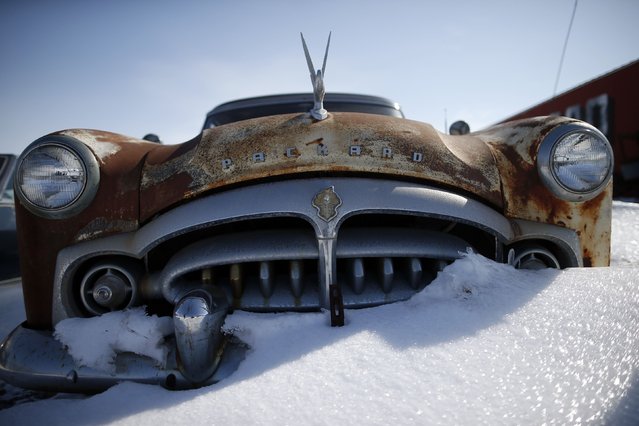
Classic antique cars are seen at an auto dealer in West Branch, Iowa, March 6, 2015. Iowa, the American heartland. Endless farm fields and quiet towns. 56,273 square miles that are soon to become the focus of the nation as the long process of electing the next U.S. president begins. (Photo by Jim Young/Reuters)
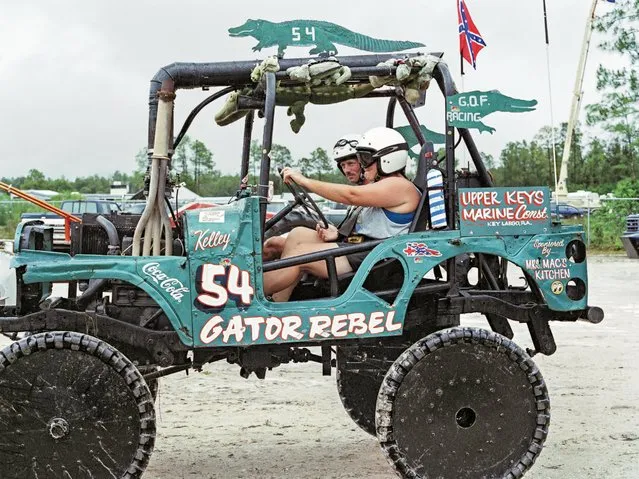
The Mile O' Mud is a 7/8-mile oval track with a 1/8-mile diagonal lane slashed through the center. The racing lanes are approximately 60 feet wide. On average, the muddy water is four to six feet deep, with three strategically placed holes. The largest hole, located in front of the grandstand, is the treacherous “Sippy Hole”, named for the legendary driver “Mississippi” Milton Morris, Swamp Buggy King 1955, who repeatedly got stuck in it. (Photo by Malcolm Lightner)