Loading...
Done
Myouchin Munehisa, 44, as he finishes Hibashi iron bells made of iron on a production line at Myochin Honpo shop on April 25, 2014 in Himeji, Japan. (Photo by Buddhika Weerasinghe/Getty Images)

Myouchin Munehisa, 44, as he finishes Hibashi iron bells made of iron on a production line at Myochin Honpo shop on April 25, 2014 in Himeji, Japan. Myochin family's iron business, started in the Heian period (794-1185) of Japan as an armor and helmet maker, shifted as the needs of people changed in the course of history. (Photo by Buddhika Weerasinghe/Getty Images)
Details
27 Apr 2014 06:29:00
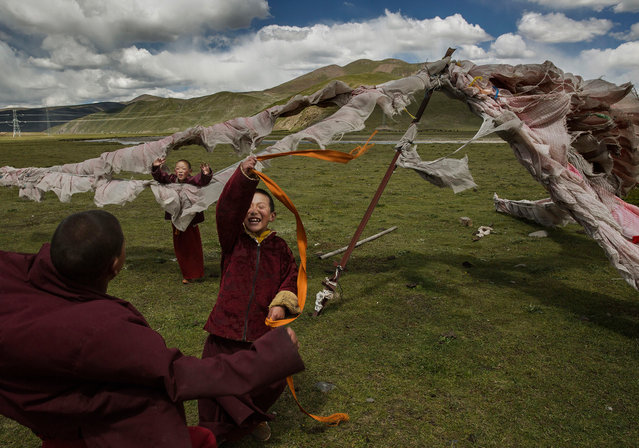
Young Buddhist novice monks play at a Tibetan nomadic summer grazing area on July 24, 2015 on the Tibetan Plateau in Yushu County, Qinghai, China. (Photo by Kevin Frayer/Getty Images)

Young Buddhist novice monks play at a Tibetan nomadic summer grazing area on July 24, 2015 on the Tibetan Plateau in Yushu County, Qinghai, China. Tibetan nomads face many challenges to their traditional way of life including political pressures, forced resettlement by China's government, climate change and rapid modernization. The Tibetan Plateau, often called “The Roof of the World”, is the world's highest and largest plateau. (Photo by Kevin Frayer/Getty Images)
Details
12 Aug 2015 13:16:00
Supporters of Fernando Haddad react to a supporter (in yellow) of Jair Bolsonaro during a runoff election in Rio de Janeiro, Brazil on October 28, 2018. (Photo by Sergio Moraes/Reuters)

Supporters of Fernando Haddad react to a supporter (in yellow) of Jair Bolsonaro during a runoff election in Rio de Janeiro, Brazil on October 28, 2018. Bolsonaro, a brash far-right congressman who has waxed nostalgic for Brazil's old military dictatorship, won the presidency of Latin America's largest nation Sunday as voters looked past warnings that the former army captain would erode democracy and embraced a chance for radical change after years of turmoil. (Photo by Sergio Moraes/Reuters)
Details
30 Oct 2018 00:01:00
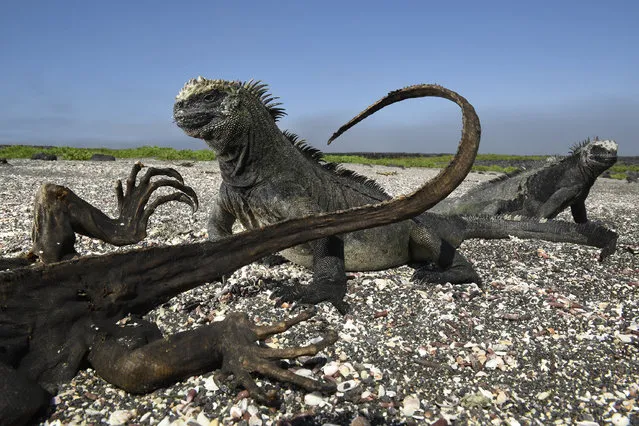
Galapagos – Rocking the Cradle: Four major ocean currents converge along the Galapagos archipelago, creating the conditions for an extraordinary diversity of animal life, April 25, 2016. The islands are home to at least 7,000 flora and fauna species, of which 97 percent of the reptiles, 80 percent of the land birds, 50 percent of the insects and 30 percent of the plants are endemic. The local ecosystem is highly sensitive to the changes in temperature, rainfall and ocean currents that characterize the climatic events known as El Niño and La Niña. These changes cause marked fluctuations in weather and food availability. Many scientists expect the frequency of El Niño and La Niña to increase as a result of climate change, making the Galapagos a possible early-warning location for its effects. (Photo by Thomas P. Peschak for National Geographic/World Press Photo)

Galapagos – Rocking the Cradle: Four major ocean currents converge along the Galapagos archipelago, creating the conditions for an extraordinary diversity of animal life, April 25, 2016. The islands are home to at least 7,000 flora and fauna species, of which 97 percent of the reptiles, 80 percent of the land birds, 50 percent of the insects and 30 percent of the plants are endemic. (Photo by Thomas P. Peschak for National Geographic/World Press Photo)
Details
16 Apr 2018 00:01:00
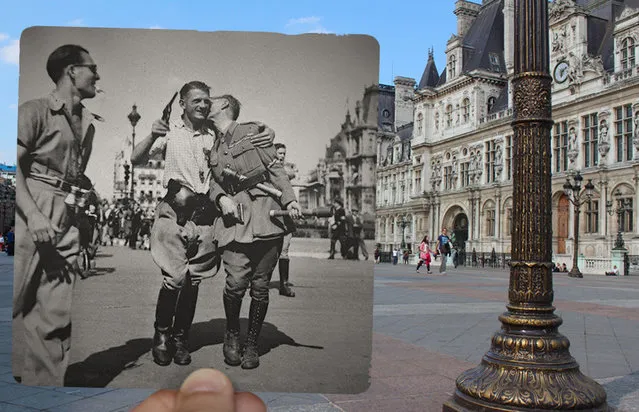
Soldiers outside the Hotel De Ville in the 1940s. (Photo by Julien Knez/Caters News)

It is already one of the world’s most iconic cities, but this incredible collection shows how much Paris has changed over the course of the past century. The collection, by French photographer Julien Knez, shows Paris in the 1940s against a backdrop of how the same places look today. Knez says he put the striking collection together to celebrate the 71st anniversary of the city’s liberation from Nazi control in August 1944. Here: Soldiers outside the Hotel De Ville in the 1940s. (Photo by Julien Knez/Caters News)
Details
07 May 2015 13:16:00
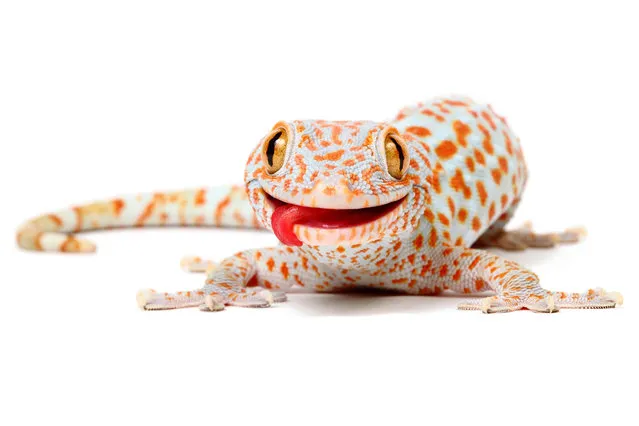
Gecko. (Photo by Mickael Leger/Caters News)

Most probably wouldnt think of snakes, spiders and lizards as beautiful animals – but these photographs could change some minds. The images show the reptiles seemingly playful sides, from a gleeful looking Budgetts frog, a cheeky leopard sticking out its tongue at the camera and a stack of four colourful iguanas. Contrasted against a white background and shot with a Canon EOS 5D Mark 2 and macro lens, photographer Mickael Leger really made sure they could be seen in all their glory. Here: Gecko. (Photo by Mickael Leger/Caters News)
Details
22 Apr 2015 09:59:00
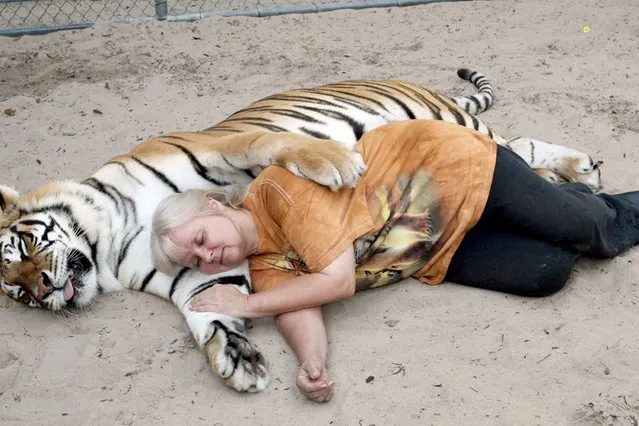
The pair are best of friends. (Photo by Ruaridh Connellan/Barcroft Media)

With six-inch fangs and weighing in at 600lb, Saber and Janda are no ­ordinary house cats. Yet these huge Bengal tigers live in Janice Haley’s suburban garden and are treated like ordinary pets. They are fed by hand, get strokes and cuddles, and white male Saber goes to sleep sucking on her finger. Janice’s life changed 20 years ago when she spotted an advert for a tiger training course in her local paper – and two years later arrived home with her first cub. Then in 2002 she bought Janda, who is now 12. Photo: The pair are best of friends. (Photo by Ruaridh Connellan/Barcroft Media)
Details
27 May 2014 10:35:00
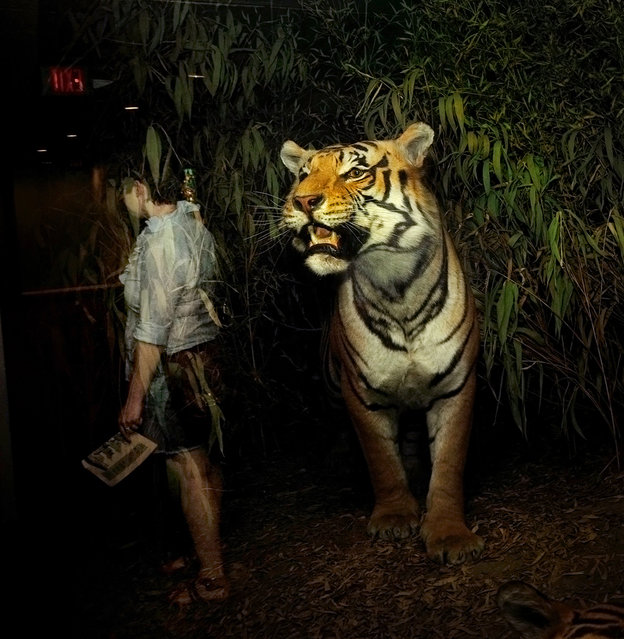
“Natural History”: Tiger. (Photo by Traer Scott)

“Natural History” is a series of completely candid single exposure images that merge the living and the dead to create allegorical narratives of our troubled co-existence with nature. Ghost-like reflections of modern visitors viewing wildlife dioramas are juxtaposed against the antique taxidermied subjects housed behind thick glass, their faces molded into permanent expressions of fear, aggression or fleeting passivity. After decades of over-hunting, climate change, poaching and destruction of habitat, many of these long dead diorama specimens now represent endangered or completely extinct species”. – Traer Scott. (Photo by Traer Scott)
Details
27 Oct 2014 11:39:00