Loading...
Done
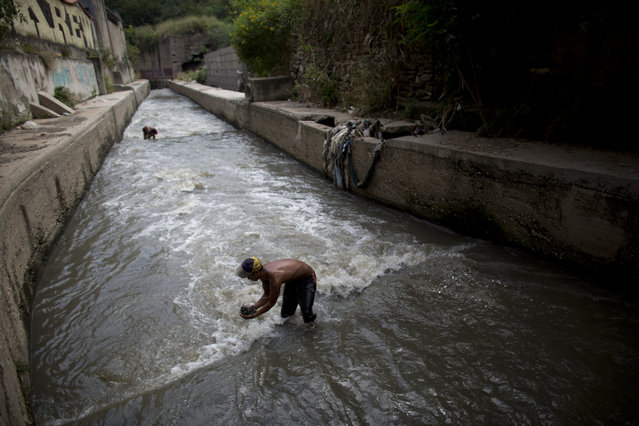
In this November 30, 2017 photo, Douglas scoops up mud from the bottom of the polluted Guaire River, in search of gold and anything valuable he can sell, in Caracas, Venezuela. Some stretches of the river smell of sewer while others emit a toxic odor of fuel, a stench that stays in ones nose for hours after leaving the water. (Photo by Ariana Cubillos/AP Photo)

In this November 30, 2017 photo, Douglas scoops up mud from the bottom of the polluted Guaire River, in search of gold and anything valuable he can sell, in Caracas, Venezuela. Some stretches of the river smell of sewer while others emit a toxic odor of fuel, a stench that stays in ones nose for hours after leaving the water. (Photo by Ariana Cubillos/AP Photo)
Details
11 Jan 2018 07:35:00
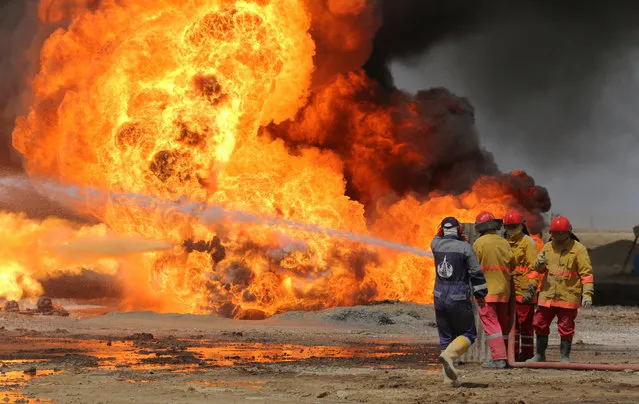
Iraqi firefighters try to stop the fire of burning oil wells in Kirkuk, northern Iraq, 02 June 2016. Two Khabbaz oil field wells in Kirkuk Province, northern Iraq, exploded by suspected insurgents, a security official said. (Photo by EPA/Stringer)

Iraqi firefighters try to stop the fire of burning oil wells in Kirkuk, northern Iraq, 02 June 2016. Two Khabbaz oil field wells in Kirkuk Province, northern Iraq, exploded by suspected insurgents, a security official said. (Photo by EPA/Stringer)
Details
24 May 2018 00:01:00
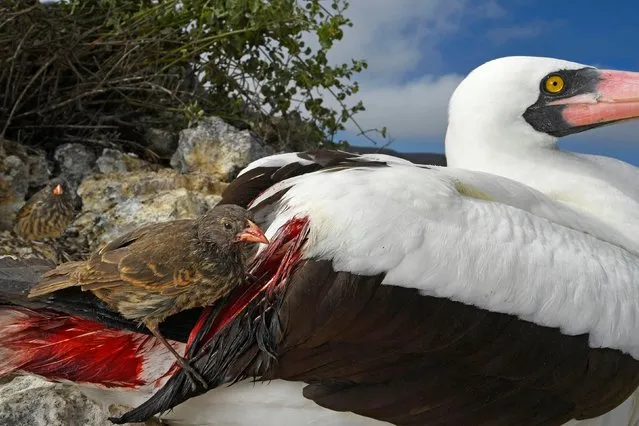
Bloodthirsty by Thomas P Peschak, Germany/South Africa — winner, Behaviour: birds. When rations run short on Wolf Island, in the remote northern Galápagos, the sharp-beaked ground finches become vampires. Their sitting targets are Nazca boobies and other large birds. The finches rely on a scant diet of seeds and insects, which regularly dries up, so they drink blood to survive. ‘I’ve seen more than half a dozen finches drinking from a single Nazca booby,’ says Tom. Rather than leave their nests the boobies tolerate the vampires, and the blood loss doesn’t seem to cause permanent harm. (Photo by Thomas P Peschak/2018 Wildlife Photographer of the Year)

Bloodthirsty by Thomas P. Peschak, Germany/South Africa — winner, Behaviour: birds. When rations run short on Wolf Island, in the remote northern Galápagos, the sharp-beaked ground finches become vampires. Their sitting targets are Nazca boobies and other large birds. The finches rely on a scant diet of seeds and insects, which regularly dries up, so they drink blood to survive. ‘I’ve seen more than half a dozen finches drinking from a single Nazca booby,’ says Tom. Rather than leave their nests the boobies tolerate the vampires, and the blood loss doesn’t seem to cause permanent harm. (Photo by Thomas P. Peschak/2018 Wildlife Photographer of the Year)
Details
19 Oct 2018 00:05:00
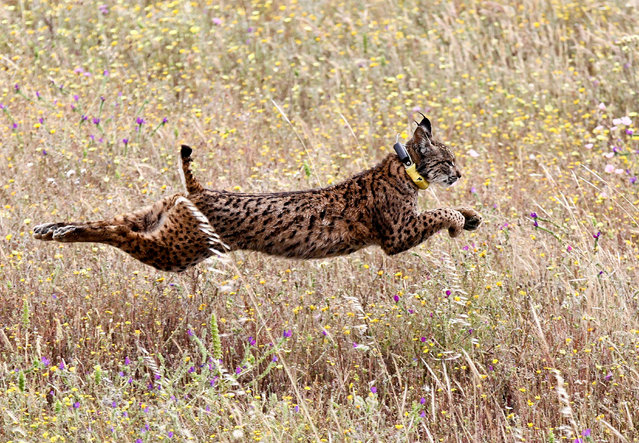
Iberian lynx Mistral jumps in a field after being released by Portugal's Minister of Environment Joao Matos Fernandes (unseen) and others in the Mount Milhouro (Herdade da Cela) region in Mertola, Portugal, 13 May 2016. Mistralis the 18th lynx bred in captivity released since late 2014. (Photo by Nuno Veiga/EPA)

Iberian lynx Mistral jumps in a field after being released by Portugal's Minister of Environment Joao Matos Fernandes (unseen) and others in the Mount Milhouro (Herdade da Cela) region in Mertola, Portugal, 13 May 2016. Mistralis the 18th lynx bred in captivity released since late 2014. (Photo by Nuno Veiga/EPA)
Details
15 May 2016 11:55:00
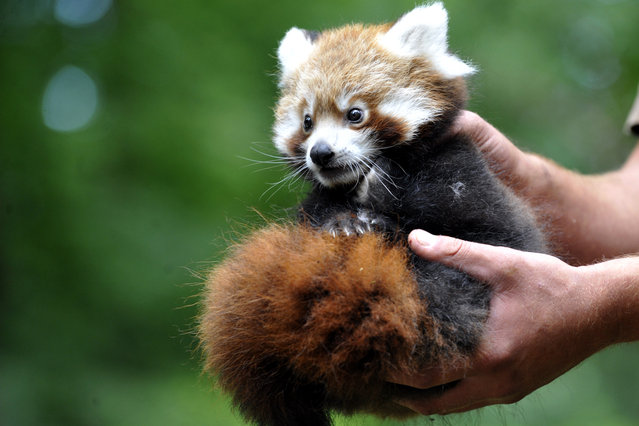
The first red panda cub was born on May 30 in zoo Zlin. Zoologist Roman Vrzal holds a male of red panda. The Red panda is pictured in Zlin, Czech Republic, August 20, 2014. (Photo by Dalibor Gluck/CTK)

The first red panda cub was born on May 30 in zoo Zlin. Zoologist Roman Vrzal holds a male of red panda. The Red panda is pictured in Zlin, Czech Republic, August 20, 2014. (Photo by Dalibor Gluck/CTK)
Details
25 Aug 2014 11:08:00
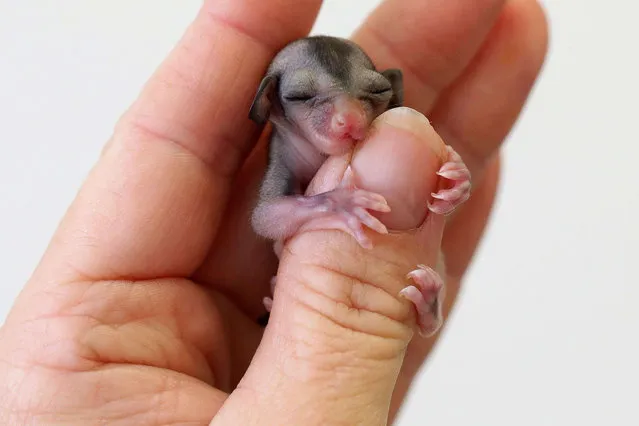
These tiny little sugar gliders are lucky to be alive after surviving a cat attack that killed their mother. (Photo by Adam Head/Newspix/REX Features)

These tiny little sugar gliders are lucky to be alive after surviving a cat attack that killed their mother. Somehow the youngsters, who were just a few days old at the time, and the size of jellybeans, survived and were rushed to the Currumbin Wildlife Hospital in Queensland, Australia. (Photo by Adam Head/Newspix/REX Features)
Details
07 Dec 2014 11:11:00
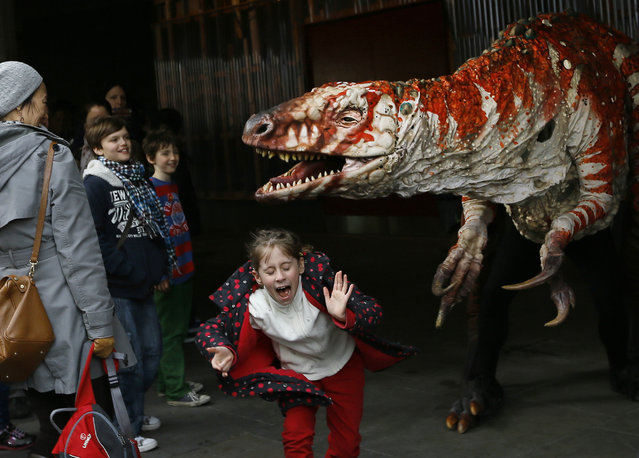
Children react as a carnivorous theropod known as the Australovenator dinosaur walks through crowds along the Southbank, in London, Monday, February 18, 2013. The dinosaur is one of many that can be visited at the Erth's Dinosaur Petting Zoo, visiting from Australia, the creatures can be touched and fed at the Southbank Centre. (Photo by Kirsty Wigglesworth/AP Photo)

Children react as a carnivorous theropod known as the Australovenator dinosaur walks through crowds along the Southbank, in London, Monday, February 18, 2013. The dinosaur is one of many that can be visited at the Erth's Dinosaur Petting Zoo, visiting from Australia, the creatures can be touched and fed at the Southbank Centre. (Photo by Kirsty Wigglesworth/AP Photo)
Details
23 Feb 2013 12:30:00
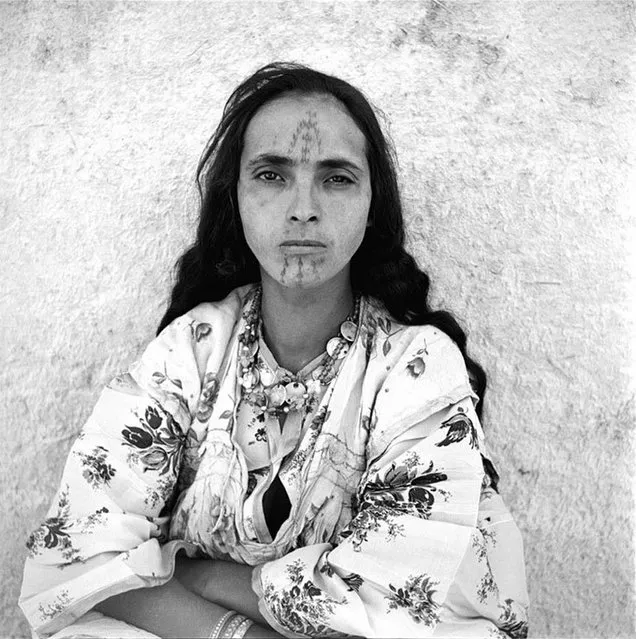
A 1960 photograph of an Algerian woman in a French regroupment village. (Photo by Marc Garanger)

For France, the trauma of the Algerian War (1954-1962) was not unlike the experience of the Vietnam War for the United States. But, unlike the conflict in Vietnam, few photographic documents exist from that period in Algeria: it is as if the French responded with collective amnesia. Marc Garanger’s Algerian Women is one of the few photographic essays dedicated to that painful period... Photo: A 1960 photograph of an Algerian woman in a French regroupment village. (Photo by Marc Garanger)
Details
29 Apr 2013 10:15:00