Loading...
Done
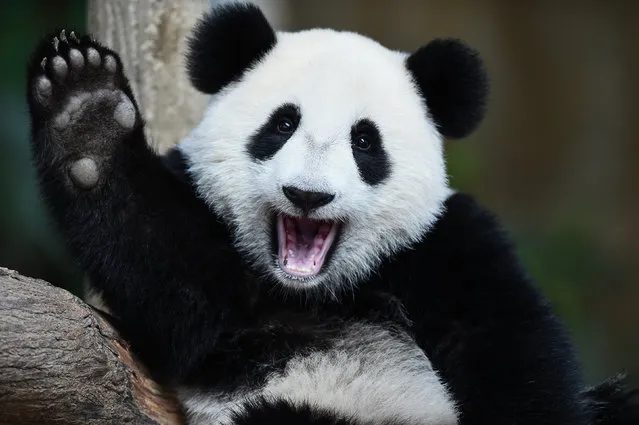
One-year-old female giant panda cub Nuan Nuan reacts inside her enclosure during joint birthday celebrations for the panda and its ten-year-old mother Liang Liang at the National Zoo in Kuala Lumpur on August 23, 2016. Giant pandas Liang Liang, aged 10, and her Malaysian-born cub Nuan Nuan, 1, were born on August 23, 2006 and August 18, 2015 respectivetly. (Photo by Mohd Rasfan/AFP Photo)

One-year-old female giant panda cub Nuan Nuan reacts inside her enclosure during joint birthday celebrations for the panda and its ten-year-old mother Liang Liang at the National Zoo in Kuala Lumpur on August 23, 2016. Giant pandas Liang Liang, aged 10, and her Malaysian-born cub Nuan Nuan, 1, were born on August 23, 2006 and August 18, 2015 respectivetly. (Photo by Mohd Rasfan/AFP Photo)
Details
29 Aug 2016 07:12:00
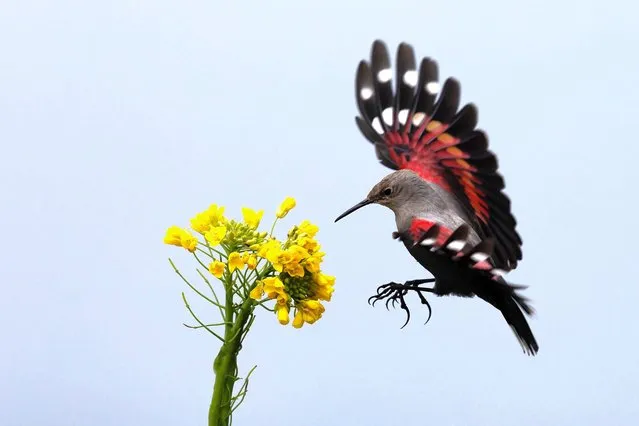
A Wallcreeper (aka Tichodroma muraria) flies to a flower on January 28, 2024 in Leshan, Sichuan Province of China. (Photo by Zhou Zhiyong/VCG via Getty Images)

A Wallcreeper (aka Tichodroma muraria) flies to a flower on January 28, 2024 in Leshan, Sichuan Province of China. (Photo by Zhou Zhiyong/VCG via Getty Images)
Details
11 Feb 2024 08:02:00
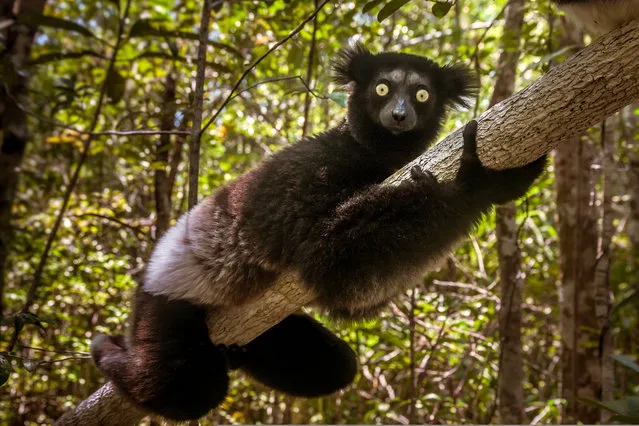
The secretive indri (Indri indri) of Madagascar, the largest living lemur. It is also critically endangered and highly evolutionarily distinct with no close relatives, which makes its branch one of most precarious on the mammal evolutionary tree. In the likely event that the indri goes extinct, we will lose 19m years of unique evolutionary history from the mammal tree of life. (Photo by Pierre-Yves Babelon/Aarhus University)

The secretive indri (Indri indri) of Madagascar, the largest living lemur. It is also critically endangered and highly evolutionarily distinct with no close relatives, which makes its branch one of most precarious on the mammal evolutionary tree. In the likely event that the indri goes extinct, we will lose 19m years of unique evolutionary history from the mammal tree of life. (Photo by Pierre-Yves Babelon/Aarhus University)
Details
18 Nov 2018 00:02:00
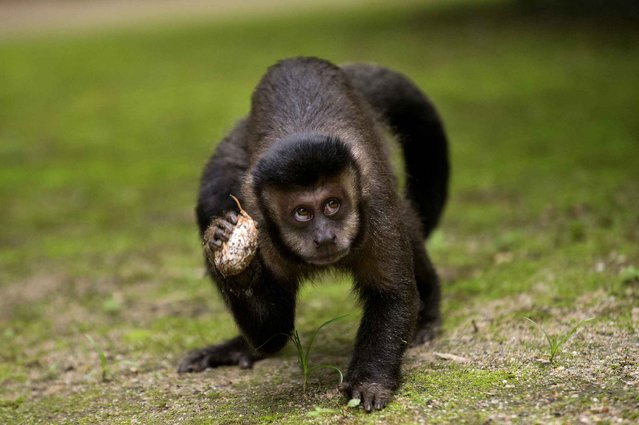
A brown capuchin monkey holds a fruit in the Botanic Garden of Rio de Janeiro, Brazil, on July 5, 2013. (Photo by Pablo Porciuncula/AFP Photo)

A brown capuchin monkey holds a fruit in the Botanic Garden of Rio de Janeiro, Brazil, on July 5, 2013. (Photo by Pablo Porciuncula/AFP Photo)
Details
06 Jul 2013 11:58:00
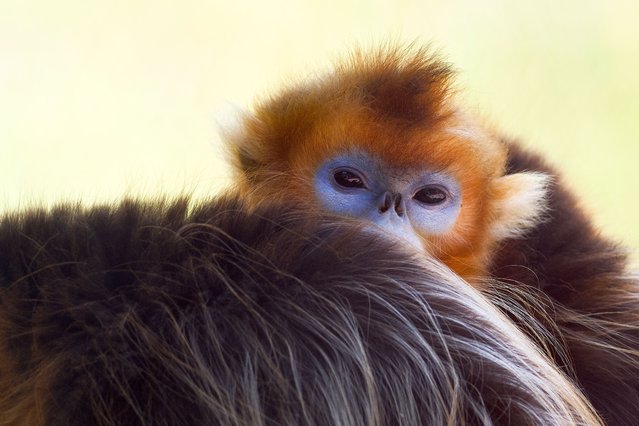
A golden snub-nosed monkeys (Rhinopitheque de Roxelane) looks through its enclosure after quarantine during its presentation at the Beauval Zoopark in Saint-Aignan Central France, on May 7, 2025. ZooParc de Beauval (Loir-et-Cher) welcomed three golden snub-nosed monkeys on April 3, 2025, an endangered species from China, as part of a conservation program, becoming the first zoo outside Asia to house these long-haired, red-furred primates with bluish faces. (Photo by Guillaume Souvant/AFP Photo)

A golden snub-nosed monkeys (Rhinopitheque de Roxelane) looks through its enclosure after quarantine during its presentation at the Beauval Zoopark in Saint-Aignan Central France, on May 7, 2025. ZooParc de Beauval (Loir-et-Cher) welcomed three golden snub-nosed monkeys on April 3, 2025, an endangered species from China, as part of a conservation program, becoming the first zoo outside Asia to house these long-haired, red-furred primates with bluish faces. (Photo by Guillaume Souvant/AFP Photo)
Details
18 May 2025 02:44:00
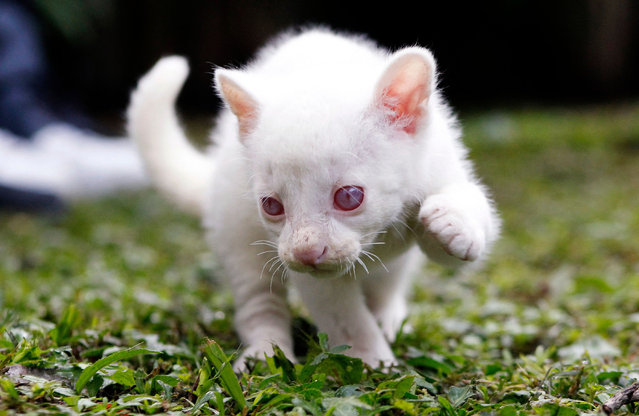
An alleged albino cub of Jaguarundi (Herpailurus yagouaroundi) plays at the Conservation Park in Medellin, Colombia, on December 23, 2021. According to environmentalists of the Conservation Park of Medellin, the little Jaguarundi will have to live in captivity as its albinism prevents it to hunt, camouflage, and protect itself from predators in the wild. (Photo by Fredy Builes/AFP Photo)

An alleged albino cub of Jaguarundi (Herpailurus yagouaroundi) plays at the Conservation Park in Medellin, Colombia, on December 23, 2021. According to environmentalists of the Conservation Park of Medellin, the little Jaguarundi will have to live in captivity as its albinism prevents it to hunt, camouflage, and protect itself from predators in the wild. (Photo by Fredy Builes/AFP Photo)
Details
02 Jan 2022 07:07:00
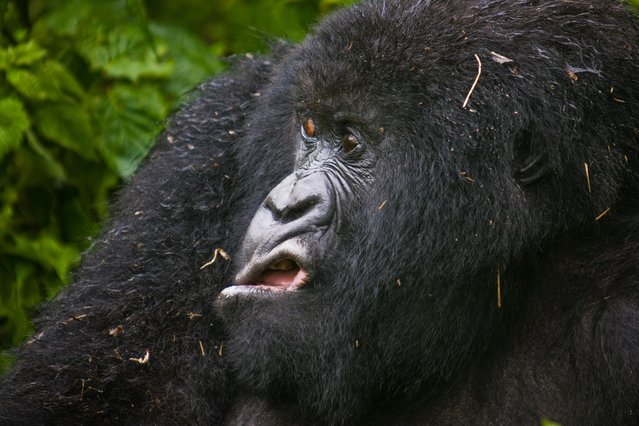
Mountains Gorilla is making grimaces, as he came out of the bush after the rain, in Virunga National Park, Rwanda. (Photo by Josef Friedhuber/Comedy Wildlife Photography Awards/Barcroft Media)

Prepare yourself for some rib-tickling laughter because the Comedy Wildlife Awards has announced its finalists. Founded by Tanzania-based photographers Paul Joynson-Hicks MBE and Tom Sullam, the aim of the awards is to put a spotlight on wildlife conservation efforts while simultaneously injecting some humour into the world of wildlife photography. Here: Mountains Gorilla is making grimaces, as he came out of the bush after the rain, in Virunga National Park, Rwanda. (Photo by Josef Friedhuber/Comedy Wildlife Photography Awards/Barcroft Media)
Details
07 Nov 2017 07:57:00
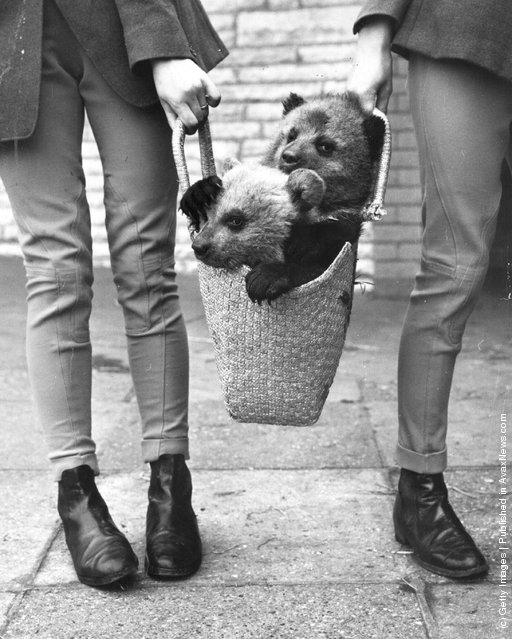
1970: Two brown bear cubs born at Whipsnade Zoo

Two brown bear cubs born at Whipsnade Zoo. (Photo by Evening Standard/Getty Images). 1970
Details
28 Nov 2011 12:00:00