Loading...
Done
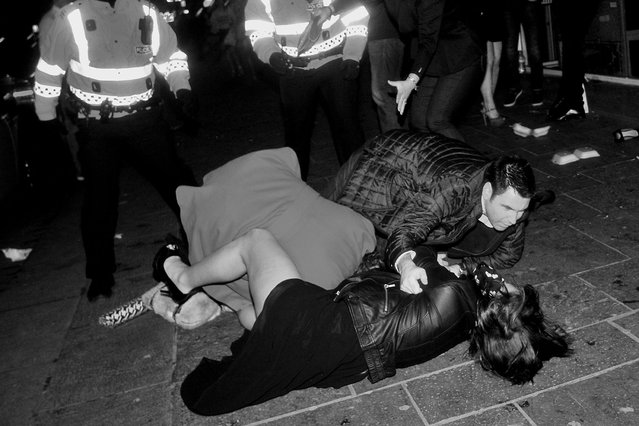
Police look on as a man tries to break up brawling women in Queen Street . (Photo by Brian Anderson)

Brian Anderson has been taking images of Glasgow for 20 years, spotlighting both the light and dark side of life. Brian, 40, said: “Glasgow is full of character. It’s a nice city, it’s a crazy city and I want to show all that”. Photo: Police look on as a man tries to break up brawling women in Queen Street. (Photo by Brian Anderson)
Details
27 Nov 2013 11:05:00
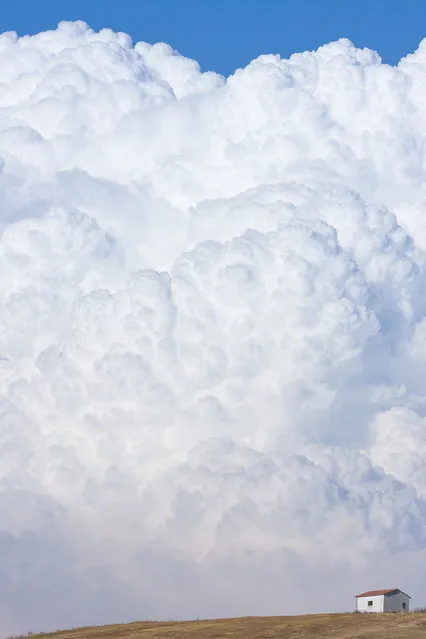
Behind A Little House By Manuel Cosentino

For his Behind a Little House Project Italian photographer Manuel Cosentino found an unsuspecting muse: a tiny nondescript house on an unexceptional hill. He returned to photograph the small building from the exact same location for nearly two years in order to capture the dramatic changes in weather and light that utterly changed the scenery just beyond the horizon
Details
31 Jul 2013 10:26:00
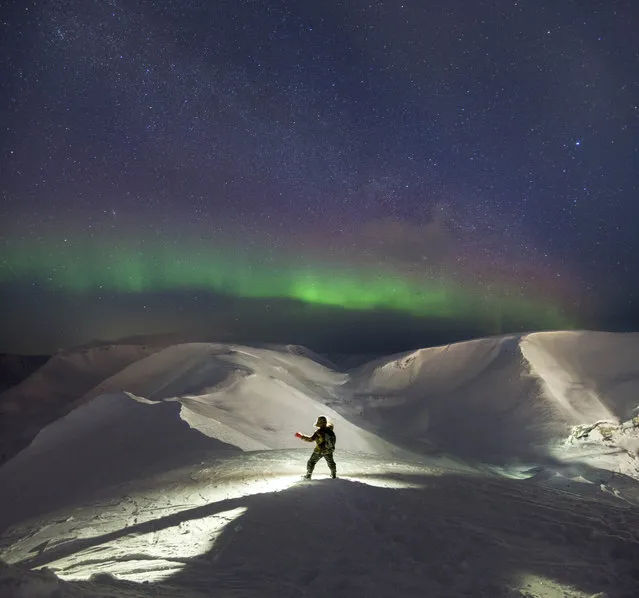
“I spend time trying to get the exposure right”, Vitaly Istomin explained. (Photo by Vitaly Istomin/Caters News Agency)

These Northern Lights “rainbows” have turned the sky greener than the Earth below. Vitaly Istomin, 26, spent several nights in freezing conditions under the stars in northern Russia’s Khibiny Mountains to capture the aurora’s “rainbows”. (Photo by Vitaly Istomin/Caters News Agency)
Details
22 Feb 2018 00:02:00
Senate pages wear eclipse glasses as they view the moon partially covering the sun during a total solar eclipse, in front of the U.S. Senate on Capitol Hill, Monday, April 8, 2024, in Washington. (Photo by Alex Brandon/AP Photo)

Senate pages wear eclipse glasses as they view the moon partially covering the sun during a total solar eclipse, in front of the U.S. Senate on Capitol Hill, Monday, April 8, 2024, in Washington. (Photo by Alex Brandon/AP Photo)
Details
19 Apr 2024 00:32:00
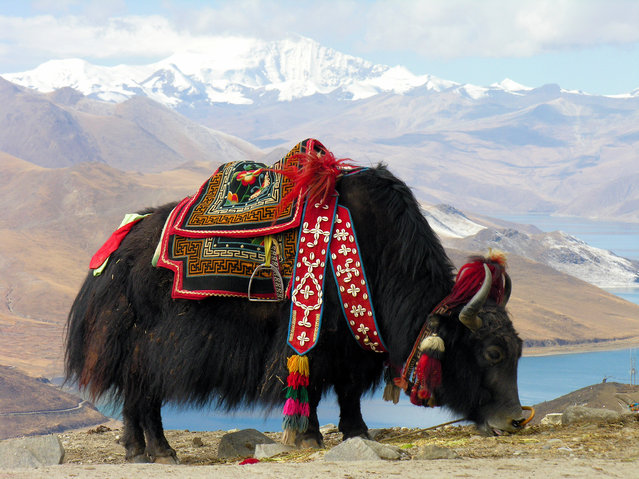
Yak near Yamdrok lake, Tibet. It is a long-haired bovinae found throughout the Himalayan region of south Central Asia, the Tibetan Plateau and as far north as Mongolia and Russia. The Tibetan economy is dominated by subsistence agriculture. Due to limited arable land, the primary occupation of the Tibetan Plateau is raising livestock, such as sheep, cattle, goats, camels, yaks, dzo, and horses. The Tibetan yak is an integral part of Tibetan life. (Photo by Dennis Jarvis)

Yak near Yamdrok lake, Tibet. It is a long-haired bovinae found throughout the Himalayan region of south Central Asia, the Tibetan Plateau and as far north as Mongolia and Russia. The Tibetan economy is dominated by subsistence agriculture. Due to limited arable land, the primary occupation of the Tibetan Plateau is raising livestock, such as sheep, cattle, goats, camels, yaks, dzo, and horses. The Tibetan yak is an integral part of Tibetan life. (Photo by Dennis Jarvis)
Details
10 Jun 2015 10:48:00
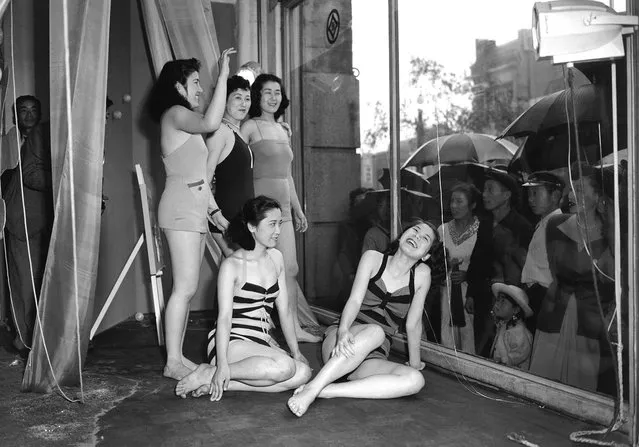
To draw the public's attention to a new line of bathing suits, a Tokyo department store used live models to show off the suits on June 5, 1950. The rain didn't bother the curious, and both the girls and the crowd seemed to like the idea of staring at each other through the glass. (Photo by AP Photo via The Atlantic)

To draw the public's attention to a new line of bathing suits, a Tokyo department store used live models to show off the suits on June 5, 1950. The rain didn't bother the curious, and both the girls and the crowd seemed to like the idea of staring at each other through the glass. (Photo by AP Photo via The Atlantic)
Details
14 Mar 2014 09:20:00
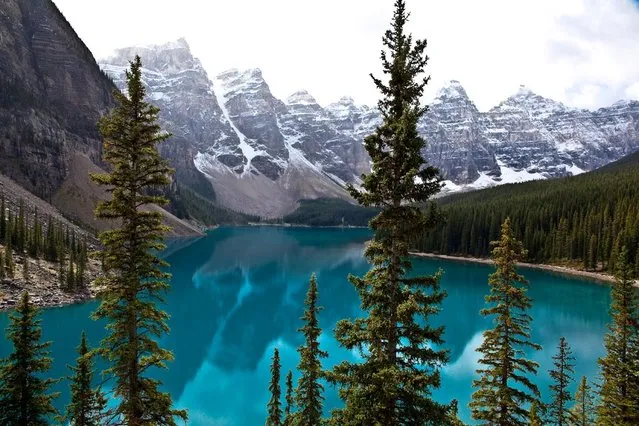
Moraine Lake Canada

Moraine Lake is a glacially-fed lake in Banff National Park, 14 kilometres (8.7 mi) outside the Village of Lake Louise, Alberta, Canada. It is situated in the Valley of the Ten Peaks, at an elevation of approximately 6,183 feet (1,885 m). The lake has a surface area of .5 square kilometres (0.19 sq mi). The lake, being glacially fed, does not reach its crest until mid to late June. When it is full, it reflects a distinct shade of blue. The colour is due to the refraction of light off the rock flour deposited in the lake on a continual basis.
Details
15 Oct 2013 11:56:00
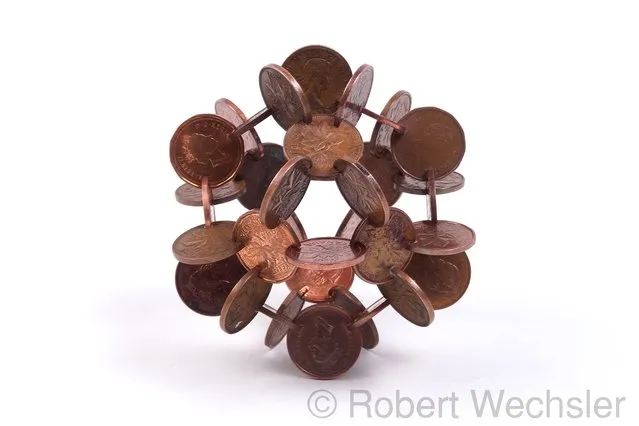
Mendicant By Robert Wechsler

American artist Robert Wechsler has realized a series of sculptural cubes made from thousands of pennies titled “The Mendicant“. Cubes achieved by notching and joining pennies in perfect orientation to one another. Joined at perpendicular angles, the coins create a lattice structure allowing tunnel like passages of light from certain angles. As one moves around them, the cubes seem to fluctuate from material to ethereal. The number of pennies increases exponentially with the size of the cube. Pictured here are three cubes differentiated with subtitles indicating the exact quantity used.
Details
21 Oct 2013 11:18:00