Loading...
Done
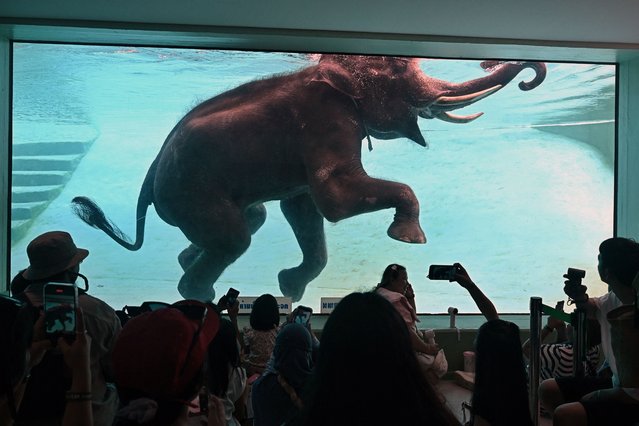
A captive elephant is made to swim for visitors at Khao Kheow Open Zoo in Chonburi province, Thailand on September 15, 2024. (Photo by Lillian Suwanrumpha/AFP Photo)

A captive elephant is made to swim for visitors at Khao Kheow Open Zoo in Chonburi province, Thailand on September 15, 2024. (Photo by Lillian Suwanrumpha/AFP Photo)
Details
22 Sep 2024 03:35:00
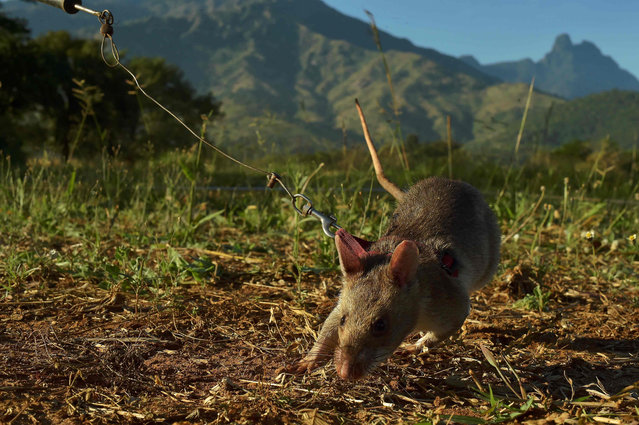
An African giant pouched rat sniffs for traces of landmine explosives at APOPO's training facility in Morogoro on June 17, 2016. (Photo by Carl De Souza/AFP Photo)

An African giant pouched rat sniffs for traces of landmine explosives at APOPO's training facility in Morogoro on June 17, 2016. APOPO trains the rats to detect both tuberculosis and landmines at its facility. Every year landmines kill or maim thousands of people worldwide. The trained rats sniff for explosive and so are able to detect the presence of landmines far faster than conventional methods which involve metal detection. (Photo by Carl De Souza/AFP Photo)
Details
19 Jun 2016 09:52:00
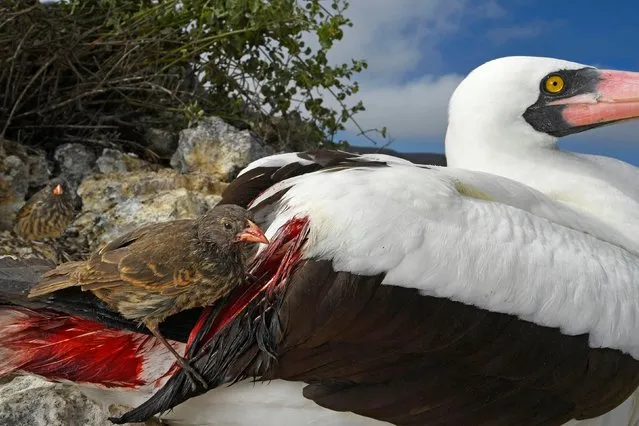
Bloodthirsty by Thomas P Peschak, Germany/South Africa — winner, Behaviour: birds. When rations run short on Wolf Island, in the remote northern Galápagos, the sharp-beaked ground finches become vampires. Their sitting targets are Nazca boobies and other large birds. The finches rely on a scant diet of seeds and insects, which regularly dries up, so they drink blood to survive. ‘I’ve seen more than half a dozen finches drinking from a single Nazca booby,’ says Tom. Rather than leave their nests the boobies tolerate the vampires, and the blood loss doesn’t seem to cause permanent harm. (Photo by Thomas P Peschak/2018 Wildlife Photographer of the Year)

Bloodthirsty by Thomas P. Peschak, Germany/South Africa — winner, Behaviour: birds. When rations run short on Wolf Island, in the remote northern Galápagos, the sharp-beaked ground finches become vampires. Their sitting targets are Nazca boobies and other large birds. The finches rely on a scant diet of seeds and insects, which regularly dries up, so they drink blood to survive. ‘I’ve seen more than half a dozen finches drinking from a single Nazca booby,’ says Tom. Rather than leave their nests the boobies tolerate the vampires, and the blood loss doesn’t seem to cause permanent harm. (Photo by Thomas P. Peschak/2018 Wildlife Photographer of the Year)
Details
19 Oct 2018 00:05:00
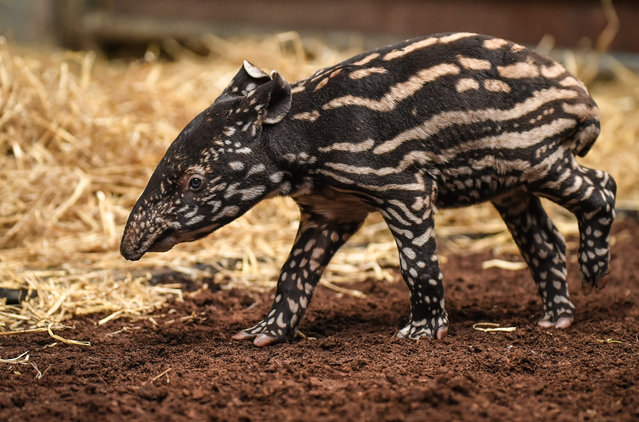
Solo, a rare baby tapir, makes his debut at Chester zoo, UK on July 18, 2016. The Malayan tapir is an endangered species and Solo is the first ever calf born at the zoo. (Photo by Chester Zoo/Rex Features/Shutterstock)

Solo, a rare baby tapir, makes his debut at Chester zoo, UK on July 18, 2016. The Malayan tapir is an endangered species and Solo is the first ever calf born at the zoo. (Photo by Chester Zoo/Rex Features/Shutterstock)
Details
24 Jul 2016 10:36:00
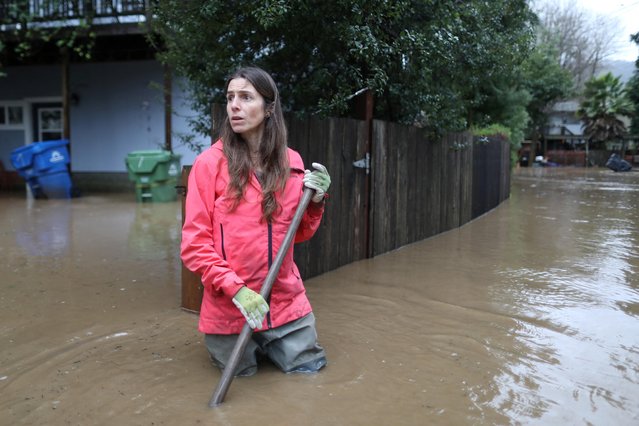
Melissa Foley clears debris and helps in her neighborhood as the San Lorenzo River rises with emergency evacuation orders in Felton Grove, California, U.S., January 14, 2023. (Photo by David Swanson/Reuters)

Melissa Foley clears debris and helps in her neighborhood as the San Lorenzo River rises with emergency evacuation orders in Felton Grove, California, U.S., January 14, 2023. (Photo by David Swanson/Reuters)
Details
23 Jan 2023 05:39:00
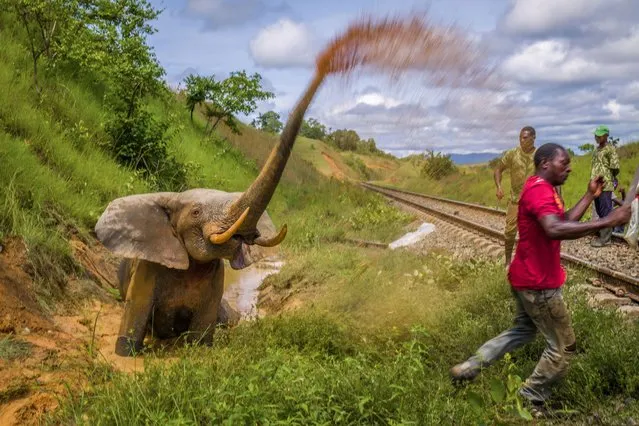
Grand prize winner: environmental photographer of the year 2023; also 1st place in the humanity v nature category; and winner of the 2023 public award. Lopé national park, Gabon, 2021. An angry elephant tries to defend itself after it was hit by a train that crosses paths the animals use within Lopé national park. Park officials decided the elephant was too severely injured to be saved. After it was killed, the park director distributed the meat to local people. As the forest loses its carrying capacity to sustain its megafauna, this kind of human-wildlife conflict is increasing. (Photo by Jasper Doest/Environmental Photography Award)

Grand prize winner: environmental photographer of the year 2023; also 1st place in the humanity v nature category; and winner of the 2023 public award. Lopé national park, Gabon, 2021. An angry elephant tries to defend itself after it was hit by a train that crosses paths the animals use within Lopé national park. Park officials decided the elephant was too severely injured to be saved. After it was killed, the park director distributed the meat to local people. As the forest loses its carrying capacity to sustain its megafauna, this kind of human-wildlife conflict is increasing. (Photo by Jasper Doest/Environmental Photography Award)
Details
09 Jul 2023 03:06:00
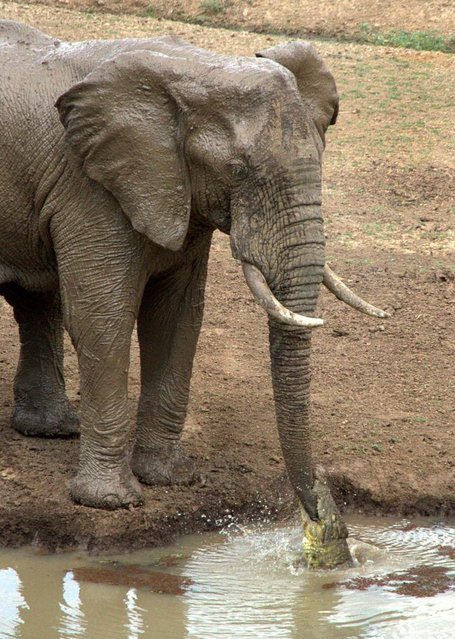
The remarkable scene was captured by amateur wildlife photographer Ian Salisbury, 62, at the South Luangwa National park in Zambia. The crocodile grabs hold of the elephant's trunk, but it soon becomes clear that he has bitten off a lot more than he can chew by grabbing the huge beast. Mr Salisbury said the elephant ‘fled rapidly into the bush’ after the attack. (Photo by Ian Salisbury/Caters News)

The remarkable scene was captured by amateur wildlife photographer Ian Salisbury, 62, at the South Luangwa National park in Zambia. The crocodile grabs hold of the elephant's trunk, but it soon becomes clear that he has bitten off a lot more than he can chew by grabbing the huge beast. Mr Salisbury said the elephant “fled rapidly into the bush” after the attack. (Photo by Ian Salisbury/Caters News)
Details
16 Nov 2013 12:55:00
A Tampa Bay Buccaneers cheerleader during the second quarter of an NFL preseason football game against the Cleveland Browns Friday, August 26, 2016, in Tampa, Fla. (Photo by Jason Behnken/AP Photo)

A Tampa Bay Buccaneers cheerleader during the second quarter of an NFL preseason football game against the Cleveland Browns Friday, August 26, 2016, in Tampa, Fla. (Photo by Jason Behnken/AP Photo)
Details
17 Oct 2016 10:15:00