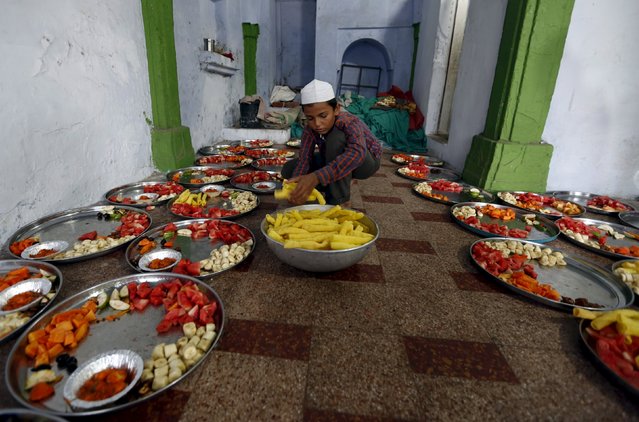
A Muslim boy prepares plates of food for an Iftar (breaking of fast) meal inside a mosque during the holy month of Ramadan in Ahmedabad, India, June 28, 2015. (Photo by Amit Dave/Reuters)
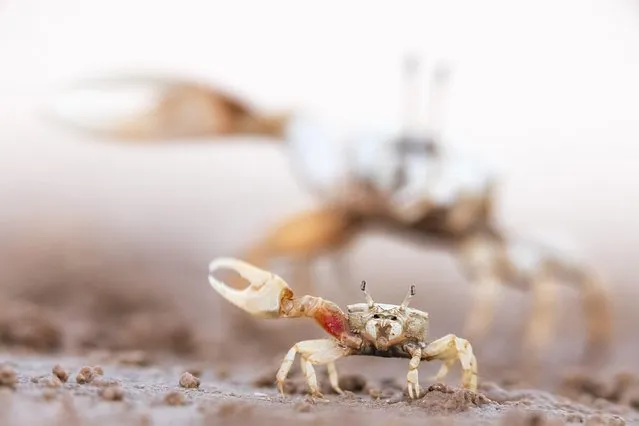
A young male fiddler crab is dwarfed by an older male of the same species, looming behind it at Morua estuary, in the Gulf of California, Mexico on January 4, 2022. Whereas female fiddler crabs have small claws of equal sizes, the males’ pincers can vary in size, with the small one used to pick up food and the larger to impress females. (Photo by Claudio Contreras/Solent News)
A Bengal tigress who gave birth to four cubs at the Guadalajara Zoo, Jalisco state, Mexico runs at the zoo on October 5, 2021. (Photo by Ulises Ruiz/AFP Photo)
People take a photo next to a blooming tree during cherry blossom season in Yuyuantan Park in Beijing, China on March 31, 2021. (Photo by Thomas Peter/Reuters)
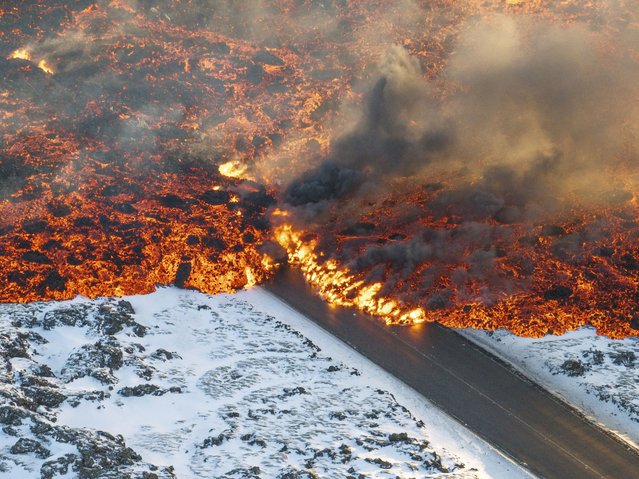
Lava crosses the main road to Grindavík and flows on the road leading to the Blue Lagoon, in Grindavík, Iceland, Thursday, February 8, 2024. (Photo by Marco Di Marco/AP Photo)
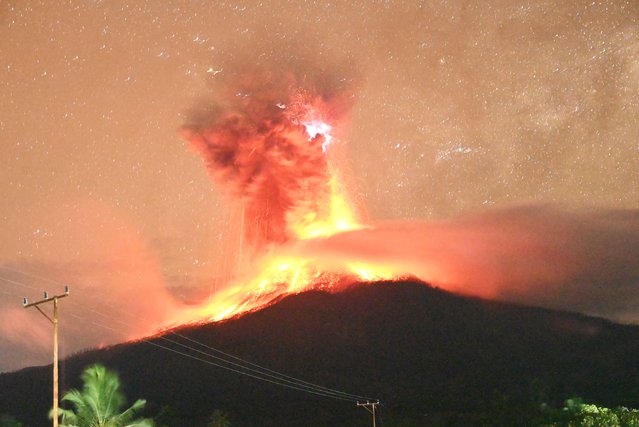
Mount Lewotobi Laki-laki volcano spews vulcanic materials during an eruption as seen from Pululera village in East Flores Regency, East Nusa Tenggara province, Indonesia, on April 27, 2025. (Photo by The Centre for Volcanology and Geological Hazard Mitigation (PVMBG)/Handout via Reuters)
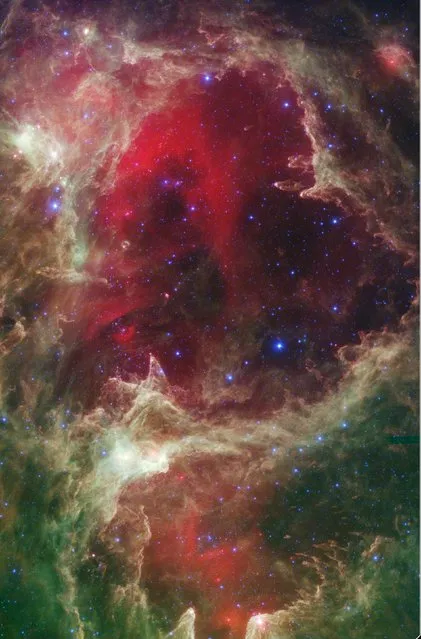
An infrared portrait from NASA's Spitzer Space Telescope which shows generations of stars is seen in this undated NASA handout image released February 14, 2013. In this wispy star-forming region, called W5, the oldest stars can be seen as blue dots in the centers of the two hollow cavities (other blue dots are background and foreground stars not associated with the region). Red shows heated dust that pervades the region's cavities, while green highlights dense clouds. (Photo by NASA/Reuters/JPL-Caltech/Harvard-Smithsonian/Handout)