Loading...
Done
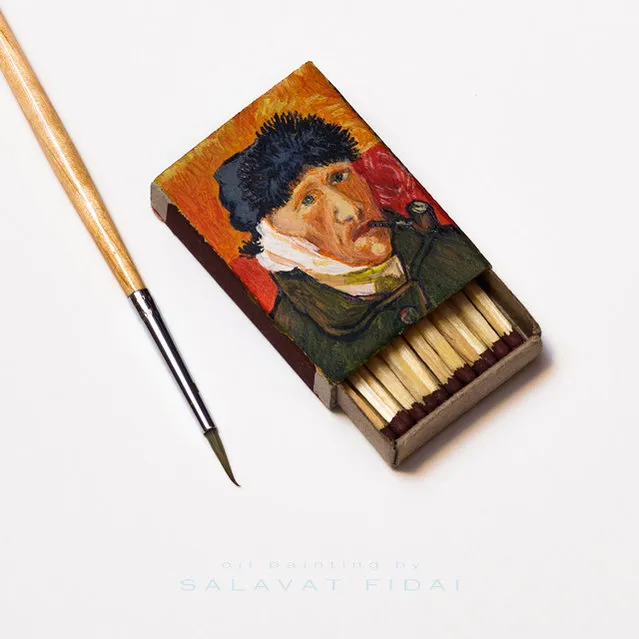
Van Gogh Paintings On Matchboxes By Salavat Fidai

Russian artist Salavat Fidai is obsessed with things in miniature, and he has previously painted miniatures on pumpkin seeds and carved sculptures into the graphite tips of pencils.

Please Subscribe To: Our Youtube Channel
Details
24 Dec 2016 23:21:00
The Iglu Hotel

Welcome to nature amidst a carefully designed environment made of glistening snow crystals – rebuilt every season from 3000 tons of snow at six locations in the Alps and the Pyrenees. A vivid product for exciting events and one of the most innovative hotel concepts of our times – CO2-neutral and sustainable. A memorable experience awaits you!
Details
10 Jul 2013 11:19:00


If you are interested, the Korean call this style Trot (ppongjjak); a very simple life story is told with three guitar chords – quite a typical situation for our planet. Long-legged dolls from LPG (by the way, “Lovely Pretty Girls” could be “Long Pretty Girls”) are certainly smiling, though it would have been more logical for them to cry their hearts out, but that's what the Korean are like; who has seen doramas, will understand.
Details
08 Jan 2019 00:03:00
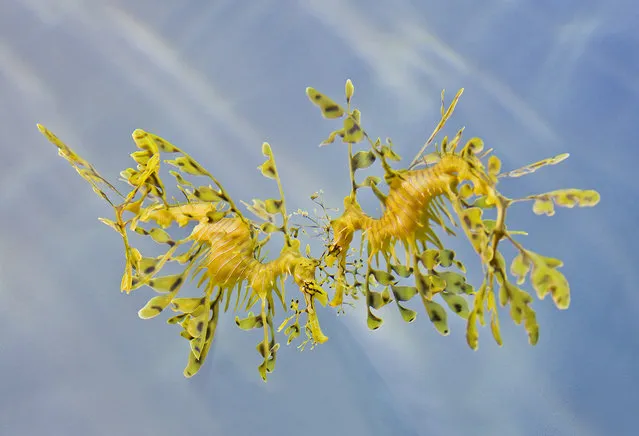
Leafy sea dragon

The leafy seadragon or Glauert's seadragon, Phycodurus eques, is a marine fish in the family Syngnathidae, which also includes the seahorses. It is the only member of the genus Phycodurus. It is found along the southern and western coasts of Australia. The name is derived from the appearance, with long leaf-like protrusions coming from all over the body. These protrusions are not used for propulsion; they serve only as camouflage. The leafy seadragon propels itself by means of a pectoral fin on the ridge of its neck and a dorsal fin on its back closer to the tail end. These small fins are almost completely transparent and difficult to see as they undulate minutely to move the creature sedately through the water, completing the illusion of floating seaweed.
Details
05 Sep 2012 08:51:00


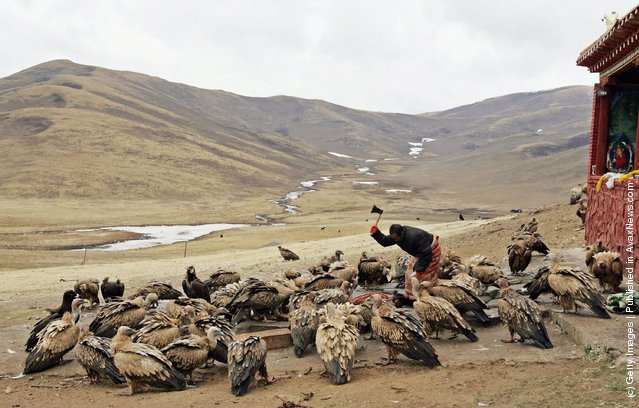
“Sky burial or ritual dissection was once a common funerary practice in Tibet wherein a human corpse is cut in specific locations and placed on a mountaintop, exposing it to the elements or the mahabhuta and animals – especially to birds of prey. The location of the sky burial preparation and place of execution are understood in the Vajrayana traditions as charnel grounds. In Tibet the practice is known as jhator, which literally means, «giving alms to the birds»”. – Wikipedia

Photo: A burial master chops bones of a body to feed vultures during a celestial burial ceremony on April 19, 2006 in Dari County of Guoluo Prefecture, Qinghai Province, northwest China. Celestial burial is a traditional funeral of Tibetan people, which began in the 7th century. (Photo by China Photos/Getty Images)
Details
18 Jun 2011 12:12:00
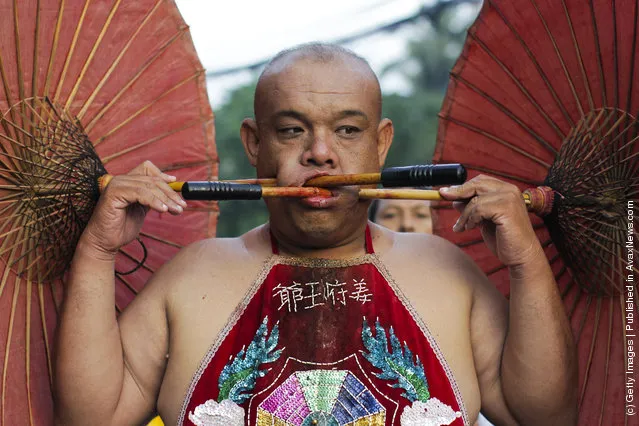
Devotees Practice Self Mutilation At Phuket Vegetarian Festival

A devotee of the Chinese shrine of Kathu Shrine, pierces his cheeks with umbrellas during a procession of Vegetarian Festival on October 4, 2011 in Phuket, Thailand. Ritual Vegetarianism in Phuket Island traces it roots back to the early 1800's. The festival begins on the first evening of the ninth lunar month and lasts for nine days. Participants in the festival perform acts of body piercing as a means of shifting evil spirits from individuals onto themselves and bring the community good luck. (Photo by Athit Perawongmetha/Getty Images)
Details
04 Oct 2011 10:49:00
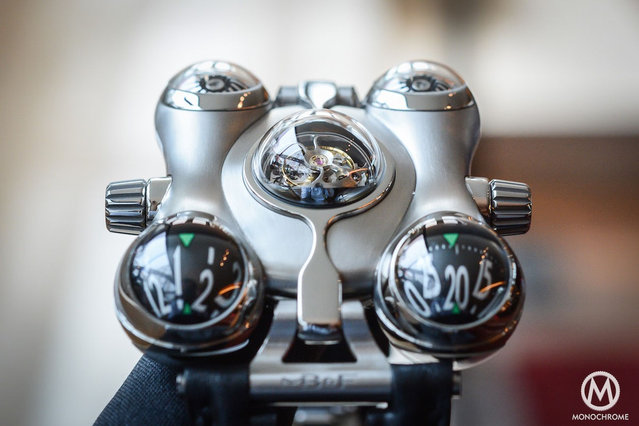
MB&F Horological Machine No. 6 Space Pirate

All throughout history of mankind people were fascinated by time, its flow, and how to measure it. Thus, the science of horology can into being, as people invented more and more sophisticated ways of measuring the passage of time. Truly, it’s one of the most profound characteristics of being a human, to feel and to ponder the meaning of time, its properties, and will we ever be able to move through it, not with it. Now, however, horology is mainly referred to the art of mechanical watchmaking. (Photo by MB&F)
Details
14 Nov 2014 13:51:00
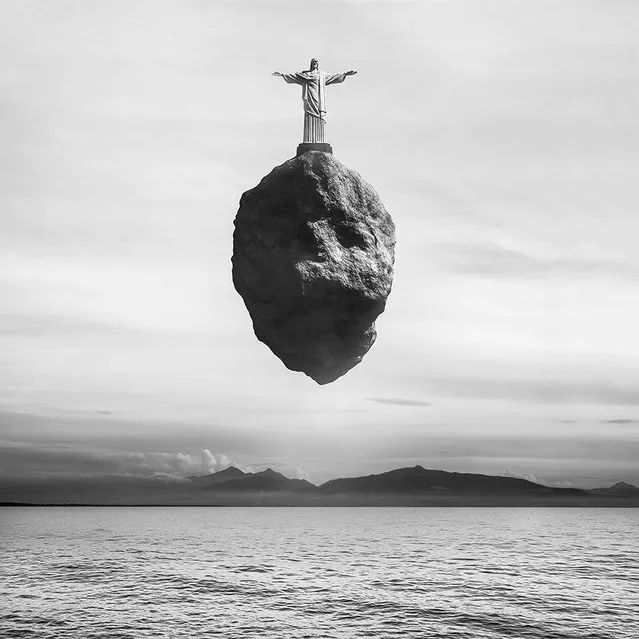
Levitation By Giuseppe Lo Schiavo

The essence of the “masterpieces” created by Giuseppe Lo Schiavo is in taking a famous architectural landmark placing it on a rock, and making it float over some body of water. Well… that’s pretty much it. Of course there will be some people who will look deep within these works of art, and catch the true meaning and intentions of the mastermind who created them, and maybe even purchase them for unreasonable amounts of money. But the rest of us, the common folk, will stare at it for a while, cringe, and move on without a second thought. (Photo by Giuseppe Lo Schiavo)
Details
04 Dec 2014 11:25:00