Loading...
Done
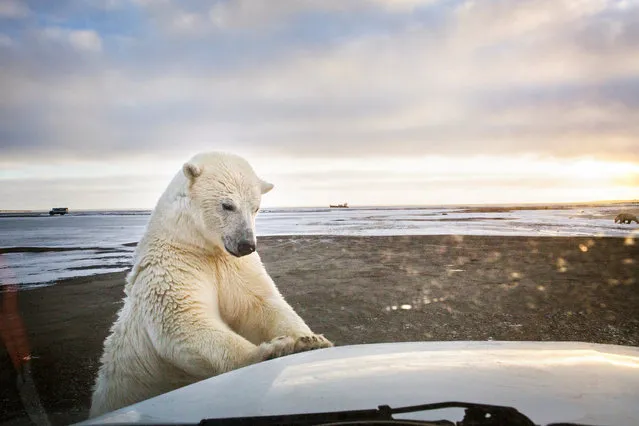
In late summer and early autumn polar bears flock to the native village of Kaktovik in the Alaskan Arctic to eat at “the boneyard” – the remains of whales annually hunted by the community. (Photo by Katie Orlinsky/Getty Images)

A selection of work by four photojournalists who have won grants of $10,000 and editorial support from the agency. Here: “Chasing Winter” by Katie Orlinksy. In late summer and early autumn polar bears flock to the native village of Kaktovik in the Alaskan Arctic to eat at “the boneyard” – the remains of whales annually hunted by the community. (Photo by Katie Orlinsky/Getty Images)
Details
02 Sep 2016 13:55:00
Children residents take a selfie as they wait for the police to dance, an unconventional approach to connect the police with the community in rough neighbourhoods, as part of the “Tirando Barrio” (Marking territory) programme in Saltillo, Northern Mexico September 9, 2016. T-Shirt reads “Street Dancers”. (Photo by Daniel Becerril/Reuters)

Children residents take a selfie as they wait for the police to dance, an unconventional approach to connect the police with the community in rough neighbourhoods, as part of the “Tirando Barrio” (Marking territory) programme in Saltillo, Northern Mexico September 9, 2016. T-Shirt reads “Street Dancers”. (Photo by Daniel Becerril/Reuters)
Details
13 Sep 2016 10:12:00
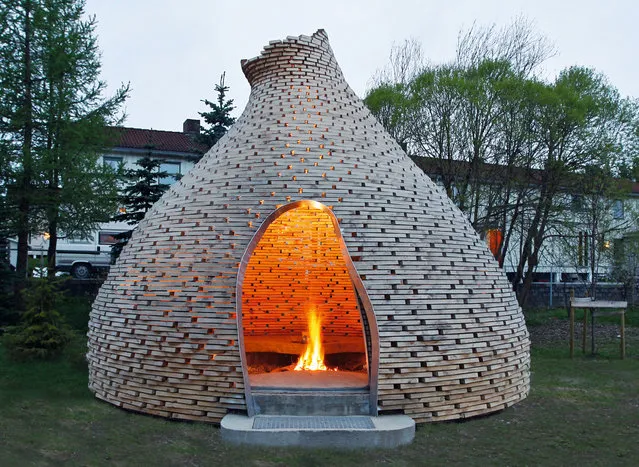
Fireplace for children, Trondheim, Norway, by Haugen/Zohar. The children of Trondheim come to sit around the fire and tell stories in this whimsical cone hut, made with materials recycled from a construction site. (Photo by Jason Havneraas/The Guardian)

Fireplace for children, Trondheim, Norway, by Haugen/Zohar. The children of Trondheim come to sit around the fire and tell stories in this whimsical cone hut, made with materials recycled from a construction site. (Photo by Jason Havneraas/The Guardian)
Details
17 Mar 2017 00:04:00
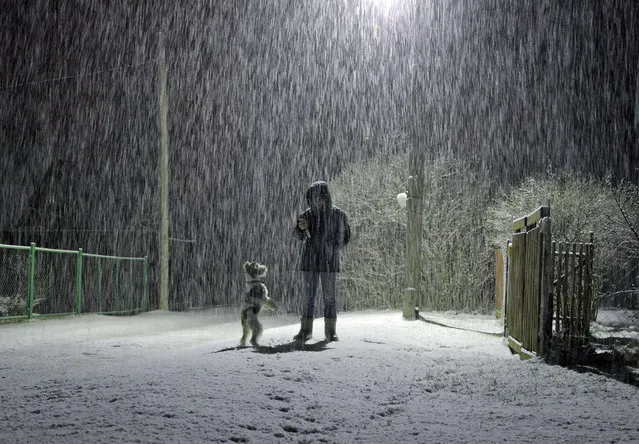
Snow falls as a woman walks her dog in the village of Podolye, 70 kilometers (43 miles) east of St. Petersburg, Russia, early Thursday, May 11, 2017. North winds brought snow to the east of the St. Petersburg region. (Photo by Dmitri Lovetsky/AP Photo)

Snow falls as a woman walks her dog in the village of Podolye, 70 kilometers (43 miles) east of St. Petersburg, Russia, early Thursday, May 11, 2017. North winds brought snow to the east of the St. Petersburg region. (Photo by Dmitri Lovetsky/AP Photo)
Details
21 Jun 2017 08:07:00
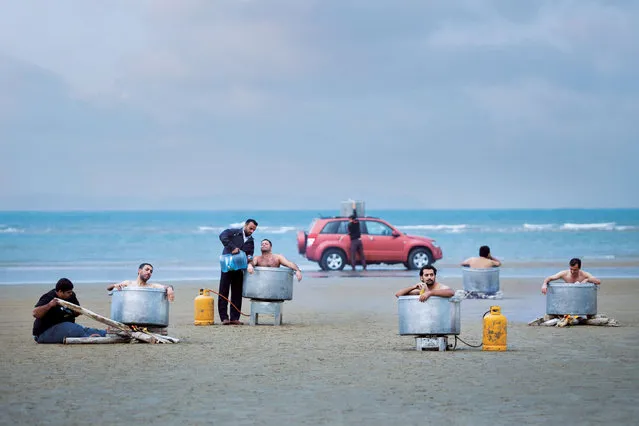
Public Space series, 2015. This series by Morteza Niknahad and Behnam Zakeri tends toward cinema, taking an almost cartoonish view of modern life in Iran. This work was inspired by the social life of dolphins. (Photo by Morteza Niknahad and Behnam Zakeri/The Guardian)

Public Space series, 2015. This series by Morteza Niknahad and Behnam Zakeri tends toward cinema, taking an almost cartoonish view of modern life in Iran. This work was inspired by the social life of dolphins. (Photo by Morteza Niknahad and Behnam Zakeri/The Guardian)
Details
19 Jul 2017 08:26:00
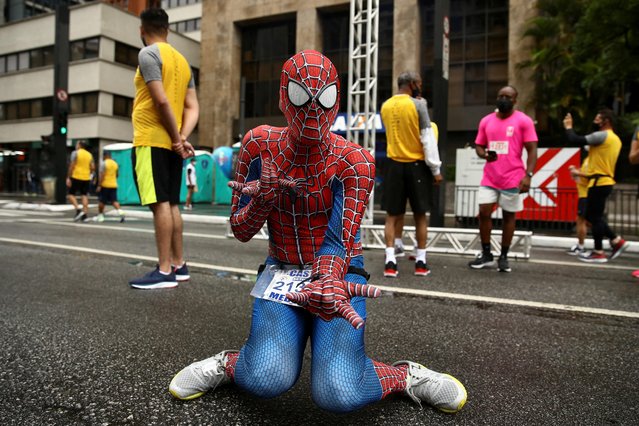
A runner dressed as Spiderman poses before the annual “Sao Silvestre Run”, an international race through the streets of Sao Paulo, Brazil on December 31, 2021. (Photo by Carla Carniel/Reuters)

A runner dressed as Spiderman poses before the annual “Sao Silvestre Run”, an international race through the streets of Sao Paulo, Brazil on December 31, 2021. (Photo by Carla Carniel/Reuters)
Details
09 Jan 2022 05:23:00
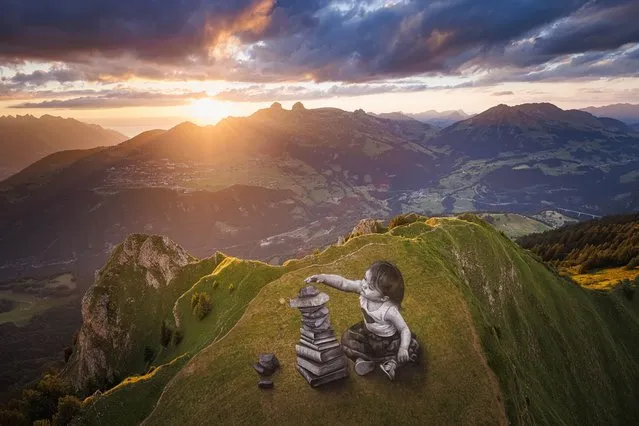
A giant biodegradable landart painting entitled “Vers l'equilibre” (Towards balance) by French-Swiss artist Saype is pictured near the summit of the Grand Chamossaire mountain, above the alpine resort of Villars-sur-Ollon, Switzerland, Wednesday, July 06, 2022. Extending over an area of 2500 square meters, this fresco was created using biodegradable pigments made out of charcoal, chalk, water and milk proteins. (Photo by Valentin Flauraud/Keystone via AP Photo)

A giant biodegradable landart painting entitled “Vers l'equilibre” (Towards balance) by French-Swiss artist Saype is pictured near the summit of the Grand Chamossaire mountain, above the alpine resort of Villars-sur-Ollon, Switzerland, Wednesday, July 06, 2022. Extending over an area of 2500 square meters, this fresco was created using biodegradable pigments made out of charcoal, chalk, water and milk proteins. (Photo by Valentin Flauraud/Keystone via AP Photo)
Details
10 Aug 2022 05:26:00
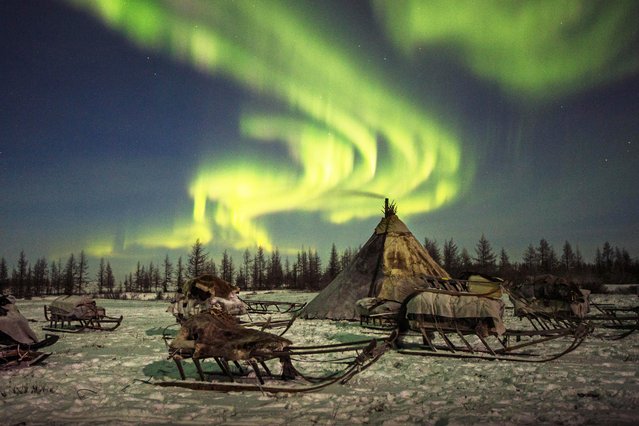
An empty camp is shown beneath a colourful sky in Siberia, December 2016. (Photo by Timothy Allen/Barcroft Productions)

A British photographer has captured life at the “edge of the world”. Timothy Allen, best known for his work on BBC's Human Planet, trekked through the freezing Siberian wilderness for 16 days as he joined part of an 800km migration of reindeer in the Yamal-Nenets region – a name that roughly translates to “edge of the world”. The stunning pictures feature the nomadic Nenets tribe, who drink blood to survive in -45°C temperatures. Timothy's epic journey, which will be revealed in an eight-minute documentary on Animal Planet USA, saw him travel across the bleak terrain of the frozen Ob River with the Nenets people in December last year. Here: An empty camp is shown beneath a colourful sky in Siberia, December 2016. (Photo by Timothy Allen/Barcroft Productions)
Details
19 Sep 2017 07:48:00