Loading...
Done
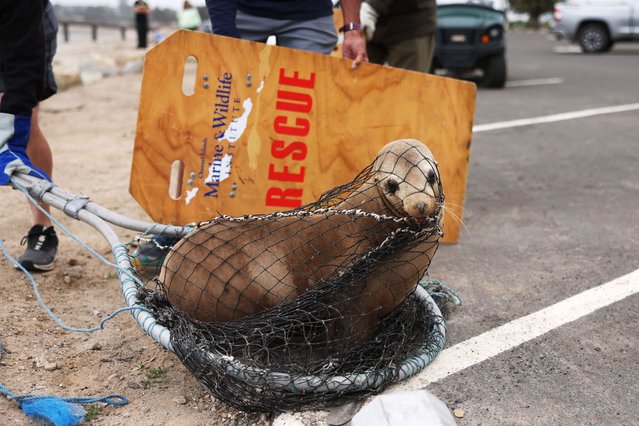
A sick California sea lion with possible domoic acid poisoning is rescued to be evaluated by volunteers from CIMWI (Channel Islands Marine & Wildlife Institute) in Santa Barbara, California, on March 25, 2025. Over a hundred sea lions, dolphins and other marine mammals, including birds, have been sickened by domoic acid poisoning from algal blooms in Southern California since February, US media reported. (Photo by David Swanson/AFP Photo)

A sick California sea lion with possible domoic acid poisoning is rescued to be evaluated by volunteers from CIMWI (Channel Islands Marine & Wildlife Institute) in Santa Barbara, California, on March 25, 2025. Over a hundred sea lions, dolphins and other marine mammals, including birds, have been sickened by domoic acid poisoning from algal blooms in Southern California since February, US media reported. (Photo by David Swanson/AFP Photo)
Details
02 Apr 2025 04:29:00
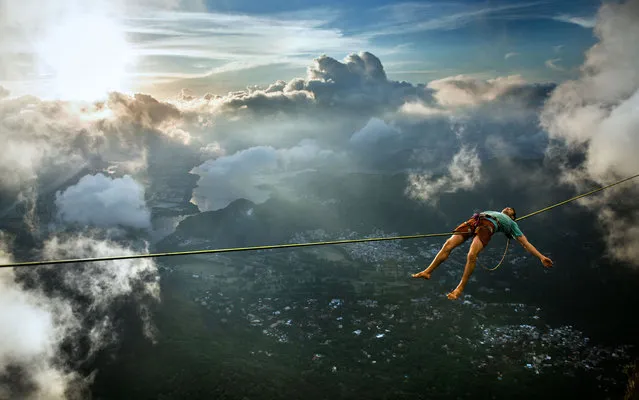
Pedra da Gavea highline, 850 meters above the city, 100 meters direct exposure, March 24, 2013. Brian Mosbaugh on the line. Carefully tiptoeing almost 3000 metres above Rio de Janeiro on a thin wire got a bit too much for this adrenaline junkie – so he decided to have a LIE DOWN. Fearless Brian Mosbaugh is so used to the perilous heights he decided he deserved a short break and proceeded to kick back and relax over the famous Brazilian city. (Photo by Scott Rogers/Caters)

Pedra da Gavea highline, 850 meters above the city, 100 meters direct exposure, March 24, 2013. Brian Mosbaugh on the line. Carefully tiptoeing almost 3000 metres above Rio de Janeiro on a thin wire got a bit too much for this adrenaline junkie – so he decided to have a LIE DOWN. Fearless Brian Mosbaugh is so used to the perilous heights he decided he deserved a short break and proceeded to kick back and relax over the famous Brazilian city. (Photo by Scott Rogers/Caters)

P.S. All pictures are presented in high resolution. To see Hi-Res images – just TWICE click on any picture. In other words, click small picture – opens the BIG picture. Click BIG picture – opens VERY BIG picture (if available; this principle works anywhere on the site AvaxNews).
Details
30 Mar 2013 12:00:00
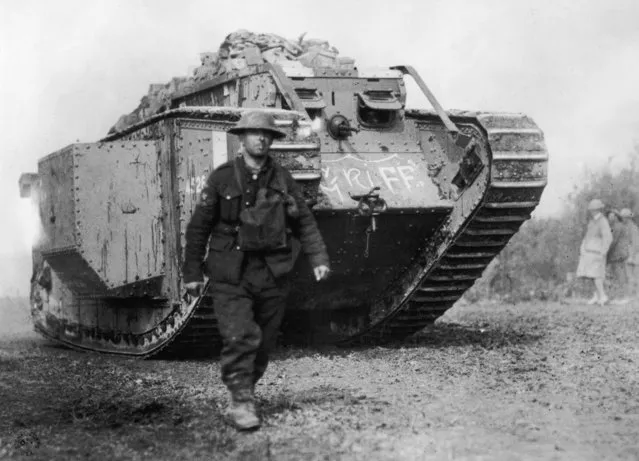
An American soldier walks ahead of an MKIV British-made tank, circa 1918. (Photo by Hulton Archive/Getty Images)

An American soldier walks ahead of an MKIV (Mark IV) British-made tank, circa 1918. (Photo by Hulton Archive/Getty Images)
Details
16 Nov 2018 00:05:00
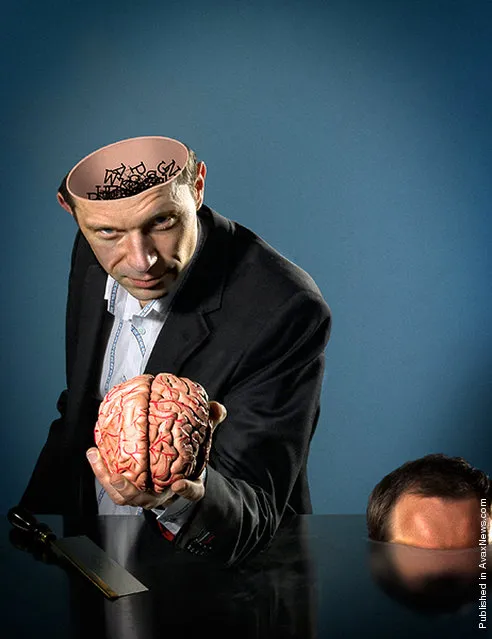
Photographers: Darrell Eager

“When you think of Darrell Eager, you think of a journeyman photographer with taste and a talent for conceptual thinking. Darrell's great at working with vague ideas and concepting back and forth until they become real and concrete, appropriate for each project”.
Details
20 Mar 2012 11:03:00
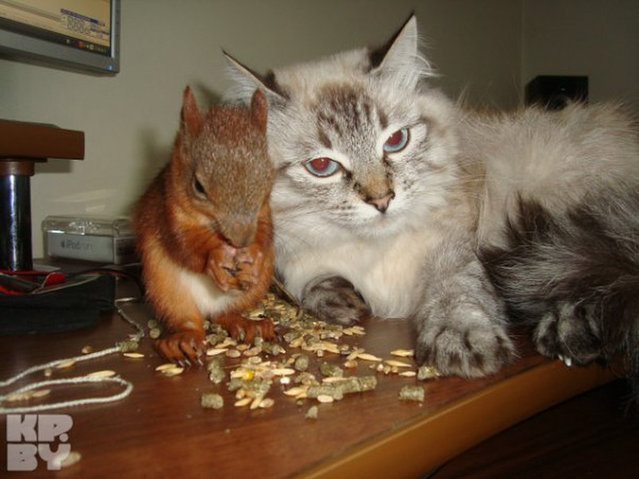
Little squirrel in Minsk worked with the taxi driver

Belarusian soldiers found a little squirrel two years ago. The little baby squirrel was just about to die but the officer of the team Peter Pankraty start feeding and taking care of it. The squirrel survived and two years later it just refuses to be separated by its saviour. Now Peter is taxi driver and squirrel Minsk makes him a good company through the entire shift. He uses the squirrel as an attraction and even promotes the tax at his taxi as “Just 45 cents and a few nuts per km”.
Details
04 Oct 2012 08:46:00
Kagome Co's employee Shigenori Suzuki tries to eat a tomato which is fed to him by the newly-developed “Wearable Tomato” device for runners, during its unveiling event ahead of the weekend's Tokyo Marathon in Tokyo February 19, 2015. (Photo by Toru Hanai/Reuters)

Kagome Co's employee Shigenori Suzuki tries to eat a tomato which is fed to him by the newly-developed “Wearable Tomato” device for runners, during its unveiling event ahead of the weekend's Tokyo Marathon in Tokyo February 19, 2015. The eight-kilo (17.6-pound) contraption fits on a runner like a rucksack. It can distribute a total of seven medium-sized tomatoes, one by one, at the click of a button and supplies the runner with much needed nutrients during a long jog or race. (Photo by Toru Hanai/Reuters)
Details
20 Feb 2015 13:23:00
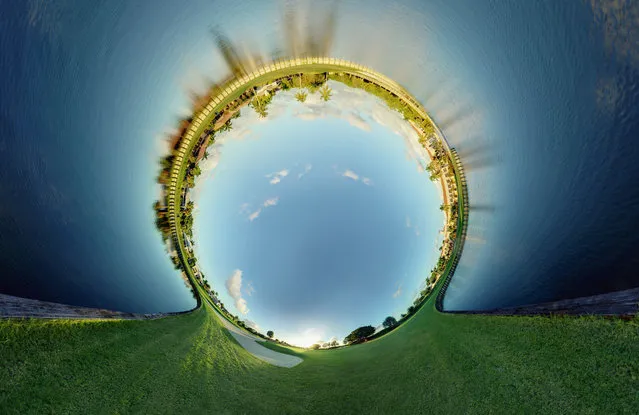
Alternative Perspectives By Randy Scott Slavin Part 1

Randy Scott Slavin's photography is surrealism based in reality. His work portrays land and cityscapes in a 360 degree view, a perspective closer to that of the human eye than a 2D photograph, he says. Slavin's "Alternate Perspectives" is a series of photographs of a single location or landmark pieced together to create a 360 degree perspective in a flat image. The results are whimsical, and occasionally eerie, scenes that reflect the portion and scale of Slavin's surroundings when he took the photo.
Details
22 Dec 2013 09:21:00
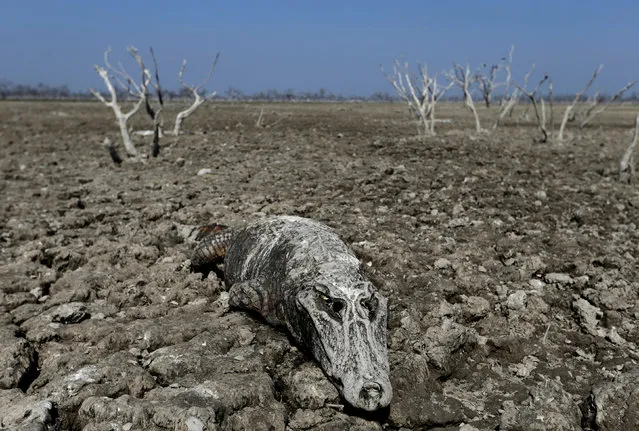
The carcass of a yacare caiman lies in the dried-up river bed of the Pilcomayo river in Boqueron, Paraguay, August 14, 2016. In Paraguay, alongside the Pilcomayo River, black vultures flew over a shrinking pond where a group of crocodilian reptiles known as yacare caimans sought refuge. Water from the river, which divides Paraguay and Argentina in the area of the Gran Chaco, was scarce. This is not an uncommon sight in the region of General Diaz, about 700 kilometres (435 miles) northwest of the country's capital Asuncion, where the Pilcomayo's waters form lakes and streams that give life to capybaras, birds and caimans. “The river's situation is critical. No water is forecast to enter the basin until December, as happens every year”, said Alcides Gonzalez, a resident of the area. (Photo by Jorge Adorno/Reuters)

The carcass of a yacare caiman lies in the dried-up river bed of the Pilcomayo river in Boqueron, Paraguay, August 14, 2016. In Paraguay, alongside the Pilcomayo River, black vultures flew over a shrinking pond where a group of crocodilian reptiles known as yacare caimans sought refuge. Water from the river, which divides Paraguay and Argentina in the area of the Gran Chaco, was scarce. This is not an uncommon sight in the region of General Diaz, about 700 kilometres (435 miles) northwest of the country's capital Asuncion, where the Pilcomayo's waters form lakes and streams that give life to capybaras, birds and caimans. (Photo by Jorge Adorno/Reuters)
Details
03 Nov 2016 12:40:00