Loading...
Done
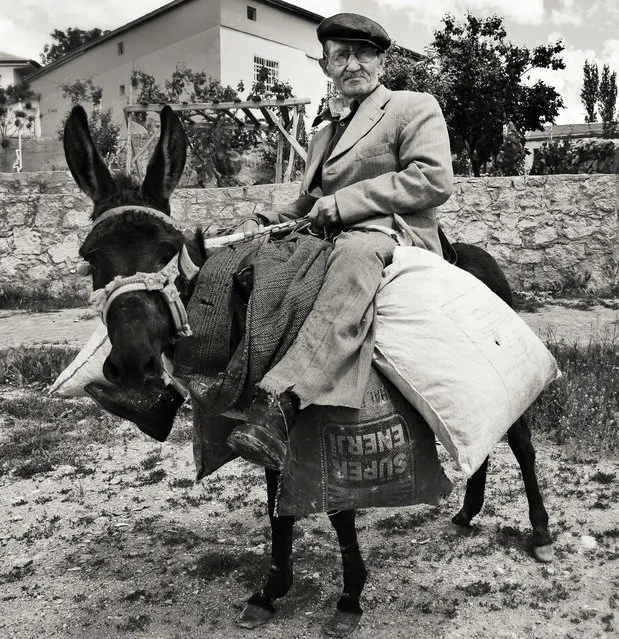
“Super Enerji”. Taken on my road trip through Turkey. (Photo and caption by Michelle Brandemuehl/National Geographic Traveler Photo Contest)

“Super Enerji”. Taken on my road trip through Turkey. (Photo and caption by Michelle Brandemuehl/National Geographic Traveler Photo Contest)

ATTENTION! All pictures are presented in high resolution. To see Hi-Res images – just TWICE click on any picture. In other words, click small picture – opens the BIG picture. Click BIG picture – opens VERY BIG picture.
Details
05 Jul 2013 11:17:00
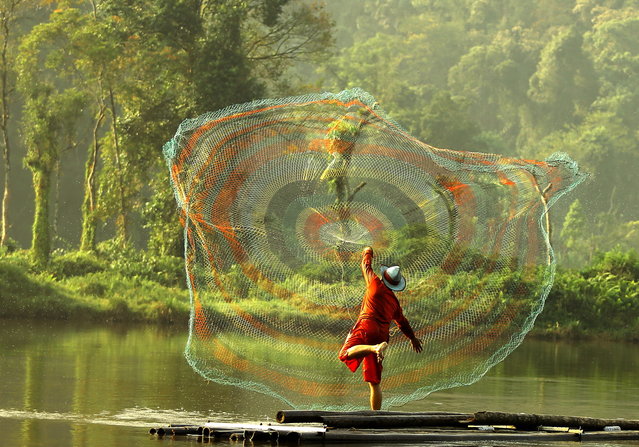
“The Net thrower”. The fisherman are conducting activities on Situgunung Lake. Photo location: Situgunung lake, Sukabumi, West Java, Indonesia. (Photo and caption by Dody Kusuma/National Geographic Photo Contest)

“The Net thrower”. The fisherman are conducting activities on Situgunung Lake. Photo location: Situgunung lake, Sukabumi, West Java, Indonesia. (Photo and caption by Dody Kusuma/National Geographic Photo Contest)
Details
13 May 2014 09:09:00
Three Burmese women members of a circus play cards as they wear the brass neck and leg rings traditionally worn by Padaung women since childhood and which cannot be removed, London, January 4, 1935. (Photo by Keystone)

Three Burmese women members of a circus play cards as they wear the brass neck and leg rings traditionally worn by Padaung women since childhood and which cannot be removed, London, January 4, 1935. (Photo by Keystone). P.S. All pictures are presented in high resolution.
Details
29 Aug 2012 11:18:00
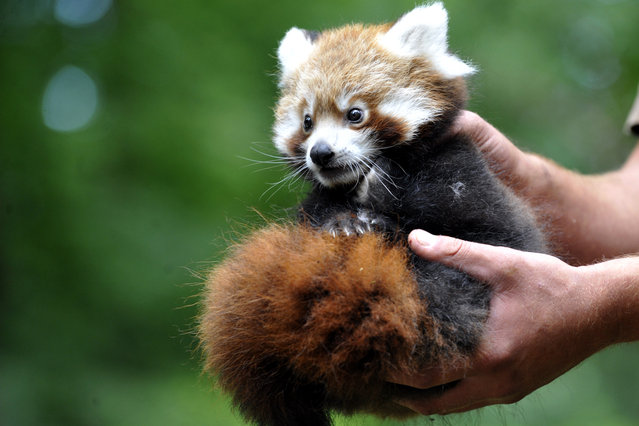
The first red panda cub was born on May 30 in zoo Zlin. Zoologist Roman Vrzal holds a male of red panda. The Red panda is pictured in Zlin, Czech Republic, August 20, 2014. (Photo by Dalibor Gluck/CTK)

The first red panda cub was born on May 30 in zoo Zlin. Zoologist Roman Vrzal holds a male of red panda. The Red panda is pictured in Zlin, Czech Republic, August 20, 2014. (Photo by Dalibor Gluck/CTK)
Details
25 Aug 2014 11:08:00
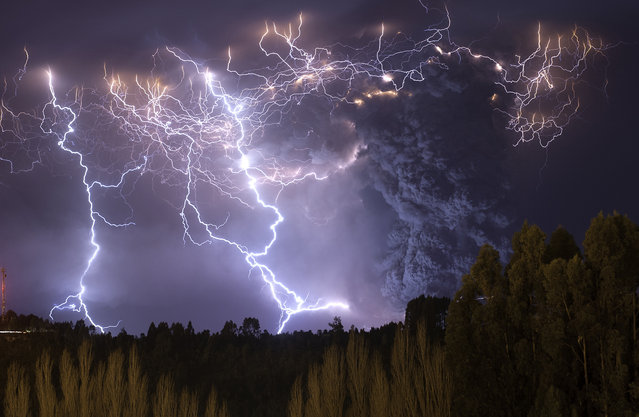
The eruption of Cordon Caulle began on June 4, 2011, located in the Region of Los Rios in Chile. For about 12 months, people and animals became accustomed to living with the daily fall of ash, which also caused problems in the air traffic in South America. The explosions and lightning during first days of the eruption could be seen from hundreds of miles around. This photograph was taken on the second night of eruption from the town of Lago Ranco. (Photo and caption by Francisco Negroni/National Geographic Traveler Photo Contest)

The eruption of Cordon Caulle began on June 4, 2011, located in the Region of Los Rios in Chile. For about 12 months, people and animals became accustomed to living with the daily fall of ash, which also caused problems in the air traffic in South America. The explosions and lightning during first days of the eruption could be seen from hundreds of miles around. This photograph was taken on the second night of eruption from the town of Lago Ranco. (Photo and caption by Francisco Negroni/National Geographic Traveler Photo Contest)

ATTENTION! All pictures are presented in high resolution. To see Hi-Res images – just TWICE click on any picture. In other words, click small picture – opens the BIG picture. Click BIG picture – opens VERY BIG picture.
Details
23 Jun 2013 11:24:00
A dog with a cherry blossom-shaped pin, is seen in the cherry blossom festival in Seoul, South Korea, Sunday, April 9, 2017. (Photo by Lee Jin-man/AP Photo)

A dog with a cherry blossom-shaped pin, is seen in the cherry blossom festival in Seoul, South Korea, Sunday, April 9, 2017. (Photo by Lee Jin-man/AP Photo)
Details
16 Apr 2017 10:27:00
Glamour model and actress Sabrina seated on the knee of Arthur Askey, 1955

Glamour model and actress Sabrina seated on the knee of Arthur Askey. (Photo by Keystone/Getty Images). 1955
Details
26 Oct 2011 13:39:00
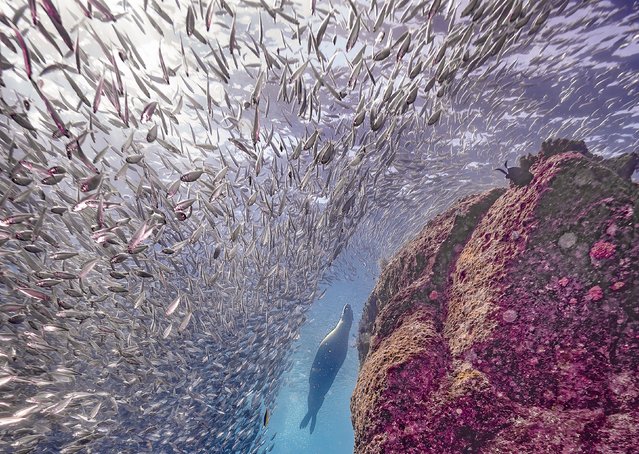
Sea lions make dinner plans in the Gulf of California early July 2024. The gulf is a primary source of sardines and anchovies, two of Mexico’s top marine resources. (Photo by Glenn Ostle/Solent News)

Sea lions make dinner plans in the Gulf of California early July 2024. The gulf is a primary source of sardines and anchovies, two of Mexico’s top marine resources. (Photo by Glenn Ostle/Solent News)
Details
04 Oct 2024 04:04:00