Loading...
Done
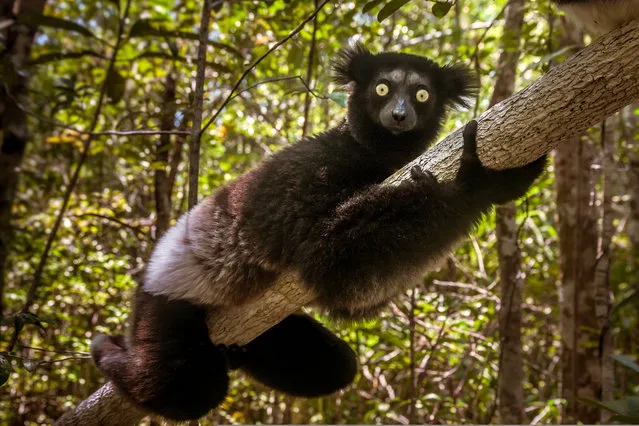
The secretive indri (Indri indri) of Madagascar, the largest living lemur. It is also critically endangered and highly evolutionarily distinct with no close relatives, which makes its branch one of most precarious on the mammal evolutionary tree. In the likely event that the indri goes extinct, we will lose 19m years of unique evolutionary history from the mammal tree of life. (Photo by Pierre-Yves Babelon/Aarhus University)

The secretive indri (Indri indri) of Madagascar, the largest living lemur. It is also critically endangered and highly evolutionarily distinct with no close relatives, which makes its branch one of most precarious on the mammal evolutionary tree. In the likely event that the indri goes extinct, we will lose 19m years of unique evolutionary history from the mammal tree of life. (Photo by Pierre-Yves Babelon/Aarhus University)
Details
18 Nov 2018 00:02:00
A brown bear cub by the Khailyulya River in north-east Kamchatka, Russia on July 24, 2021. (Photo by Yuri Smityuk/TASS)

A brown bear cub by the Khailyulya River in north-east Kamchatka, Russia on July 24, 2021. (Photo by Yuri Smityuk/TASS)
Details
08 Aug 2021 05:17:00
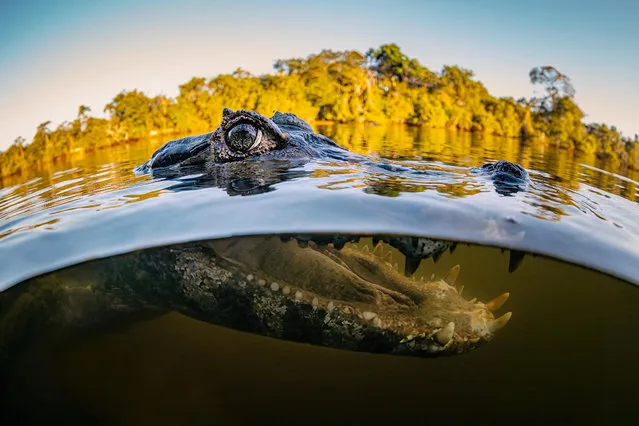
A caiman in the Pantanal region of Brazil in 2021. They are used to seeing humans, allowing the photographer, Leighton Lum, a close-up shot. (Photo by Leighton Lum/Caters News Agency)

A caiman in the Pantanal region of Brazil in 2021. They are used to seeing humans, allowing the photographer, Leighton Lum, a close-up shot. (Photo by Leighton Lum/Caters News Agency)
Details
02 Sep 2021 02:14:00
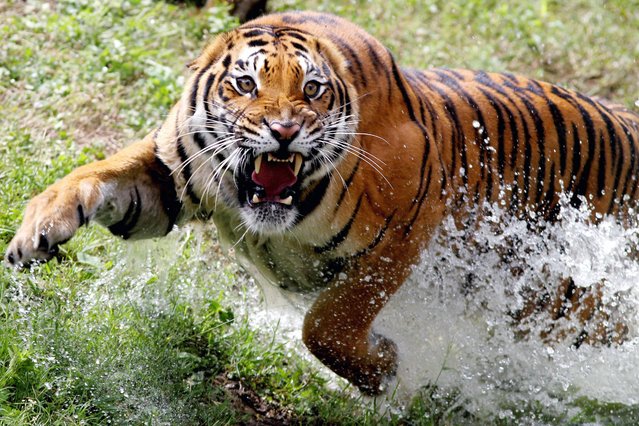
A Bengal tigress who gave birth to four cubs at the Guadalajara Zoo, Jalisco state, Mexico runs at the zoo on October 5, 2021. (Photo by Ulises Ruiz/AFP Photo)

A Bengal tigress who gave birth to four cubs at the Guadalajara Zoo, Jalisco state, Mexico runs at the zoo on October 5, 2021. (Photo by Ulises Ruiz/AFP Photo)
Details
10 Oct 2021 06:59:00
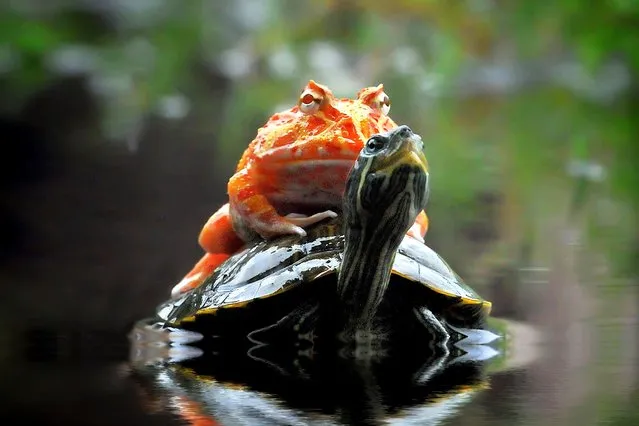
The photographer Yan Hidayat says his pet Pacman frog and Brazilian turtle are inseparable. He still had to wait four hours to get this photo in West Sumatra, Indonesia, in the first decade of March 2024. (Photo by Yan Hidayat/Media Drum Images)

The photographer Yan Hidayat says his pet Pacman frog and Brazilian turtle are inseparable. He still had to wait four hours to get this photo in West Sumatra, Indonesia, in the first decade of March 2024. (Photo by Yan Hidayat/Media Drum Images)
Details
24 Mar 2024 01:07:00
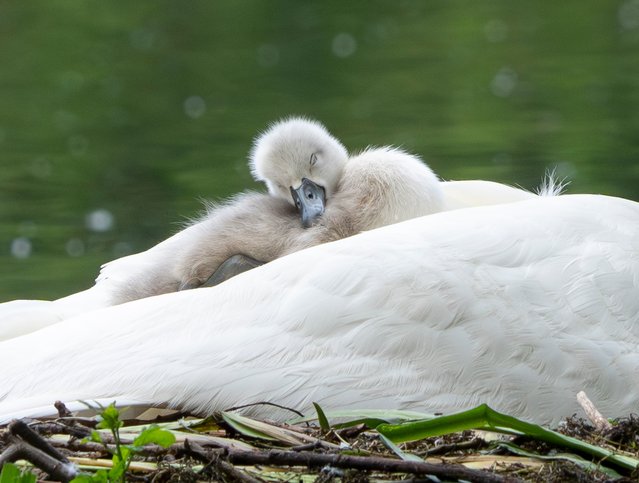
A cygnet keeps snug under its mother’s wing at Heronry Pond in Wanstead Park in east London in the last decade of May 2024. (Photo by Jeff Moore/The Times)

A cygnet keeps snug under its mother’s wing at Heronry Pond in Wanstead Park in east London in the last decade of May 2024. (Photo by Jeff Moore/The Times)
Details
09 Jun 2024 05:31:00
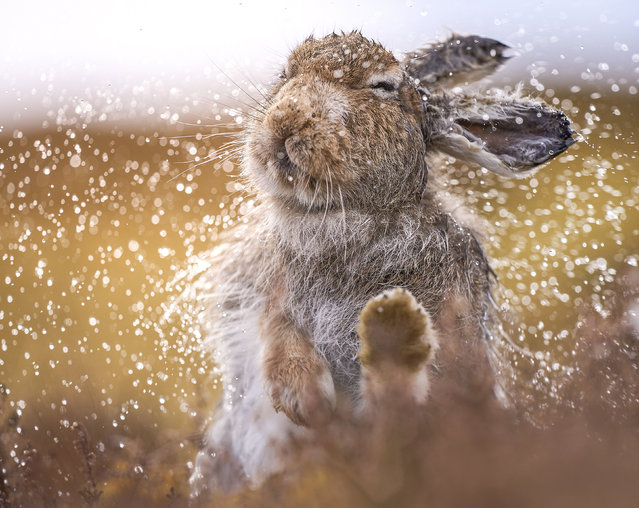
A mountain hare shakes off rain from its fur, in Findhorn Valley, Moray, Scotland in the second decade of August 2024. In summer, the hare’s coat is a grey-brown colour with a tinge of blue, making them hard to spot against the heather moorland. In winter, it changes to almost completely white for camouflage in the snow. (Photo by Will Hall/Solent News)

A mountain hare shakes off rain from its fur, in Findhorn Valley, Moray, Scotland in the second decade of August 2024. In summer, the hare’s coat is a grey-brown colour with a tinge of blue, making them hard to spot against the heather moorland. In winter, it changes to almost completely white for camouflage in the snow. (Photo by Will Hall/Solent News)
Details
25 Aug 2024 03:50:00
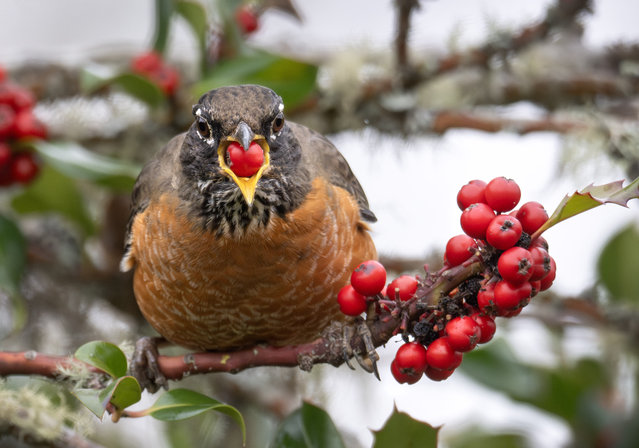
An American robin feeds on holly berries in a thicket near Elkton in southwestern Oregon on November 16, 2024. Many birds can safely consume holly berries, including blackbirds, redwings, and thrushes. There is an old wives tale that if you see a bird eating a berry, it is safe for humans to eat, but this is not true. Birds consume many plants that are poisonous to humans, holly berries included. (Photo by Robin Loznak/ZUMA Press Wire/Rex Features/Shutterstock)

An American robin feeds on holly berries in a thicket near Elkton in southwestern Oregon on November 16, 2024. Many birds can safely consume holly berries, including blackbirds, redwings, and thrushes. There is an old wives tale that if you see a bird eating a berry, it is safe for humans to eat, but this is not true. Birds consume many plants that are poisonous to humans, holly berries included. (Photo by Robin Loznak/ZUMA Press Wire/Rex Features/Shutterstock)
Details
01 Dec 2024 01:43:00