Loading...
Done


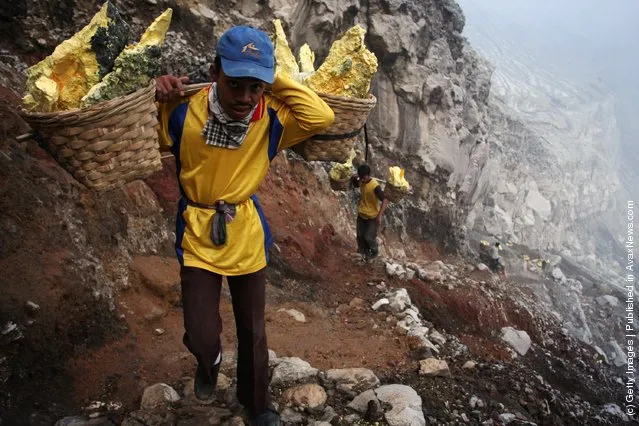
Traditional miners carry sulphur on the Ijen volcano complex on May 25, 2009 outside Banyuwangi, East Java, Indonesia. Miners carry the solidified yellow sulphur blocks from the crater floor to the rim for as many hours a day as they can tolerate, paid by the kilogram of sulphur they extract. The average wage is USD $.05 per kilogram of sulphur and a worker, depending on his strength and stamina, carry on average 3 baskets of 70-80kg per day, earning him around USD $11. (Photo by Ulet Ifansasti/Getty Images)
Details
08 Jul 2011 10:53:00
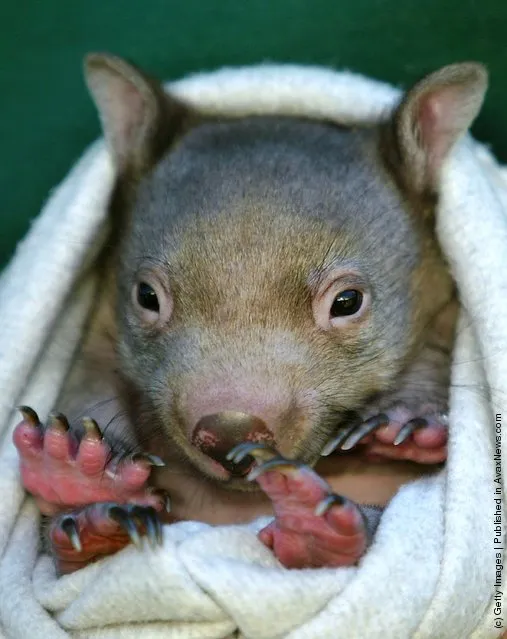
A baby Common Wombat

“Wombats are Australian marsupials; they are short-legged, muscular quadrupeds, approximately 1 metre (39 in) in length with a short, stubby tail. They are adaptable in their habitat tolerances, and are found in forested, mountainous, and heathland areas of south-eastern Australia, including Tasmania, as well as an isolated patch of about 300 ha in Epping Forest National Park in central Queensland”. – Wikipedia

Photo: “Abdul”, a baby Common Wombat, is one of the marsupials on show during the spring baby boom at Taronga Zoo September 1, 2005 in Sydney, Australia. “Abdul” was orphaned when his mother was killed by a car. (Photo by Mark Nolan/Getty Images)
Details
20 Aug 2011 11:23:00
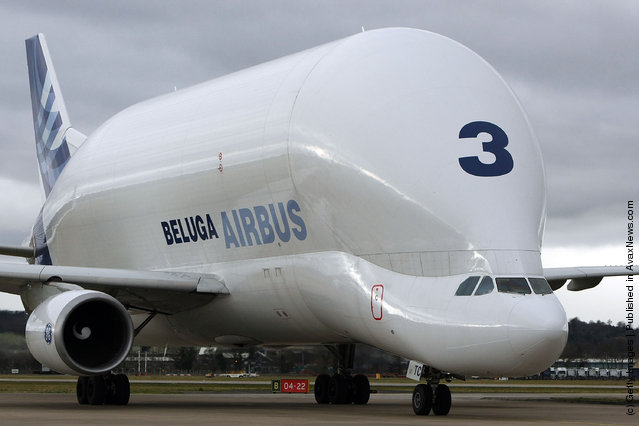
Airbus A300-600ST Beluga

“The Airbus A300-600ST (Super Transporter) or Beluga, is a version of the standard A300-600 wide-body airliner modified to carry aircraft parts and over-sized or awkward cargo. It was officially called the Super Transporter at first, but the name Beluga became popular and has now been officially adopted”. – Wikipedia

Photo: The first Future Strategic Tanker Aircraft wing set is loaded on to a giant Beluga Airbus aircraft for transit to Bremen on February 25, 2009 in Broughton, England. (Photo by Christopher Furlong/Getty Images)
Details
14 Oct 2011 08:42:00
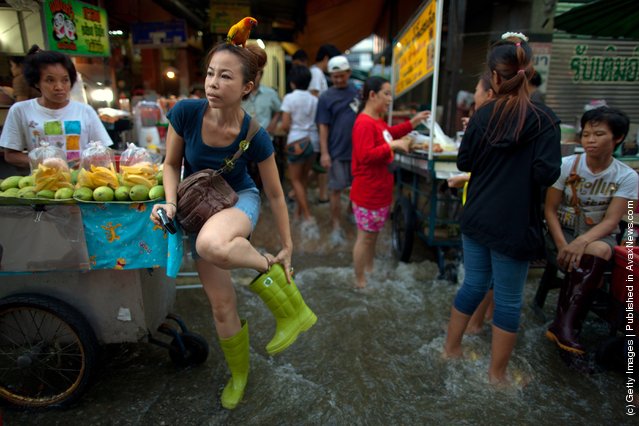
Patarawan fixes her boots as her parrot, Sim sits on her head as she goes shopping for dinner at a busy flooded market near the Chao Phraya river

Patarawan fixes her boots as her parrot, Sim sits on her head as she goes shopping for dinner at a busy flooded market near the Chao Phraya river October 27, 2011 in Bangkok, Thailand. Hundreds of factories closed in the central Thai province of Ayutthaya and Nonthaburi as the flood waters began to reach Bangkok. Around 350 people have died in flood-related incidents since late July according to the Department of Disaster Prevention and Mitigation, with Thailand experiencing the worst flooding in 50 years. (Photo by Paula Bronstein/Getty Images)
Details
28 Oct 2011 13:14:00
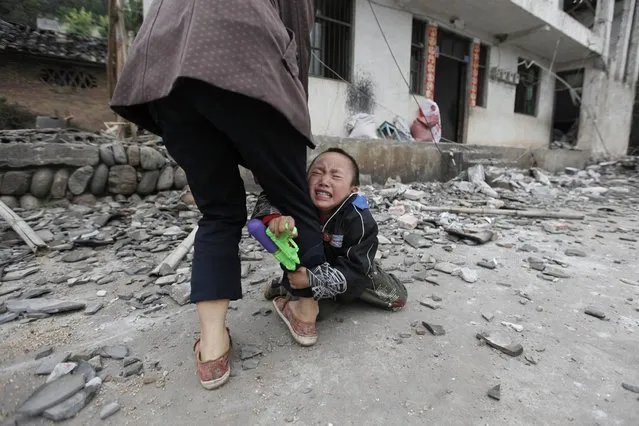
A boy holds his mother's leg as he cries in front of their damaged house after a strong 6.6 magnitude earthquake at Longmen village, Lushan county in Ya'an, Sichuan province. (Photo by Jason Lee/Reuters)

A boy holds his mother's leg as he cries in front of their damaged house after a strong 6.6 magnitude earthquake at Longmen village, Lushan county in Ya'an, Sichuan province. (Photo by Jason Lee/Reuters)
Details
02 Jan 2014 11:56:00
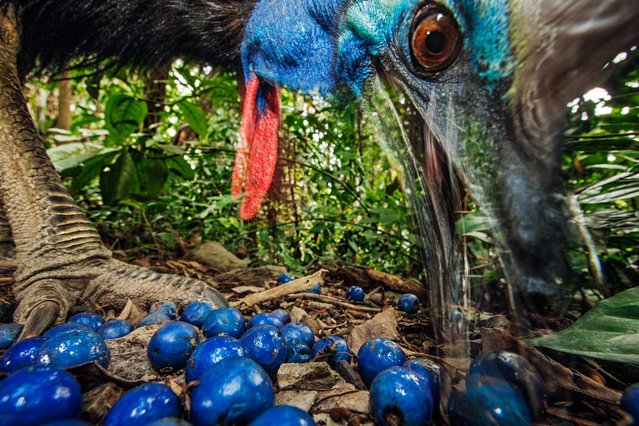
“Cassowaries are large, flightless birds related to emus and (more distantly) to ostriches, rheas, and kiwis”, writes Olivia Judson in the September issue of National Geographic magazine. (Photo by Christian Ziegler/National Geographic)

“Cassowaries are large, flightless birds related to emus and (more distantly) to ostriches, rheas, and kiwis”, writes Olivia Judson in the September issue of National Geographic magazine. How large? People-size: Adult males stand well over five foot five and top 110 pounds. Females are even taller, and can weigh more than 160 pounds. Dangerous when roused, they’re shy and peaceable when left alone. But even birds this big and tough are prey to habitat loss. The dense New Guinea and Australia rain forests where they live have dwindled. Today cassowaries might number 1,500 to 2,000. And because they help shape those same forests – by moving seeds from one place to another – “if they vanish”, Judson writes, “the structure of the forest would gradually change” too. (Photo by Christian Ziegler/National Geographic)
Details
06 Jan 2014 12:21:00
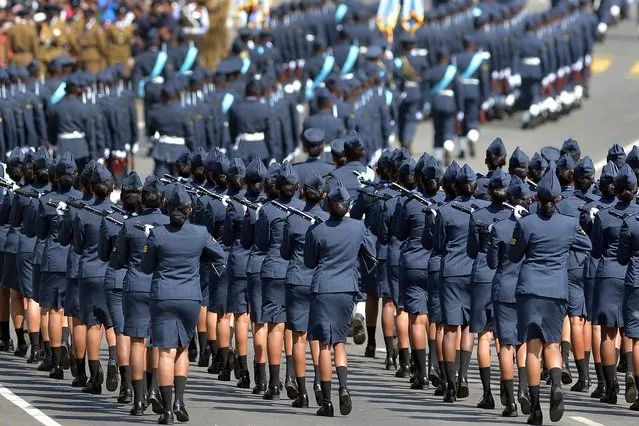
Sri Lankan military personnel march during the country's 66th Independence Day celebrations in the central town of Kegalle, about 40 kms from the capital Colombo on February 4, 2014. Sri Lanka cemmemorates its independence from British rule on February 4, 1948. (Photo by Ishara S. Kodikara/AFP Photo)

Sri Lankan military personnel march during the country's 66th Independence Day celebrations in the central town of Kegalle, about 40 kms from the capital Colombo on February 4, 2014. Sri Lanka cemmemorates its independence from British rule on February 4, 1948. (Photo by Ishara S. Kodikara/AFP Photo)
Details
08 Feb 2014 15:19:00
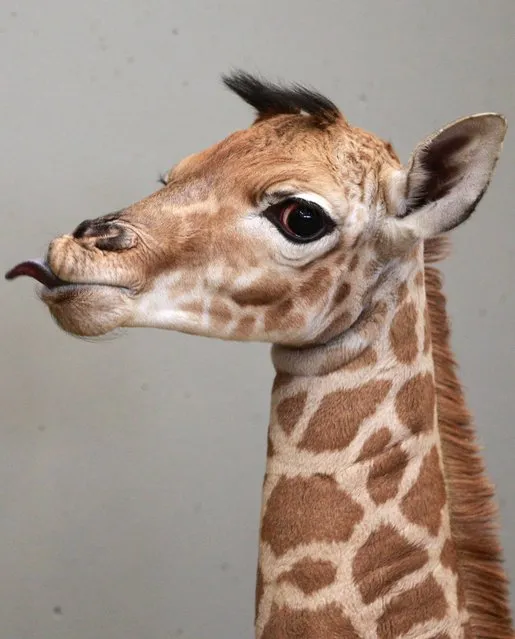
A newborn baby giraffe shows its tongue at the Planckendael zoo in Mechelen, 25 kilometers North of Brussels, Tuesday, February 18, 2014. The calf was born on Valentines day, February 14, and has a heart shaped spot on the hip. (Photo by Yves Logghe/AP Photo)

A newborn baby giraffe shows its tongue at the Planckendael zoo in Mechelen, 25 kilometers North of Brussels, Tuesday, February 18, 2014. The calf was born on Valentines day, February 14, and has a heart shaped spot on the hip. (Photo by Yves Logghe/AP Photo)
Details
22 Feb 2014 13:36:00