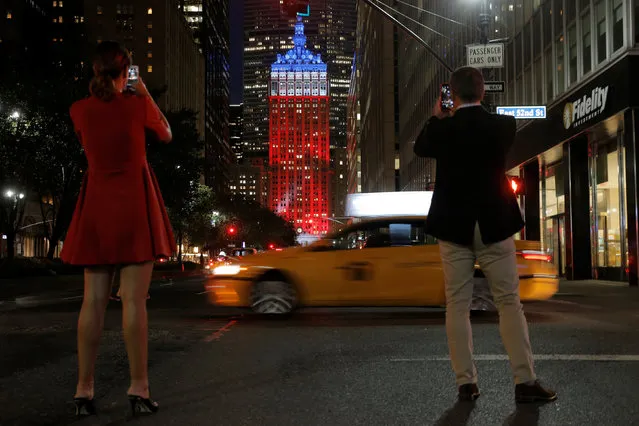
A couple photograph The Helmsley Building on Park Avenue, lit in honor of the victims of the Nice attacks, in Manhattan, New York, U.S., July 15, 2016. (Photo by Brendan McDermid/Reuters)
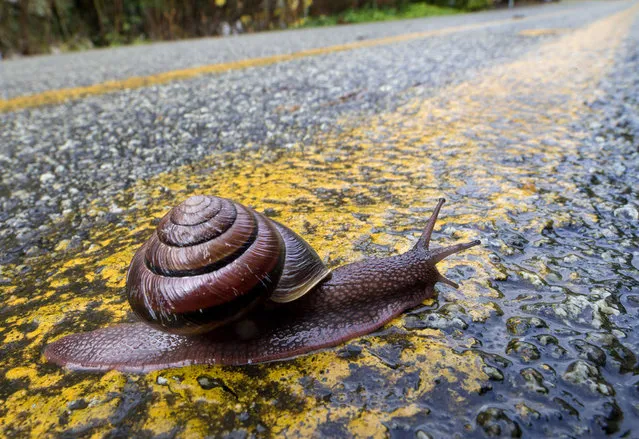
A large Pacific sideband snail slowly crosses a rain wet road in rural Douglas County, Oregon near Elkton on Sunday, December 2, 2012. The moisture loving snail should be very content with the recent heavy rains in southwestern Oregon and northern California. (Photo by Robin Loznak)
A woman takes a selfie picture as Turkish Kurds gather as part of Newroz celebrations in Diyarbakir, on March 21, 2016. Nowruz, the Farsi-language word for “New Year”, is an ancient Persian festival, celebrated on the first day of spring, on March 21, in Central Asian republics, Iraq, Turkey, Afghanistan and Iran. (Photo by Ilyas Akengin/AFP Photo)
Three cabaret dancers sit glum-faced in the Windmill Theatre's canteen upon hearing the news that the theatre's owners have sold out to a cinema company, on October 02, 1964. The theatre, which was the first to include nudity in its shows, has been able to cope with competition from a growing number of West End strip clubs. (Photo by Hulton-Deutsch Collection/CORBIS/Corbis via Getty Images)
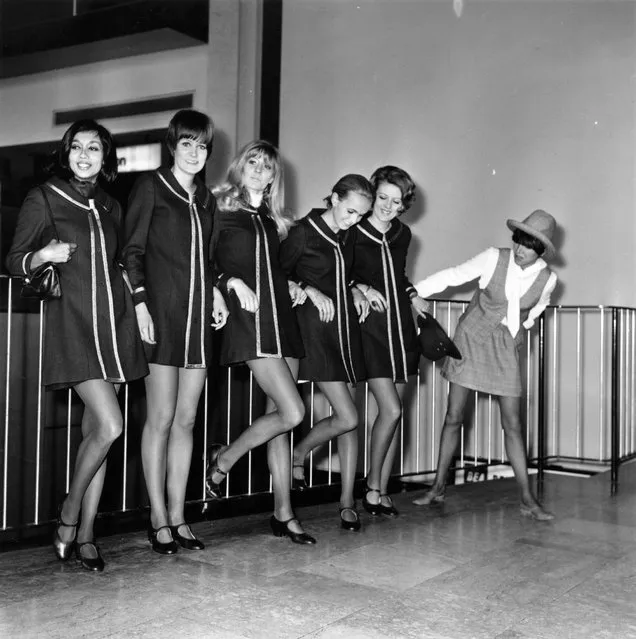
English fashion designer Mary Quant (R) with a group of models at Heathrow Airport, before leaving for a continental fashion tour, 18th March 1968. (Photo by Express/Getty Images)
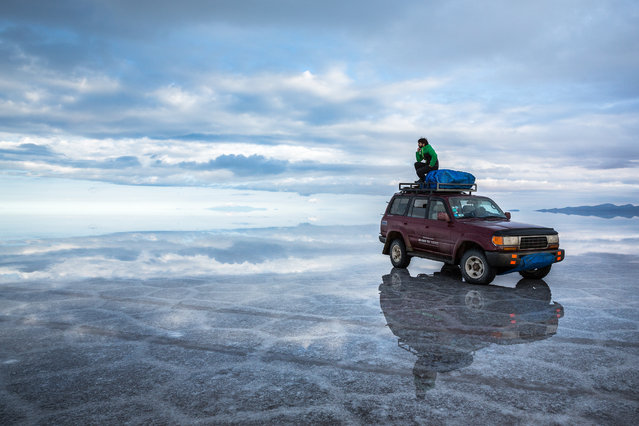
At 10,582 square kilometres, the Bolivian salt flats – otherwise known as Salar de Uyuni – are the largest on the planet and contain between 50 and 70% of the world’s lithium reserves. After exploring Chile and Argentina, photographer Joel Santos decided to travel to Bolivia in January 2017 to check the salt flats off his bucket list. With an electrical storm rolling in, Joel and his two travelling companions were the only souls left on the vast flats and captured the eerie flats without a person in sight. (Photo by Joel Santos/Barcroft Images)
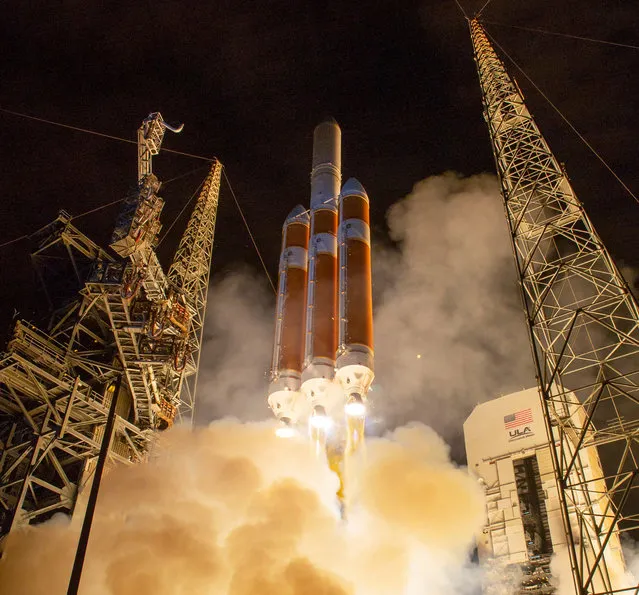
A handout photo made available by the NASA shows the United Launch Alliance Delta IV Heavy rocket launches NASA's Parker Solar Probe to touch the Sun, from Launch Complex 37 at Cape Canaveral Air Force Station, Florida, USA, 12 August 2018. Parker Solar Probe is humanity’s first-ever mission into a part of the Sun’s atmosphere called the corona. Here it will directly explore solar processes that are key to understanding and forecasting space weather events that can impact life on Earth. (Photo by Bill Ingalls/EPA-EFE/NASA)