Dog puppy “Sandy” protects against the rain with an umbrella fixed on her leash during a stroll in Rust, southern Germany, on May 26, 2013. (Photo by Patrick Seeger/AFP Photo)
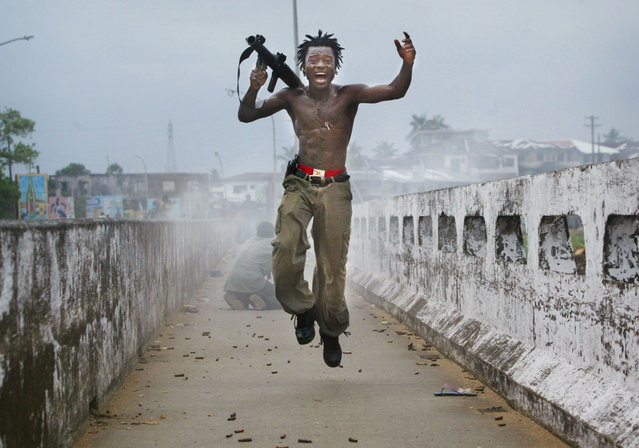
Chris Hondros, a Getty Images photographer, was fatally wounded on April 20, 2011, in a mortar attack by government forces while covering the civil war in Libya. Hondros' work is woven in our history as he covered everything from politics to marathons. A new film will focus on his life as told through his images. Here's a look at some of his finest and final work. Some of these images are graphic in nature
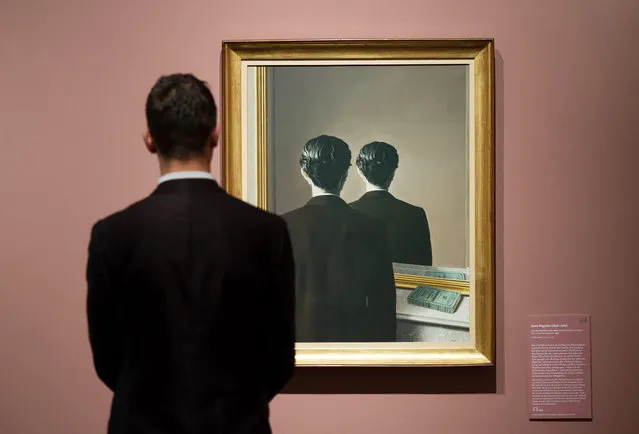
In this October 5, 2016 photo a man looks at the work “Not to be Reproduced” by Rene Magritte at the Kunsthalle art gallery in Hamburg, Germany. The exhibition, which runs from Oct. 7, 2016 until Jan. 22, 2017, features more than 150 masterpieces of surrealism from four of the most significant European private collections of the 20th century. (Photo by Daniel Reinhardt/DPA via AP Photo)
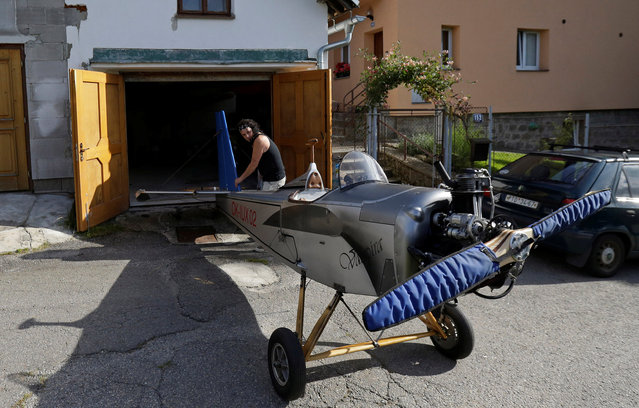
Aviator Frantisek Hadrava moves Vampira, an ultralight plane based on the U.S.-design of light planes called Mini-Max, out of a garage in the village of Zdikov, Czech Republic, August 23, 2016. Frantisek thought driving to work for 14 minutes was too much, so he built an plane to cut the commute by half. (Photo by David W. Cerny/Reuters)
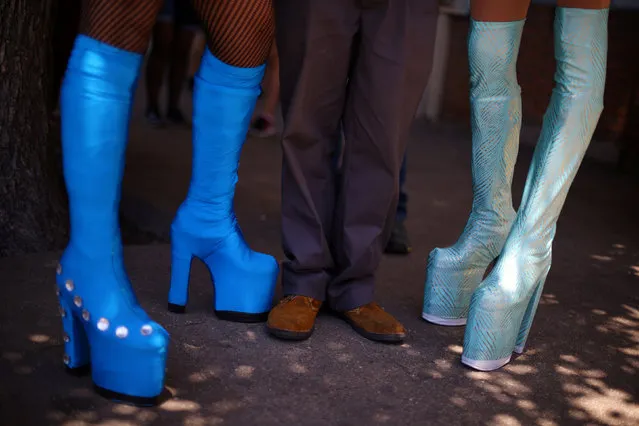
Activists attend a parade to demand rights of gender equality to LGBT community members in Santiago, Chile, November 25, 2017. (Photo by Ivan Alvarado/Reuters)
Young migrants gesture during a day of solidarity organised by local organizations and resdients for asylum seekers at a makeshift camp outside the foreign office in Brussels, Belgium September 6, 2015. Over 150,000 people seeking to enter Europe have reached Hungary this year, most coming through the southern border with Serbia, and many apply for asylum but quickly try to leave for wealthier EU countries. (Photo by Yves Herman/Reuters)
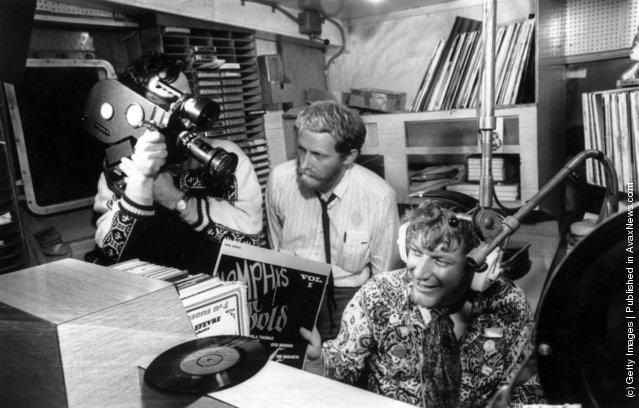
“«Pirate radio» in the UK first became widespread in the early 1960s when pop music stations such as Radio Caroline and Radio London started to broadcast on medium wave to the UK from offshore ships or disused sea forts. At the time these stations were not illegal because they were broadcasting from international waters. The stations were set up by entrepreneurs and music enthusiasts to meet the growing demand for pop and rock music, which was not catered for by the legal BBC Radio services”. – Wikipedia
Photo: The “World in Action” team making a program about the pirate radio ship Caroline, filmed by Paddy Searle, and produced by Mike Hodges. The DJ being filmed is Robbie Dale, and Hodges is standing behind him. (Photo by James Jackson/Evening Standard/Getty Images). 6th September 1967