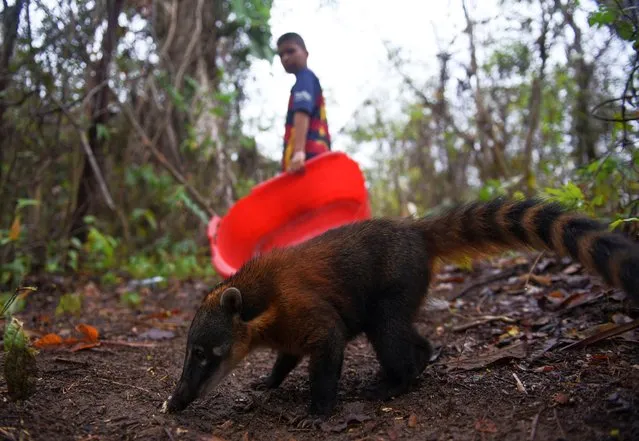
Eddy the badger is pictured as Nicanor goes to leave water and fruits for the animals affected by the fires, in San Buenaventura, Bolivia on November 26, 2023. (Photo by Claudia Morales/Reuters)
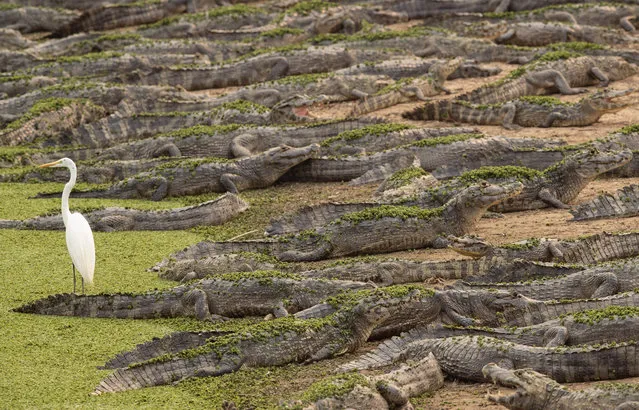
Alligators and an egret stand on the banks of the Bento Gomes river next to the Transpantaneira road at the Pantanal wetlands near Pocone, Mato Grosso state, Brazil, Monday, September 14, 2020. A vast swath of the vital wetlands is burning in Brazil, sweeping across several national parks and obscuring the sun behind dense smoke. (Photo by Andre Penner/AP Photo)
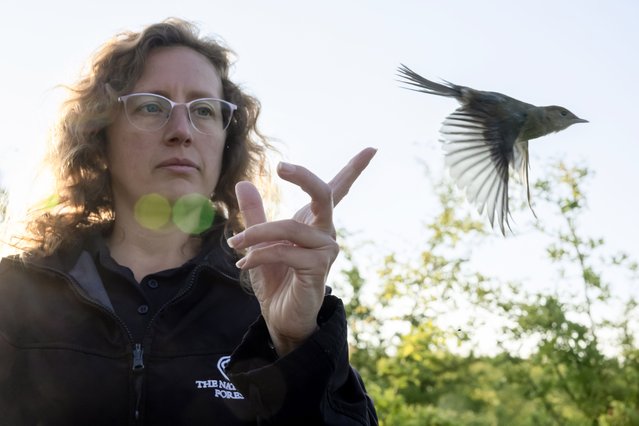
A juvenile blackcap is recorded in the soft light of morning at Minorca, UK, a former open-cast mine near Moira in the National Forest on June 18, 2025. Dr Heather Gilbert, research and evidence manager, checks mist nets among wildflowers and young trees as part of long-term monitoring that shows bird numbers have increased by 48 per cent over 30 years. (Photo by Rod Kirkpatrick/RKP Photography)
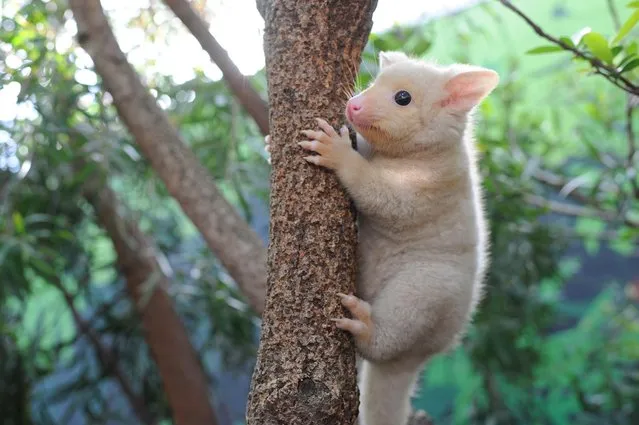
The common brushtail possum (Trichosurus vulpecula, from the Greek for "furry tailed" and the Latin for "little fox", previously in the genus Phalangista) is a nocturnal, semi-arboreal marsupial of the family Phalangeridae, it is native to Australia, and the second largest of the possums.
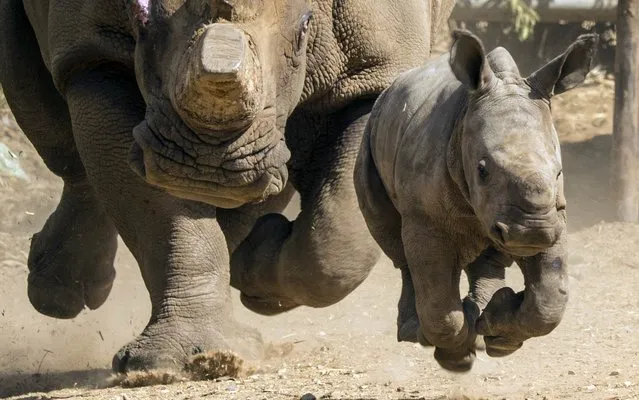
A newly born female White Rhino runs alongside her mother in Ramat Gan Safari Park near Tel Aviv, Israel, on September 3, 2014. She was born three weeks ago, after more than twenty years without a female White Rhino birth in the Safari, Sagit Horowitz, the safari spokeswoman said. (Photo by Ariel Schalit/AP Photo)
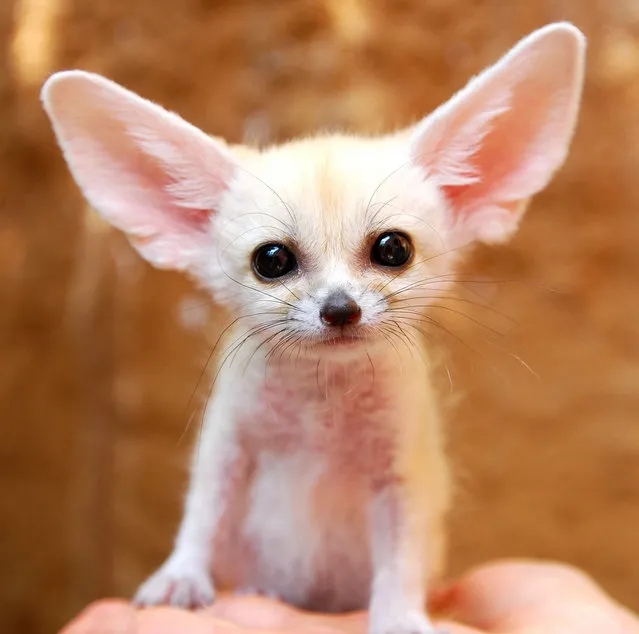
“The fennec fox or fennec (Vulpes zerda) is a small nocturnal fox found in the Sahara of North Africa. Its most distinctive feature is its unusually large ears, which serve to dissipate heat”. – Wikipedia. (Photo by In Cherl Kim)
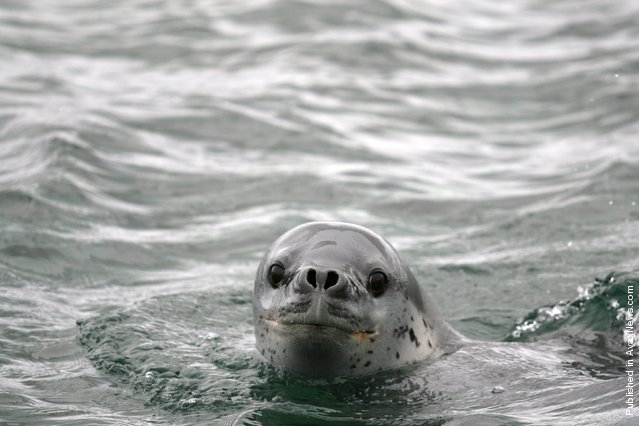
“The leopard seal (Hydrurga leptonyx), also referred to as the sea leopard, is the second largest species of seal in the Antarctic (after the southern elephant seal). It is most common in the southern hemisphere along the coast of Antarctica and on most sub-Antarctic islands, but can also be found on the coasts of southern Australia, Tasmania, South Africa, New Zealand, Lord Howe Island, Tierra del Fuego, the Cook Islands, and the Atlantic coast of South America. It can live twenty-six years, possibly more. Orcas and large sharks are the only natural predators of leopard seals”. – Wikipedia