Loading...
Done
Contestants of a tourism beauty pageant balance eggs on their collarbones as they cruise along the Yellow River in Jiyuan, Henan province, China, June 22, 2015. The contestants believe that if they are slim enough, their collarbones will allow them to balance the eggs securely on their bodies. (Photo by Reuters/Stringer)

Contestants of a tourism beauty pageant balance eggs on their collarbones as they cruise along the Yellow River in Jiyuan, Henan province, China, June 22, 2015. The contestants believe that if they are slim enough, their collarbones will allow them to balance the eggs securely on their bodies. (Photo by Reuters/Stringer)
Details
30 Jun 2015 12:09:00
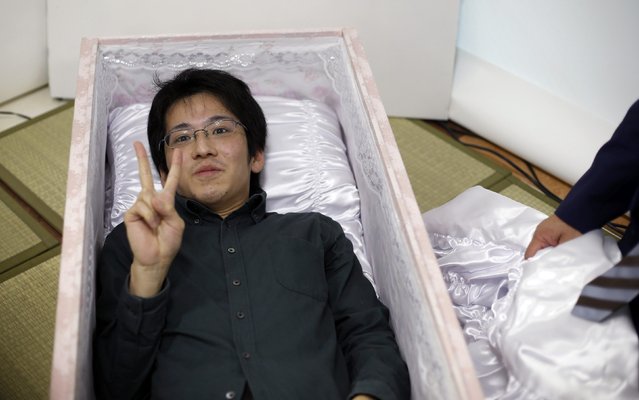
Noriaki Iwashima gestures as he lies in a coffin to try it out during an end-of-life seminar held by Japan's largest retailer Aeon Co in Tokyo October 24, 2014. (Photo by Toru Hanai/Reuters)

Noriaki Iwashima gestures as he lies in a coffin to try it out during an end-of-life seminar held by Japan's largest retailer Aeon Co in Tokyo October 24, 2014. Funeral arrangements are normally left to those who have been left behind but the latest trend in Japan, which literally translates to “End of life” preparations, is for the ageing to prepare their own funerals and graves before they set off on their journey to the great beyond. With a population that is expected to shrink by nearly 30 million people over the next 50 years, the market for funerals, graves and anything related to the afterlife is still very much alive. (Photo by Toru Hanai/Reuters)
Details
10 Nov 2014 13:48:00
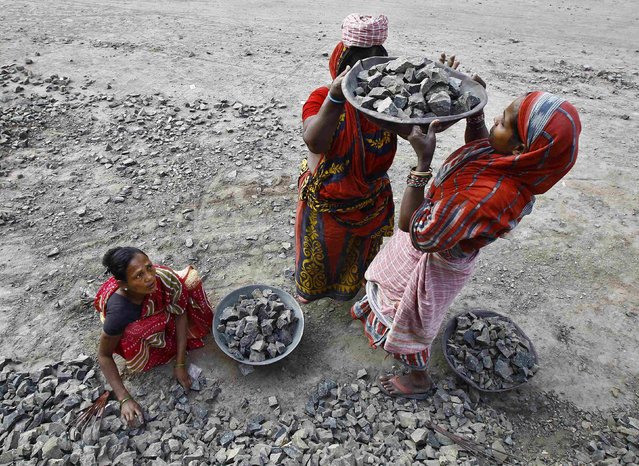
Women labourers work at the construction site of a road in Kolkata January 8, 2015. Across towns and cities in India, it is not uncommon to see women cleaning building sites, carrying bricks and or shoveling gravel - helping construct the infrastructure necessary for the country's economic and social development. (Photo by Rupak De Chowdhuri/Reuters)

Women labourers work at the construction site of a road in Kolkata January 8, 2015. Across towns and cities in India, it is not uncommon to see women cleaning building sites, carrying bricks and or shoveling gravel – helping construct the infrastructure necessary for the country's economic and social development. They help build roads, railway tracks, airports, and offices. They lay pipes for clean water supplies, cables for telecommunications, and dig the drains for sewage systems. But although women make up at least 20 percent of India's 40 million construction workers, they are less recognized than male workers with lower pay and often prone to safety hazards and sexual harassment. They are often unaware of their rights or scared to complain, say activists now trying to campaign for better treatment of women in the construction industry. (Photo by Rupak De Chowdhuri/Reuters)

Details
15 Jan 2015 13:47:00
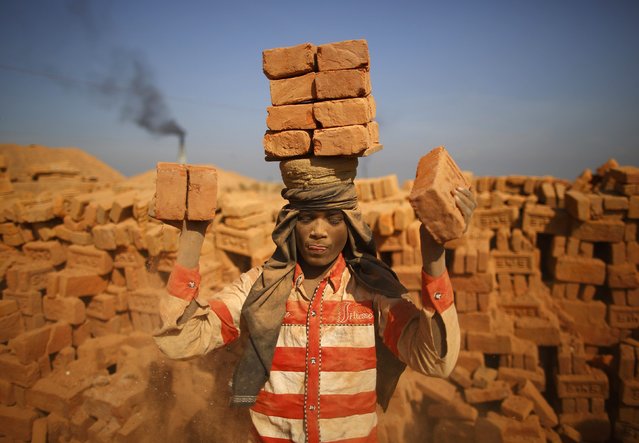
A worker stack bricks on his head at a brick factory in Lalitpur January 12, 2015. (Photo by Navesh Chitrakar/Reuters)

A worker stack bricks on his head at a brick factory in Lalitpur January 12, 2015. (Photo by Navesh Chitrakar/Reuters)
Details
16 Jan 2015 12:40:00
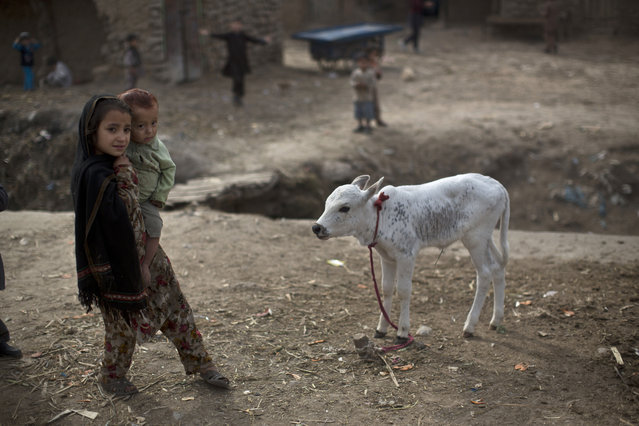
An Afghan refugee girl shows her younger brother a calf in a slum on the outskirts of Islamabad, Pakistan, Friday, February 6, 2015. (Photo by Muhammed Muheisen/AP Photo)

An Afghan refugee girl shows her younger brother a calf in a slum on the outskirts of Islamabad, Pakistan, Friday, February 6, 2015. (Photo by Muhammed Muheisen/AP Photo)
Details
12 Feb 2015 13:04:00
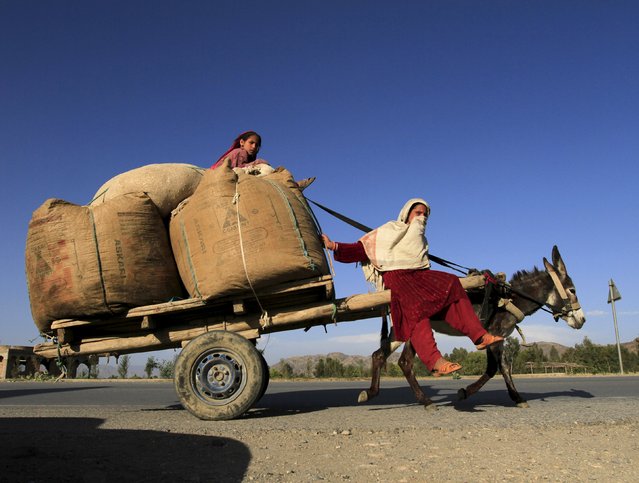
Girls ride on a donkey cart with grass for animals on the outside of Nangarhar province, Afghanistan May 19, 2015. (Photo by Reuters/Parwiz)

Girls ride on a donkey cart with grass for animals on the outside of Nangarhar province, Afghanistan May 19, 2015. (Photo by Reuters/Parwiz)
Details
28 Jul 2015 12:07:00
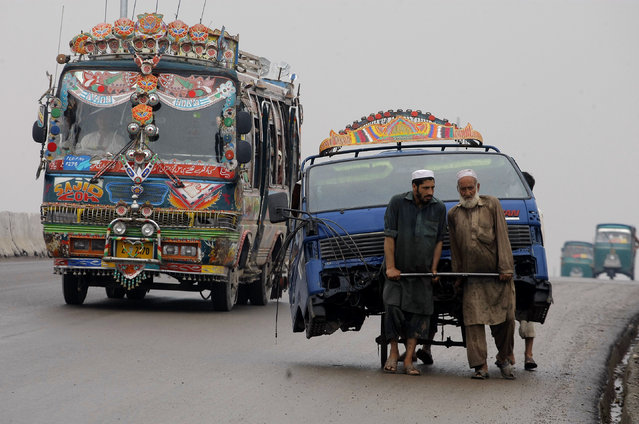
Pakistani laborers transport the front portion of a vehicle using a handcart at a road in Peshawar, Pakistan, Monday, August 3, 2015. (Photo by Mohammad Sajjad/AP Photo)

Pakistani laborers transport the front portion of a vehicle using a handcart at a road in Peshawar, Pakistan, Monday, August 3, 2015. (Photo by Mohammad Sajjad/AP Photo)
Details
04 Aug 2015 12:09:00
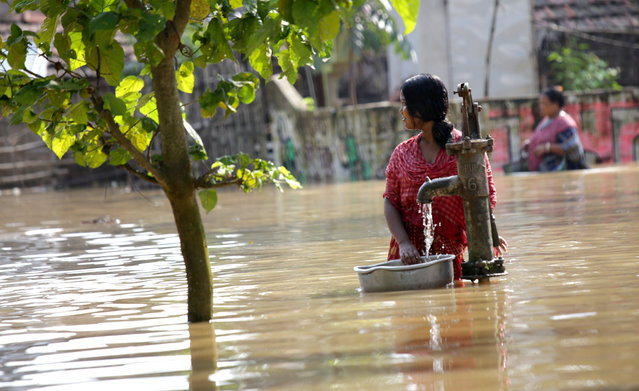
A photo made avialable on 05 August 2015 shows an Indian woman collecting drinking water from a water pump in the submerged village of Sreerampur, some 150 kilometers north of Calcutta, India, on 04 August 2015. At least 215 people have died in floods and a landslide following monsoon rains in India over the past week, 83 deaths were reported from the western state of Gujarat and 69 from eastern West Bengal. The worst-affected states were West Bengal, Gujarat and Rajasthan, the Home Ministry said. (Photo by Piyal Adhikary/EPA)

A photo made avialable on 05 August 2015 shows an Indian woman collecting drinking water from a water pump in the submerged village of Sreerampur, some 150 kilometers north of Calcutta, India, on 04 August 2015. At least 215 people have died in floods and a landslide following monsoon rains in India over the past week, 83 deaths were reported from the western state of Gujarat and 69 from eastern West Bengal. The worst-affected states were West Bengal, Gujarat and Rajasthan, the Home Ministry said. (Photo by Piyal Adhikary/EPA)
Details
08 Aug 2015 12:04:00