Loading...
Done
Models pose in designs from May Quant's collection on a street in London, England, on October 16, 1969.  Grania, left, wears the "Shimmy Shimmy," a white rayon dress over matching pants with a shawl.  Baba, center, wears "Razzamatazz," a jumpsuit featuring plastic sequins in blue, silver and red on nylon.  Linda wears "Muffit," a pink minidress with an old English style floppy mobcap. (Photo by AP Photo)

Models pose in designs from May Quant's collection on a street in London, England, on October 16, 1969. Grania, left, wears the "Shimmy Shimmy," a white rayon dress over matching pants with a shawl. Baba, center, wears "Razzamatazz," a jumpsuit featuring plastic sequins in blue, silver and red on nylon. Linda wears "Muffit," a pink minidress with an old English style floppy mobcap. (Photo by AP Photo)
Details
18 Oct 2015 08:08:00
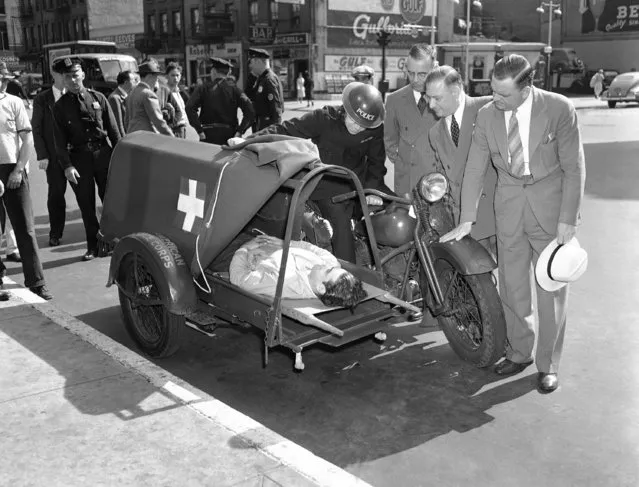
Developed for the British American Ambulance Corps, this new motorcycle ambulance is capable of speeding wounded soldiers 90 miles an hour from the front lines to field hospitals. Its springs are synchronized with the patient?s heartbeat to avoid increasing fever when traveling over various Terrain. Viewing it in New York  August 27, 1941, are left to right: constable Herbert Scott of England, driver; William E. Detlor, whose firm developed the vehicle; M. W. Stand, inspector-general of Civilian Defense, and Maj. Edward Riekert, also. (Photo by AP Photo)

Developed for the British American Ambulance Corps, this new motorcycle ambulance is capable of speeding wounded soldiers 90 miles an hour from the front lines to field hospitals. Its springs are synchronized with the patient's heartbeat to avoid increasing fever when traveling over various Terrain. Viewing it in New York August 27, 1941, are left to right: constable Herbert Scott of England, driver; William E. Detlor, whose firm developed the vehicle; M. W. Stand, inspector-general of Civilian Defense, and Maj. Edward Riekert, also. (Photo by AP Photo)
Details
28 Aug 2015 11:51:00
Mrs. Marie Graskamp of Milwaukee shows the different positions one might assume when entering the bomb shelter in Milwaukee  September 3, 1958. This circular entrance is about three feet in diameter. This is the entrance (according to the builders) that would connect to the cellar of a home assuming the shelter was in the ground for added protection. (Photo by AP Photo)

Mrs. Marie Graskamp of Milwaukee shows the different positions one might assume when entering the bomb shelter in Milwaukee September 3, 1958. This circular entrance is about three feet in diameter. This is the entrance (according to the builders) that would connect to the cellar of a home assuming the shelter was in the ground for added protection. If a bombing should occur, all members of family would proceed to the cellar and then through the circular port into the shelter. (Photo by AP Photo)
Details
04 Sep 2015 12:44:00
A tearful Beatle lover pleads unsuccessfully with a policeman to carry her fan button to Ringo, one of the four mop-top singers who drew squeals and shrieks from more than 30,000 spectators at two Indiana State Fair shows in Indianapolis on September 4, 1964. (Photo by Bob Daugherty/AP Photo)

A tearful Beatle lover pleads unsuccessfully with a policeman to carry her fan button to Ringo, one of the four mop-top singers who drew squeals and shrieks from more than 30,000 spectators at two Indiana State Fair shows in Indianapolis on September 4, 1964. (Photo by Bob Daugherty/AP Photo)
Details
05 Sep 2015 12:21:00
Somalis remove the body of a man killed in a blast in the capital Mogadishu, Somalia Saturday, October 14, 2017. (Photo by Farah Abdi Warsameh/AP Photo)

Somalis remove the body of a man killed in a blast in the capital Mogadishu, Somalia Saturday, October 14, 2017. A huge explosion from a truck bomb has killed at least 20 people in Somalia's capital, police said Saturday, as shaken residents called it the most powerful blast they'd heard in years. (Photo by Farah Abdi Warsameh/AP Photo)
Details
16 Oct 2017 08:57:00
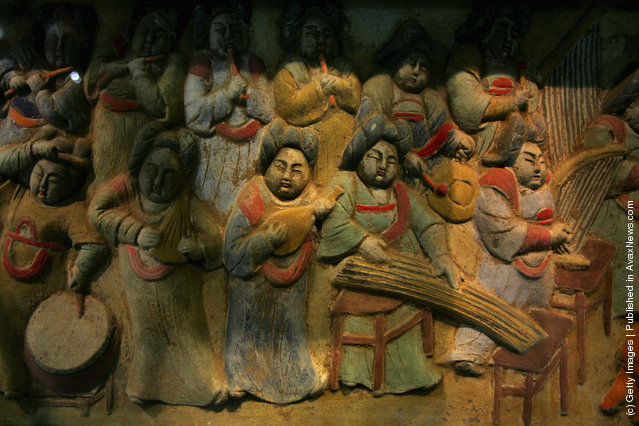
Chinese Music History Museum In Xian

Brick-carving featuring Tang Dynasty (AD 618-907) maids performing musical instruments is seen at the Chinese Music History Museum in Xian University of Architecture and Technology on September 27, 2008 in Xian of Shaanxi Province, China. (Photo by China Photos/Getty Images)
Details
13 Aug 2011 12:21:00
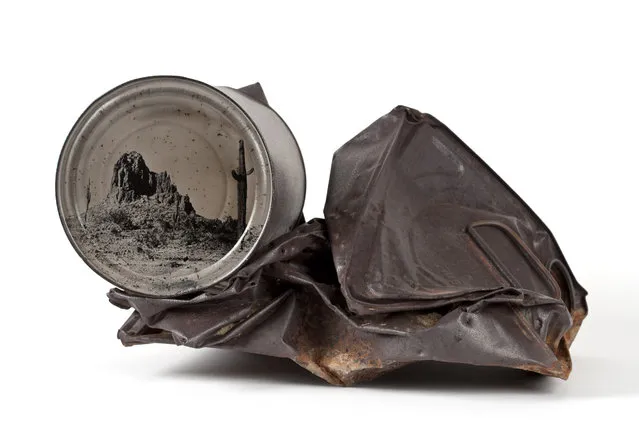
Conversations with History by Photographer David Emitt Adams

Photographer David Emitt Adams creates tintypes on discarded cans he collects from the Sonoran Desert. In his artist statement, Adams says that some are more than four decades old, which have earned a deep reddish-brown, rusty coloration. (Photo by David Emitt Adams)
Details
19 Mar 2014 05:24:00
Ocean voyage

Do you think that history is a science? Well, not exactly. First, and foremost, history is the state's “legend of wars”, it’s official regalia. Of course, public historians are not interested in scientific truth – quite the opposite. In this respect, any attempt to present a state’s history as altruistic and benevolent as possible is welcomed and encouraged – as opposed to any revisionism attempts that may be more accurate. In this matter, Chinese have surpassed us all – they revised in highly creative manner (but rather shamelessly) the technology already invented by Europeans, a process that resulted in oldest state on the planet. Here is an interesting paradox: ask any sinologist about the Middle Kingdom during second century B.C., and he will describe it to you in such a vivid manner as if he has been living there all his life – but as soon as you will ask him to describe Chinese history in the 19-20th centuries… let's say, his eagerness will be greatly diminished. However, we will discuss China in a different article, and in the meantime we will try to understand how exactly historic “legend of wars” is formed and functions – based on a specific and well-known example. A great example is Ferdinand Magellan's first voyage around the world.

Details
14 Nov 2011 09:11:00