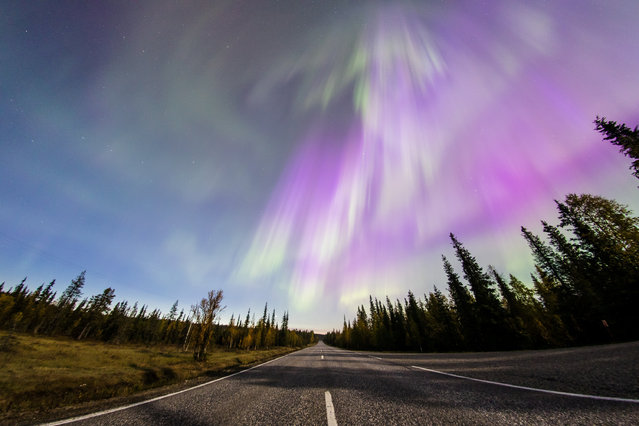
The Aurora Borealis (Northern Lights) is seen over the sky near the village of Pallas (Muonio region) of Lapland, Finland September 8, 2017. (Photo by Alexander Kuznetsov/Reuters)
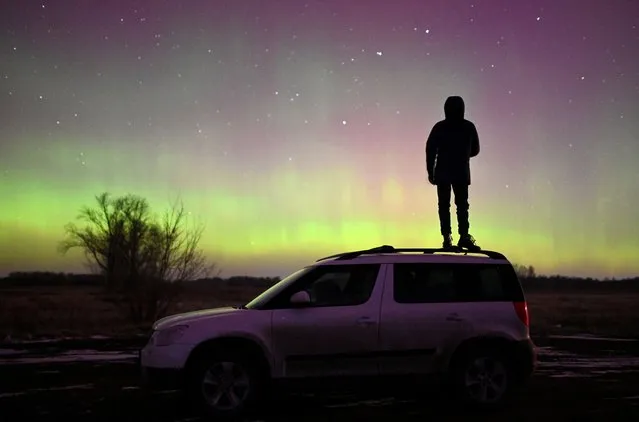
A person stands on a car while looking at Auroras, caused by a coronal mass ejection on the Sun, that illuminate the skies in the southwestern Siberian Omsk region, Russia on November 6, 2023. (Photo by Alexey Malgavko/Reuters)
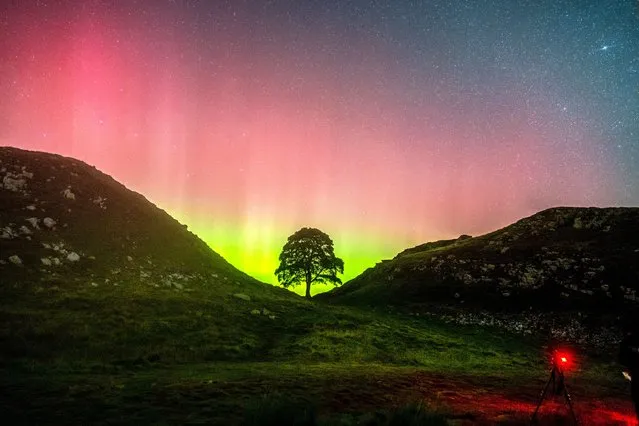
The Northern lights made an appearance just after midnight on Wednesday over Sycamore Gap in Northumberland, North East England on September 13, 2023, with the aurora pillars visible. (Photo by Ian Sproat/Picture Exclusive)
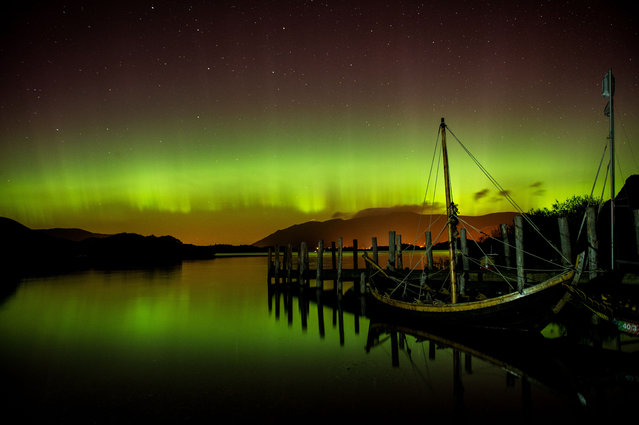
The aurora borealis, or the northern lights occur over Derwentwater, near Keswick, England, Thursday October 8, 2015. The northern lights are the result of collisions between gaseous particles in the Earth's atmosphere with charged particles released from the sun. (Photo by Owen Humphreys/PA Wire via AP Photo)
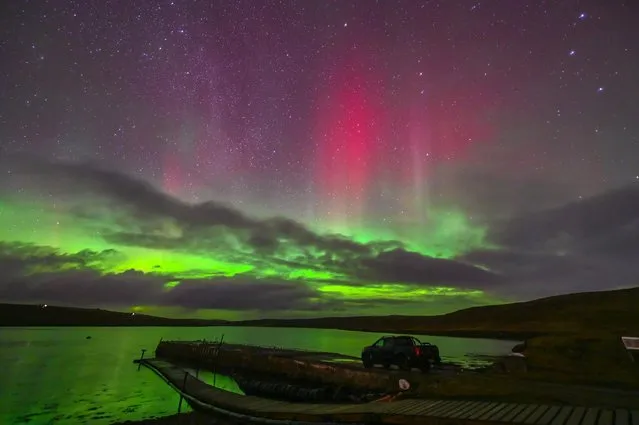
The northern lights as seen from from Yell in the Shetland Islands, Scotland on January 15, 2023. The aurora borealis is caused by collisions between electrically charged particles released from the sun that enter the Earth’s atmosphere and collide with gases such as oxygen and nitrogen. (Photo by Ryan Nisbet/Capture Media Agency)
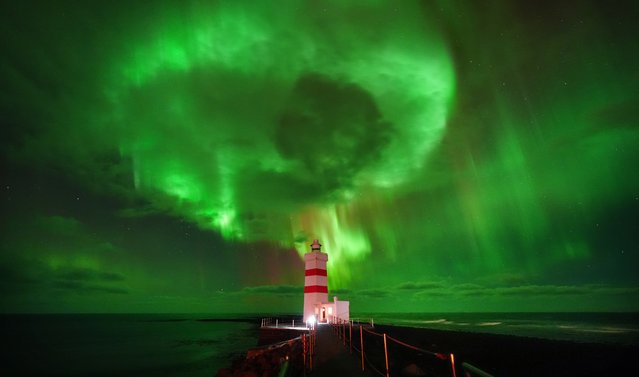
The aurora borealis, also known as the northern lights, visible above Old Gardur Lighthouse on the northern point of the Reykjanes peninsula in Iceland on Sunday, November 24, 2024. The lighthouse dates to 1897, and was one of the first built in Iceland. (Photo by Owen Humphreys/PA Images via Getty Images)
Three cabaret dancers sit glum-faced in the Windmill Theatre's canteen upon hearing the news that the theatre's owners have sold out to a cinema company, on October 02, 1964. The theatre, which was the first to include nudity in its shows, has been able to cope with competition from a growing number of West End strip clubs. (Photo by Hulton-Deutsch Collection/CORBIS/Corbis via Getty Images)