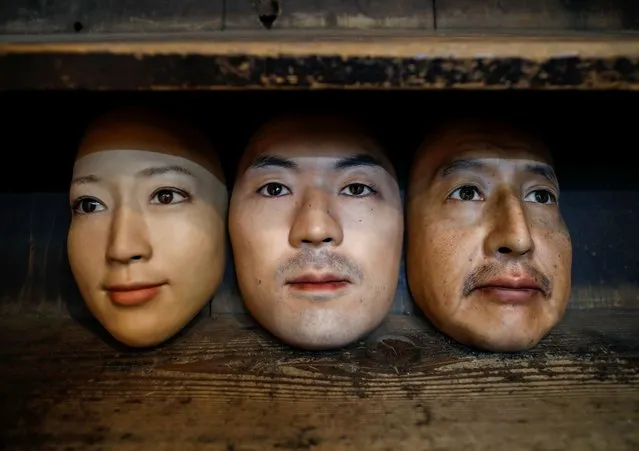
A man, wearing a protective mask following an outbreak of the coronavirus disease (COVID-19), walks in Tokyo, Japan on March 17, 2020. (Photo by Edgard Garrido/Reuters)
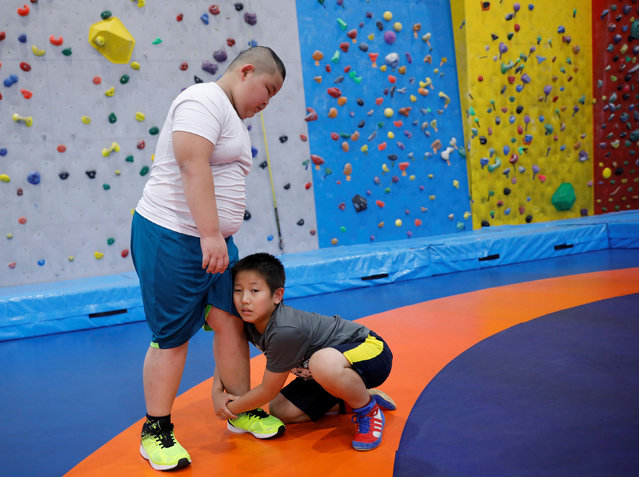
Kyuta Kumagai, 10, wrestles with a boy the same age as him, during a training session at Buddy acL Ariake's wrestling club in Tokyo, Japan, August 22, 2020. (Photo by Kim Kyung-Hoon/Reuters)
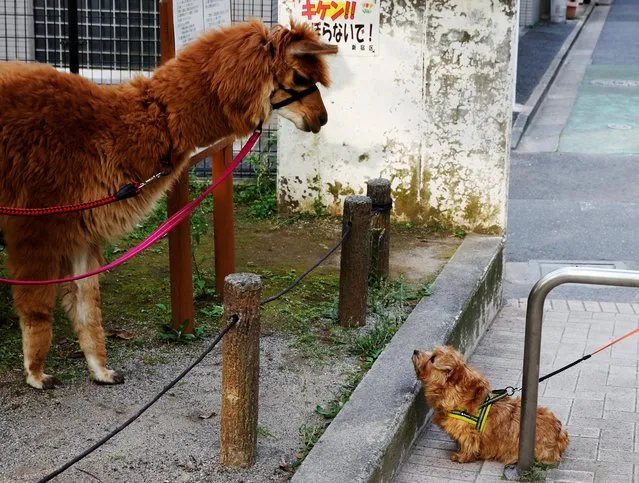
An alpaca Satsuki looks at a pet dog at a park while Alpaca Fureai Land's staffs walk the alpaca during early morning in Tokyo, Japan on June 21, 2023. (Photo by Kim Kyung-Hoon/Reuters)
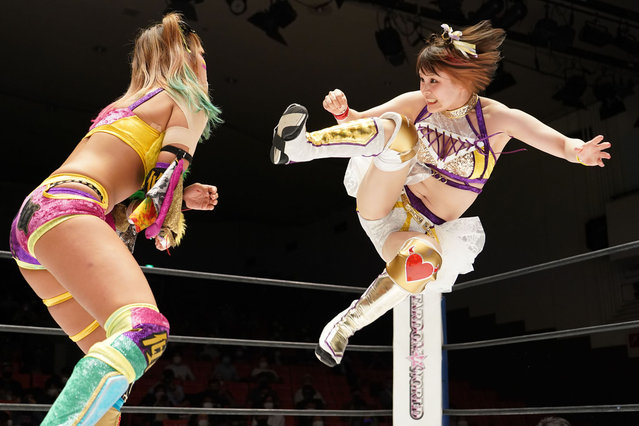
Waka Tsukiyama and Sayaka Unagi compete during the Women's Pro-Wrestling “Stardom” at Korakuen Hall on September 06, 2021 in Tokyo, Japan. (Photo by Etsuo Hara/Getty Images)
Ella Bucio of Mexico takes part in a training session before Women's Speed Semi Final at the FIG Parkour World Championships in Tokyo on October 15, 2022. (Photo by Philip Fong/AFP Photo)
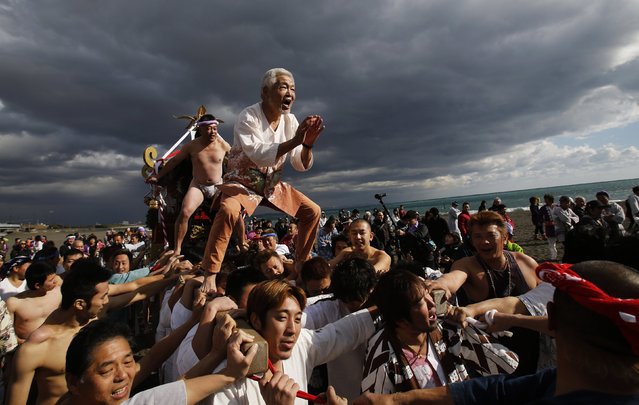
Men ride on a “mikoshi” or portable shrine as local people carry it into the sea during a festival to wish peace in the ocean and good fortune in the new year in Oiso, west of Tokyo, January 1, 2015. (Photo by Yuya Shino/Reuters)
Отава Ё – Яблочко (Otava Yo – Yablochko; Russian: Яблочко, “Little Apple”). Yablochko is a Russian folk song of chastushka style and dance, traditionally presented as sailors' dance. The choreographed version of the dance first appeared in the 1926 Reinhold Glière ballet The Red Poppy and from there is known in the West as the Russian Sailors Dance.