Loading...
Done
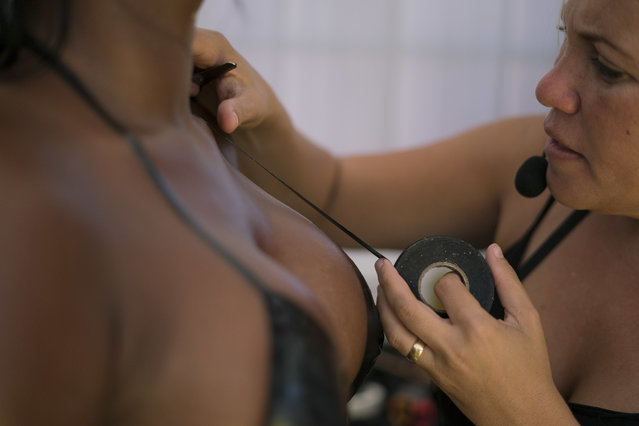
In this January 11, 2017 photo, Erika Martins uses black electrical tape to create a customer's bikini, in order to attain crisp tan lines, on her rooftop Erika Bronze salon in the suburb of Realengo in Rio de Janeiro, Brazil. Martins wears a microphone connected to an open speaker system in order to direct her assistants to clients who need more tanning lotion or a sprinkling of water on their skin. (Photo by Renata Brito/AP Photo)

In this January 11, 2017 photo, Erika Martins uses black electrical tape to create a customer's bikini, in order to attain crisp tan lines, on her rooftop Erika Bronze salon in the suburb of Realengo in Rio de Janeiro, Brazil. Martins wears a microphone connected to an open speaker system in order to direct her assistants to clients who need more tanning lotion or a sprinkling of water on their skin. (Photo by Renata Brito/AP Photo)
Details
25 Jan 2017 11:21:00
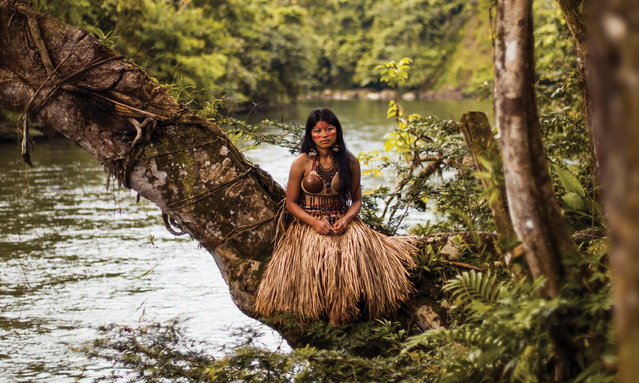
Ecuador: “More and more tribes of Amazonia are starting to adopt modern clothes for everyday life. But they are still keeping their traditional clothes for important events. I photographed this young woman in her wedding outfit”. (Photo by Mihaela Noroc/The Guardian)

Photographer Mihaela Noroc travelled the world from Ethiopia to the US and from Guatemala to France in search of natural and authentic beauty. She introduces some of the inspiring women she met on her journey. Here: Ecuador. “More and more tribes of Amazonia are starting to adopt modern clothes for everyday life. But they are still keeping their traditional clothes for important events. I photographed this young woman in her wedding outfit”. (Photo by Mihaela Noroc/The Guardian)
Details
27 Sep 2017 08:29:00
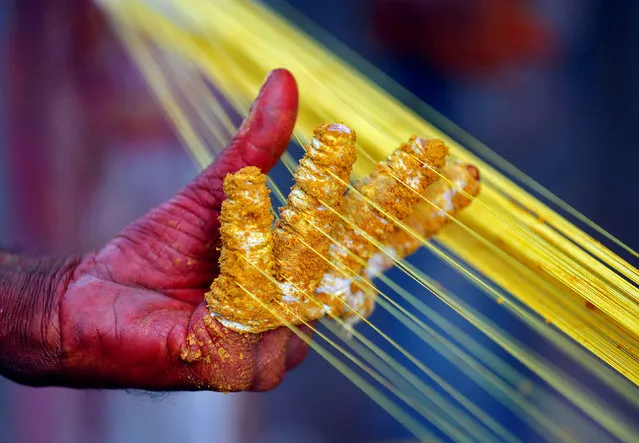
A worker applies colour to strings which will be used to fly kites, by a roadside in Ahmedabad, India, November 23, 2017. (Photo by Amit Dave/Reuters)

A worker applies colour to strings which will be used to fly kites, by a roadside in Ahmedabad, India, November 23, 2017. (Photo by Amit Dave/Reuters)
Details
27 Nov 2017 09:03:00
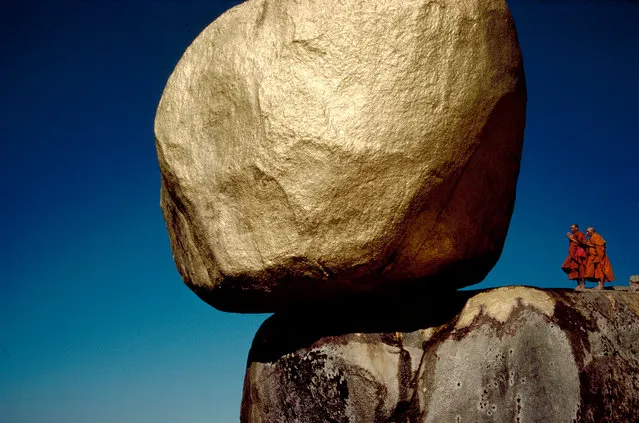
Kyaiktiyo, Burma, 1978. The Golden Rock at Shwe Pyi Daw (the Golden Country), the Buddhist holy place. Hiroji Kubota writes: “I was desperate to keep a distance from America for a while; luckily, I found Burma and its gentle and compassionate people. In the spring of 1978, on the top of the hill where I took this photo, I had two Leica bodies: the one with Tri-X and the other with Kodachrome 64. Soon after, I realised that the colour one looked very colourful and was more powerful. That was my decisive moment, to become a colour photographer”. (Photo by Hiroji Kubota/Magnum Photos)

Kyaiktiyo, Burma, 1978. The Golden Rock at Shwe Pyi Daw (the Golden Country), the Buddhist holy place. Hiroji Kubota writes: “I was desperate to keep a distance from America for a while; luckily, I found Burma and its gentle and compassionate people. In the spring of 1978, on the top of the hill where I took this photo, I had two Leica bodies: the one with Tri-X and the other with Kodachrome 64. Soon after, I realised that the colour one looked very colourful and was more powerful. That was my decisive moment, to become a colour photographer”. (Photo by Hiroji Kubota/Magnum Photos)
Details
10 Jun 2016 13:30:00
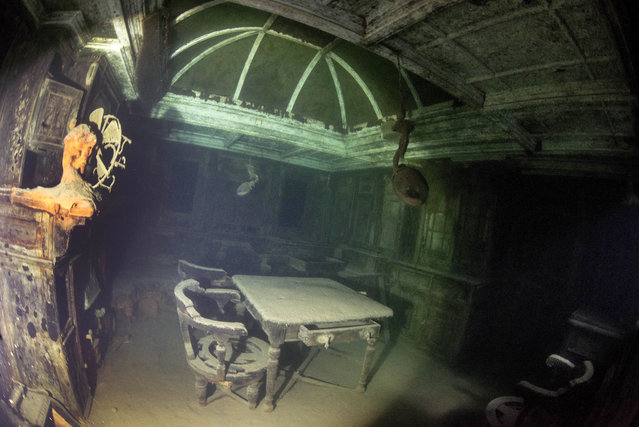
Not many divers visit the Gunilda, due to its remote location, depths of 270 feet, and chilly (38 degrees F/3 degrees C) temperatures. (Photo by Becky Kagan Schott/Caters News Agency)

These stunning images reveal the remains of a more than century-old sunken ship that has been preserved beneath freezing Lake Superior. The ship looks almost exactly the same as it did the day it sunk beneath waves all those years ago. At 60 meters long (approximately 198 feet), the «Gunilda» sunk after it struck some rocks and was not saved. Now, these stunning images have been captured 107 years after the sinking when a small group of divers revisited the vessel. (Photo by Becky Kagan Schott/Caters News Agency)
Details
25 Apr 2018 00:01:00
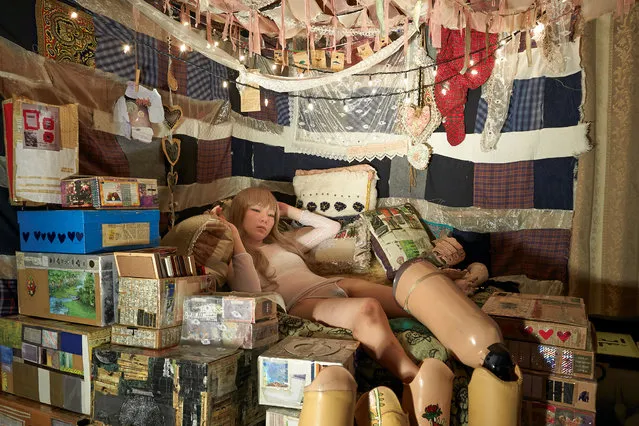
Ophelia (2013). From a series of photos of imagined women exhibited at the 2013 Aichi Triennale. Here, Katayama invokes Hamlet’s tragic heroine, after the painting by British pre-Raphaelite John Everett Millais. (Photo by Mari Katayama/The Guardian)

Born with a rare condition, the artist has chronicled her life in portraits – capturing everything from her tattooed prosthetics to the tentacled creature she stitched together on the shores of Naoshima. Here: Ophelia (2013). From a series of photos of imagined women exhibited at the 2013 Aichi Triennale. Here, Katayama invokes Hamlet’s tragic heroine, after the painting by British pre-Raphaelite John Everett Millais. (Photo by Mari Katayama/The Guardian)
Details
07 Mar 2017 00:04:00
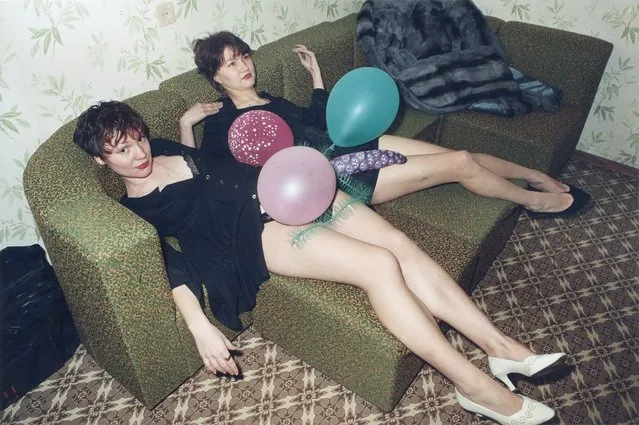
Yoshkar-Ola, Matrosova Street (1995). He turned his lens upon Russians – particularly young people – in the newly liberated state. (Photo by Sergey Chilikov)

Russian pop art photographer Sergey Chilikov captures a nation liberated from the social oppression of late-era Soviet rule – at parties, in the streets, and bouncing high. His exhibition, Photoprovocations, will be at Photo London, 19-22 May. Here: Yoshkar-Ola, Matrosova Street (1995). (Photo by Sergey Chilikov)
Details
20 May 2016 13:10:00
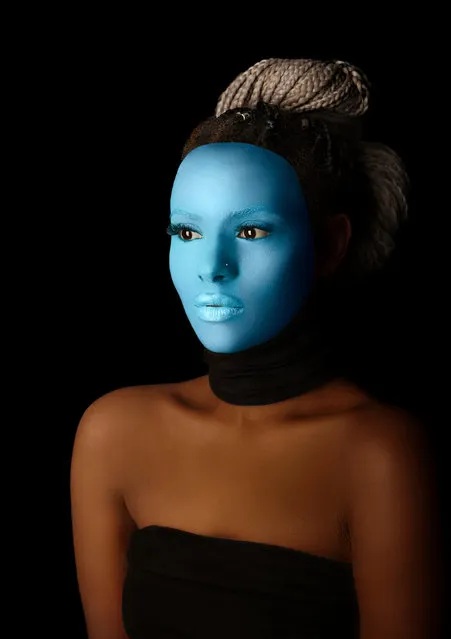
Brtukan. “Being a girl of colour in a society where the majority of the people are white, I have had to get used to all the different ways people approach me. From being asked what kind of rap music you listen to and how you wash your hair, to getting told, “you don’t sound black”, “you’re pretty for a black girl” or “you’re not that black so it’s OK”, as if being black is such a bad thing”. (Photo by Lisa Minogue/The Guardian)

As part of FLAIR Melbourne – a Flinders Lane art festival – Melbourne’s Lisa Minogue presents stylised photographic portraits of Australian women of colour, their faces painted vibrantly to accentuate their individuality and encourage the viewer to study each face more closely. Minogue asked each woman the same question: “What do the words “coloured girl” mean to you?”. (Photo by Lisa Minogue/The Guardian)
Details
17 Aug 2016 11:16:00