Loading...
Done
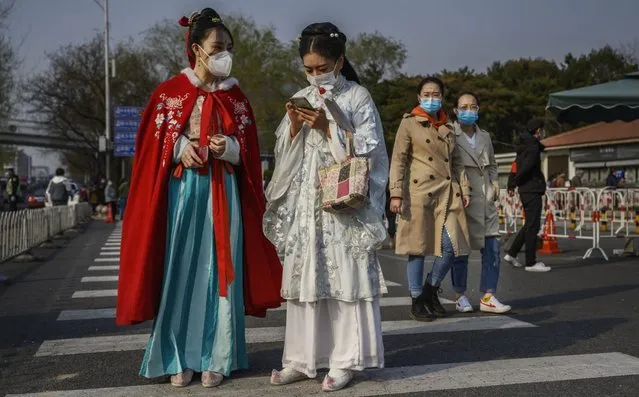
Chinese women wear protective masks as they are dressed in traditional clothing from the Qing Dynasty era outside a park on March 29, 2020 in Beijing, China. A limited section of the iconic tourist site was re-opened to the public this week allowing a smaller number of visitors to reserve tickets online in advance and to enter after passing health screening. With the pandemic hitting hard across the world, China recorded its first day with no new domestic cases of the coronavirus last week, since the government imposed sweeping measures to keep the disease from spreading. For two months, millions of people across China have been restricted in how they move from their homes, while other cities have been locked down in ways that appeared severe at the time but are now being replicated in other countries trying to contain the virus. Officials believe the worst appears to be over in China, though there are concerns of another wave of infections as the government attempts to reboot the worlds second largest economy. In Beijing, it is mandatory to wear masks outdoors, retail stores operate on reduced hours, restaurants employ social distancing among patrons, and tourist attractions at risk of drawing large crowds remain closed. Monitoring and enforcement of virus-related measures and the quarantine of anyone arriving to Beijing is carried out by neighborhood committees and a network of Communist Party volunteers who wear red arm bands. A primary concern for Chinese authorities remains the arrival of flights from Europe and elsewhere, given the exposure of passengers in regions now regarded as hotbeds for transmission. Since January, China has recorded more than 81,000 cases of COVID-19 and at least 3200 deaths, mostly in and around the city of Wuhan, in central Hubei province, where the outbreak first started. (Photo by Kevin Frayer/Getty Images)

Chinese women wear protective masks as they are dressed in traditional clothing from the Qing Dynasty era outside a park on March 29, 2020 in Beijing, China. A limited section of the iconic tourist site was re-opened to the public this week allowing a smaller number of visitors to reserve tickets online in advance and to enter after passing health screening. (Photo by Kevin Frayer/Getty Images)
Details
01 Apr 2020 00:05:00
Revellers enjoy a night out in central Liverpool, northwest England, on December 30, 2020 before hightened Tier 3 restrictions closing hospitality venues, and bars indoor and outdoor socialising between households are imposed in the city amid surging cases of the novel coronavirus. Tighter coronavirus restrictions will be extended across England from on December 30 the British government announced, with a new Covid-19 variant blamed for a rapid surge in cases. Liverpool enters Tier 3, which closes hospitality venues, and bars indoor and outdoor socialising between households with the highest Tier 4 rules, which require all non-essential shops, hairdressers as well as leisure and entertainment venues to close, will now apply to more than 44 million people. (Photo by Oli Scarff/AFP Photo)

Revellers enjoy a night out in central Liverpool, northwest England, on December 30, 2020 before hightened Tier 3 restrictions closing hospitality venues, and bars indoor and outdoor socialising between households are imposed in the city amid surging cases of the novel coronavirus. (Photo by Oli Scarff/AFP Photo)
Details
01 Mar 2021 08:47:00
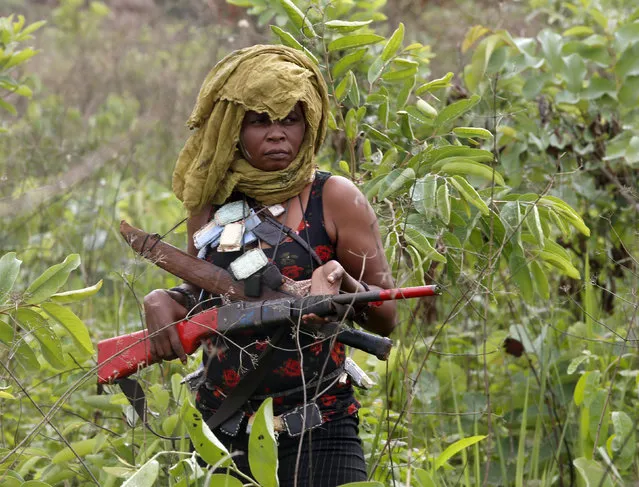
A female member of the anti-balaka, a Christian militia, patrols with other militiamen outside village of Zawa April 8, 2014. (Photo by Goran Tomasevic/Reuters)

Anti-balaka militia originally sprang up to protect the Christian population of the Central African Republic, but now stand accused of human rights abuses themselves. Last month, the African Union branded militia targeting Muslims in Central African Republic as “terrorists” and said they would be treated as enemy combatants, a day after killing a Congolese peacekeeper and amid deepening international frustration at continuing violence in the impoverished and landlocked country. Photo: A female member of the anti-balaka, a Christian militia, patrols with other militiamen outside village of Zawa April 8, 2014. (Photo by Goran Tomasevic/Reuters)
Details
10 Apr 2014 10:26:00
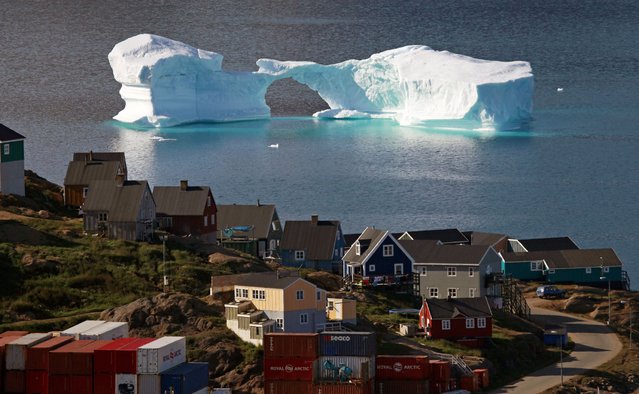
File photo of an iceberg floating near a harbour in the town of Kulusuk, east Greenland August 1, 2009. The United Nations 19th Climate Change Conference (COP19) will take place November 11-22, 2013 in Warsaw. The main goal of the talks with almost almost 200 nations assembled, is to lay the foundation for the new global climate agreement, aiming at further emission reduction, which is to be signed in 2015 in Paris and be launched in 2020. (Photo by Bob Strong/Reuters)

It's taken roughly five months, but a massive iceberg has separated from Antarctica's Pine Island Glacier. According to NASA's Earth Observatory, the estimated size of this iceberg, named B-31, is around 660 square kilometres (33 km long by 20 km wide) – a city-sized block of ice that has slowly migrated away from the continent, and is now floating out to sea. Take a look at some massive icebergs afloat in the oceans. Photo: File photo of an iceberg floating near a harbour in the town of Kulusuk, east Greenland August 1, 2009. (Photo by Bob Strong/Reuters)
Details
27 Apr 2014 07:47:00
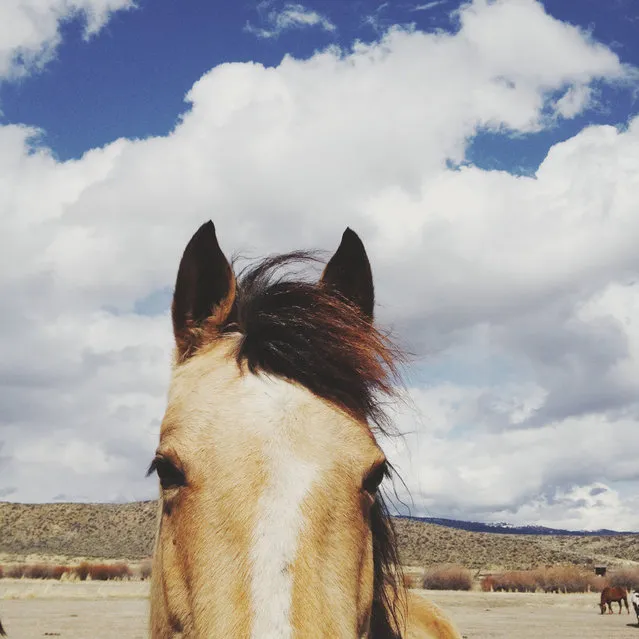
Professional iPhone Photographer Kevin Russ

Kevin Russ, a photographer & image moderator for iStockphoto, grew up in Arroyo Grande, California. In 2003, he made the move to Portland, planning to study at Multnomah Bible College. Finding the workload to be minimal, Kevin invested in a camera, filling his free time and finding himself instantly smitten with the craft. A year and a half later, photography had evolved into his full-time job. However, after 4 years of consistent portrait work, Kevin became burnt out and took a step back from photography altogether. Two years later, he picked up the camera again and now spends the majority of his time on the road, exploring & photographing the rustic landscapes & wildlife he encounters.
Details
04 Jun 2014 16:57:00
Cassette Tape Art By Benoit Jammes

So I'm a 33 year old graphic designer, and I live in Paris, France
This work on cassette tapes is entirely handmade, with a bit of work but so nostalgia... It so happened that I found a bunch of old cassettes at home; seeing them brought me back, in thought, to an earlier time, the 80s, and to me as a kid. In any case, I could not play them any more so resurrecting them sounded like a good idea...it was sound, it became visual! And I am pretty sure they are more happy now than in a shoebox :-)
I think people from my generation relate to this work because many enjoy the funny side of it, the references. They are happy to see that these old cassette tapes managed to start a new life!

Signed and numbered prints are available for sale.

Benoit Jammes

Details
11 Apr 2013 11:06:00
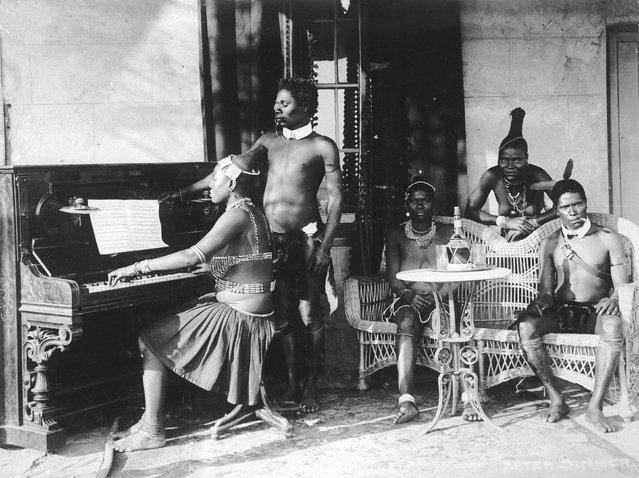
circa 1925:  A Zulu woman playing the piano while a group of others sit and listen.  (Photo by General Photographic Agency/Getty Images)

“The Zulu are the largest South African ethnic group, with an estimated 10–11 million people living mainly in the province of KwaZulu-Natal. Small numbers also live in Zimbabwe, Zambia, and Mozambique. Their language, Zulu, is a Bantu language; more specifically, part of the Nguni subgroup. The Zulu Kingdom played a major role in South African history during the 19th and 20th centuries. Under apartheid, Zulu people were classed as third-class citizens and suffered from state-sanctioned discrimination. They remain today the most numerous ethnic group in South Africa, and now have equal rights along with all other citizens”. – Wikipedia.

Photo: A Zulu woman playing the piano while a group of others sit and listen (to put it briefly, Englishmen scoff over Zulu). South Africa, circa 1925. (Photo by General Photographic Agency)

Details
03 Feb 2014 09:40:00
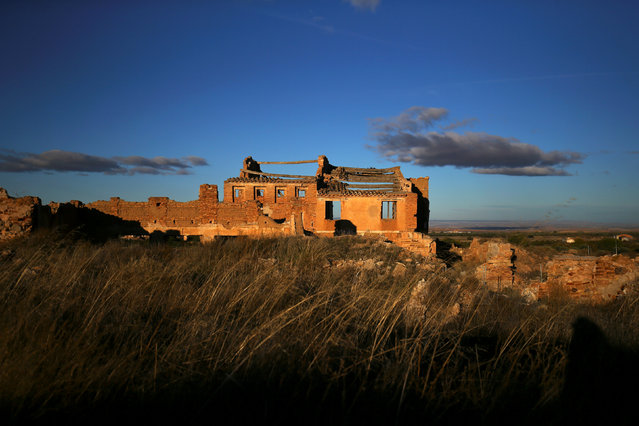
Ruins of a building are seen in the old village of Belchite, in northern Spain, November 13, 2016. (Photo by Andrea Comas/Reuters)

Ruins of a building are seen in the old village of Belchite, in northern Spain, November 13, 2016. Almost 80 years ago Tomas Ortin fled under the cover of night from his home in the small town of Belchite on Spain's northern plains to escape with hundreds of others from one of the bloodiest battles of the country's civil war. At 94 years old, Ortin now lives just across the road from Belchite, which has lain in ruins since Republican forces attacked it, a symbol of the destruction caused by the 1936-1939 war in which an estimated 500,000 people died. (Photo by Andrea Comas/Reuters)
Details
30 Nov 2016 12:31:00