Loading...
Done
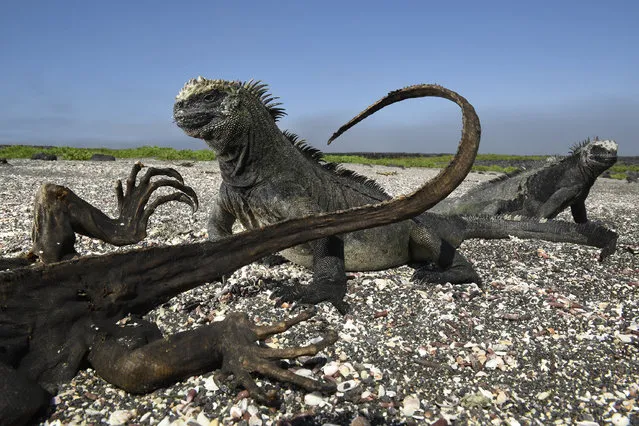
Galapagos – Rocking the Cradle: Four major ocean currents converge along the Galapagos archipelago, creating the conditions for an extraordinary diversity of animal life, April 25, 2016. The islands are home to at least 7,000 flora and fauna species, of which 97 percent of the reptiles, 80 percent of the land birds, 50 percent of the insects and 30 percent of the plants are endemic. The local ecosystem is highly sensitive to the changes in temperature, rainfall and ocean currents that characterize the climatic events known as El Niño and La Niña. These changes cause marked fluctuations in weather and food availability. Many scientists expect the frequency of El Niño and La Niña to increase as a result of climate change, making the Galapagos a possible early-warning location for its effects. (Photo by Thomas P. Peschak for National Geographic/World Press Photo)

Galapagos – Rocking the Cradle: Four major ocean currents converge along the Galapagos archipelago, creating the conditions for an extraordinary diversity of animal life, April 25, 2016. The islands are home to at least 7,000 flora and fauna species, of which 97 percent of the reptiles, 80 percent of the land birds, 50 percent of the insects and 30 percent of the plants are endemic. (Photo by Thomas P. Peschak for National Geographic/World Press Photo)
Details
16 Apr 2018 00:01:00
While the lido was described as bringing “modernism to the masses” on the British coast it was just the latest example of a trend that had been developing since Victorian times – transforming seaside towns into resorts for leisure and entertainment. In the latter half of the nineteenth century, the fashion was for local authorities to build great piers stretching from the promenade out into the sea

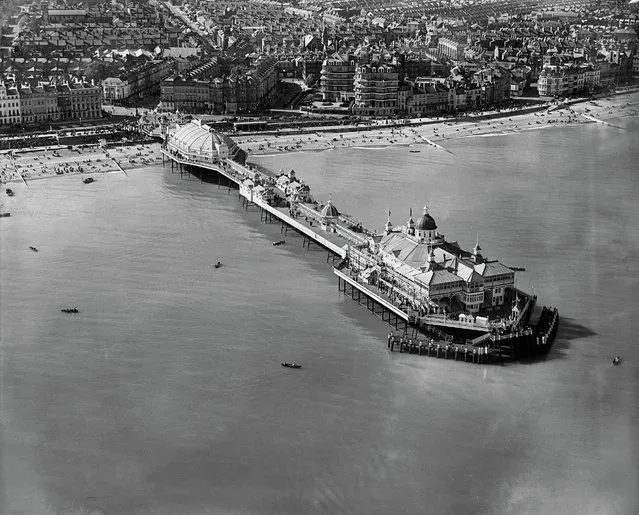
While the lido was described as bringing “modernism to the masses” on the British coast it was just the latest example of a trend that had been developing since Victorian times – transforming seaside towns into resorts for leisure and entertainment. In the latter half of the nineteenth century, the fashion was for local authorities to build great piers stretching from the promenade out into the sea. The Eastbourne Pier, pictured here in May 1931, was erected between 1866 and 1870 to an ingenious design by Eugenius Birch, which saw the structure sitting on special cups allowing the supporting struts to “move” in bad weather. Arranged on the pier's 1,000-foot length were kiosks, a theatre, a ballroom and a camera obscura. 1931. (Photo by Aerofilms Collection via “A History of Britain From Above”)
Details
25 Feb 2014 12:59:00
Young revelers take part in a parade called "La Calabiuza" on November 1, 2015, on the eve of the Day of the Dead in Tonacatepeque, 20 kms (13 miles) north of San Salvador. During the celebration, the residents of Tonacatepeque, originally an indigenous community, recall the characters from the mythology of Cuscatlan – pre-Columbian west and central regions of El Salvador – and their dead relatives. (Photo by Marvin Recinos/AFP Photo)

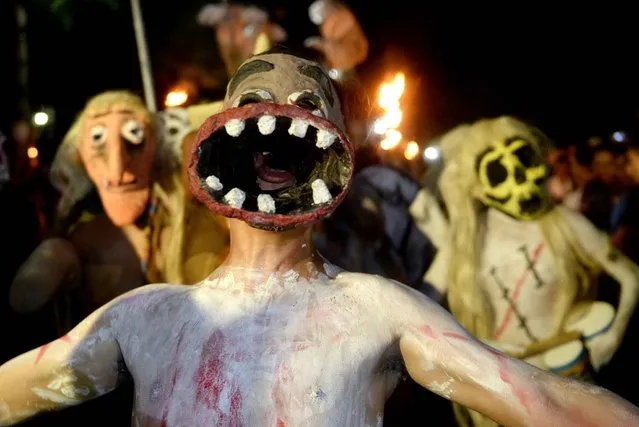
Young revelers take part in a parade called "La Calabiuza" on November 1, 2015, on the eve of the Day of the Dead in Tonacatepeque, 20 kms (13 miles) north of San Salvador. During the celebration, the residents of Tonacatepeque, originally an indigenous community, recall the characters from the mythology of Cuscatlan – pre-Columbian west and central regions of El Salvador – and their dead relatives. (Photo by Marvin Recinos/AFP Photo)
Details
04 Nov 2015 11:50:00
People walk past debris on May 3, 2015 in Bhaktapur, Nepal. A major 7.8 earthquake hit Kathmandu mid-day on Saturday, and was followed by multiple aftershocks that triggered avalanches on Mt. Everest that buried mountain climbers in their base camps. (Photo by David Ramos/Getty Images)

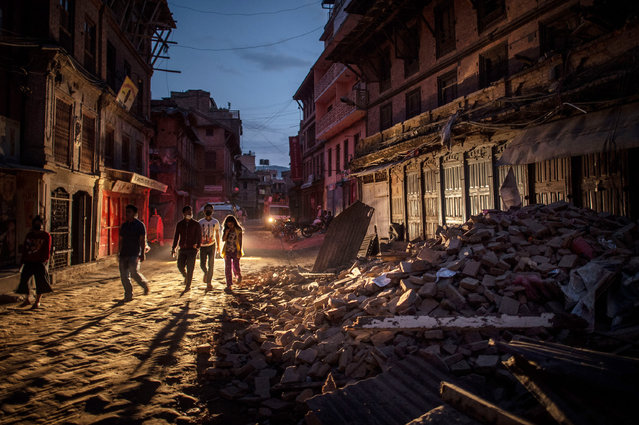
People walk past debris on May 3, 2015 in Bhaktapur, Nepal. A major 7.8 earthquake hit Kathmandu mid-day on Saturday, and was followed by multiple aftershocks that triggered avalanches on Mt. Everest that buried mountain climbers in their base camps. (Photo by David Ramos/Getty Images)
Details
09 May 2015 11:38:00
“The Storm”. During I was taking photo with my nephew, the storm came and I caught this beautiful moment. Photo location: Kocaeli, Turkey. (Photo and caption by Aytül Akbaş/National Geographic Photo Contest)

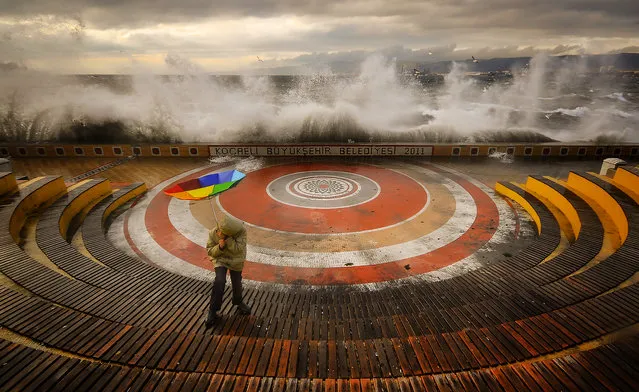
Honorable Mention: “The Storm”. During I was taking photo with my nephew, the storm came and I caught this beautiful moment. Photo location: Kocaeli, Turkey. (Photo and caption by Aytül Akbaş/National Geographic Photo Contest)
Details
28 Dec 2014 10:58:00
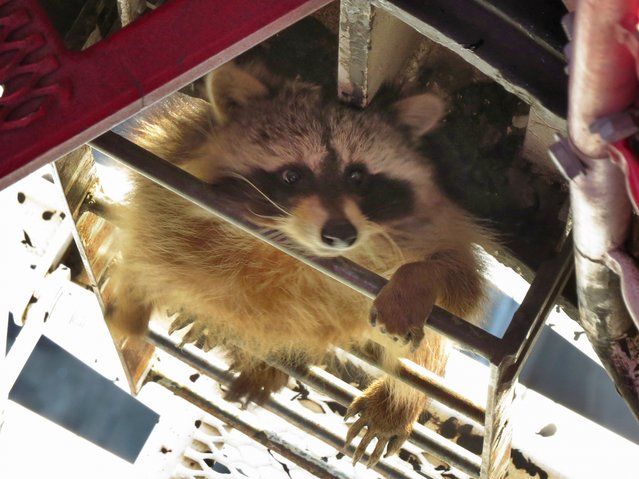
In this Thursday, April 16, 2015 photo provided by Robert MacFarlane, a raccoon climbs up a skyscraper in downtown Toronto. Social media was abuzz Thursday with the photo of the raccoon peering from between the metallic rungs of a crane 58 stories high. (Photo by Robert MacFarlane)

In this Thursday, April 16, 2015 photo provided by Robert MacFarlane, a raccoon climbs up a skyscraper in downtown Toronto. Social media was abuzz Thursday with the photo of the raccoon peering from between the metallic rungs of a crane 58 stories high. (Photo by Robert MacFarlane)
Details
18 Apr 2015 11:03:00
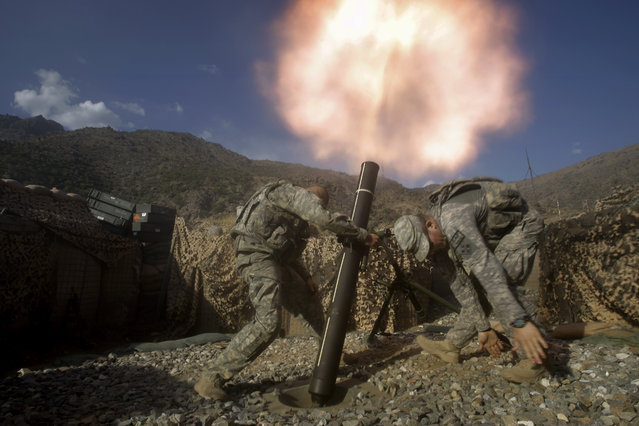
U.S. soldiers from the 2nd Battalion, 12th Infantry Regiment, 4th Brigade Combat Team, fire mortars at known enemy firing positions from a base in the Pech River Valley in Afghanistan's Kunar province, Saturday, October 24, 2009. (Photo by David Guttenfelder/AP Photo)

David Guttenfelder was born in Iowa and graduated from the University of Iowa with a Bachelor of Arts in cultural anthropology. He has worked for the AP since 1994 based in Kenya, the Ivory Coast, India and Japan. He is currently AP’s chief Asia photographer and his feature work has been used prominently in editorial publications throughout the world including Time and National Geographic. Photo: U.S. soldiers from the 2nd Battalion, 12th Infantry Regiment, 4th Brigade Combat Team, fire mortars at known enemy firing positions from a base in the Pech River Valley in Afghanistan's Kunar province, Saturday, October 24, 2009. (Photo by David Guttenfelder/AP Photo)
Details
21 Apr 2014 10:11:00
French army deminers secure a helicopter in a hangar at the Gao airport, on February 9, 2013. Two Malian soldiers and four civilians have already been killed by landmines, and French troops are still fighting off what Paris called “residual jihadists” in reclaimed territory. (Photo by Pascal Guyot/AFP Photo/The Atlantic)

French army deminers secure a helicopter in a hangar at the Gao airport, on February 9, 2013. Two Malian soldiers and four civilians have already been killed by landmines, and French troops are still fighting off what Paris called “residual jihadists” in reclaimed territory. (Photo by Pascal Guyot/AFP Photo via The Atlantic)
Details
28 Feb 2013 12:00:00