Loading...
Done
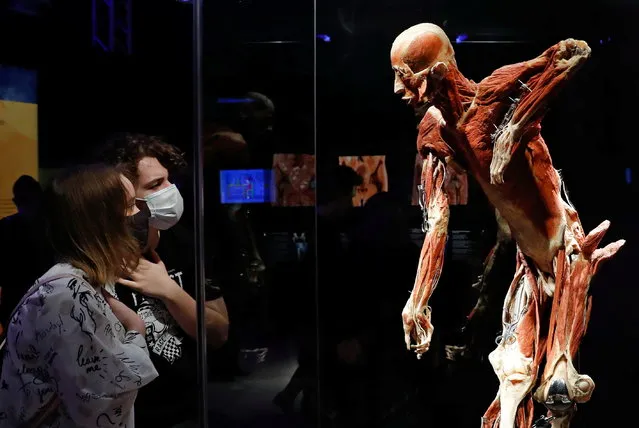
Visitors look at a plastinated human body during the “Body Worlds” exhibition by German anatomist Gunther von Hagens at a pavilion of the Exhibition of Achievements of National Economy (VDNKh) in Moscow, Russia on March 24, 2021. Head of Russian Investigative Committee Alexander Bastrykin ordered a probe of the exhibition after it sparked outrage among conservative religious groups and public figure. (Photo by Evgenia Novozhenina/Reuters)

Visitors look at a plastinated human body during the “Body Worlds” exhibition by German anatomist Gunther von Hagens at a pavilion of the Exhibition of Achievements of National Economy (VDNKh) in Moscow, Russia on March 24, 2021. Head of Russian Investigative Committee Alexander Bastrykin ordered a probe of the exhibition after it sparked outrage among conservative religious groups and public figure. (Photo by Evgenia Novozhenina/Reuters)
Details
25 Mar 2021 09:38:00
This picture taken on January 1, 2014 shows giant panda “Li Li” sleeping on a tree in Hangzhou Wild Animal World in Hangzhou, east China's Zhejiang province. Giant pandas, notorious for their low s*x drive, are among the world's most endangered animals. Fewer than 1,600 pandas remain in the wild, mainly in China's Sichuan province, with a further 300 in captivity around the world. (Photo by AFP Photo)

This picture taken on January 1, 2014 shows giant panda “Li Li” sleeping on a tree in Hangzhou Wild Animal World in Hangzhou, east China's Zhejiang province. Giant pandas, notorious for their low s*x drive, are among the world's most endangered animals. Fewer than 1,600 pandas remain in the wild, mainly in China's Sichuan province, with a further 300 in captivity around the world. (Photo by AFP Photo)
Details
04 Jan 2014 14:58:00
Takeoka Chisaka, Hiroshima, Japan. “One morning in August 1945, I was walking home from the night shift at a factory in Hiroshima. As I reached my door, there was a huge explosion. When I came to, my head was bleeding and I had been blasted 30m away”. (Photo and caption by Sasha Maslov)

Takeoka Chisaka, Hiroshima, Japan. “One morning in August 1945, I was walking home from the night shift at a factory in Hiroshima. As I reached my door, there was a huge explosion. When I came to, my head was bleeding and I had been blasted 30m away. The atomic bomb had detonated. When I found my mother, her eyes were badly burned. A doctor said they had to come out, but he didn’t have the proper tools so used a knife instead. It was hellish. I became a peace-worker after the war. In the 1960s, at a meeting at the UN, I met one of the people who created the atomic bomb. He apologised”. (Photo and caption by Sasha Maslov)
Details
11 May 2015 11:56:00
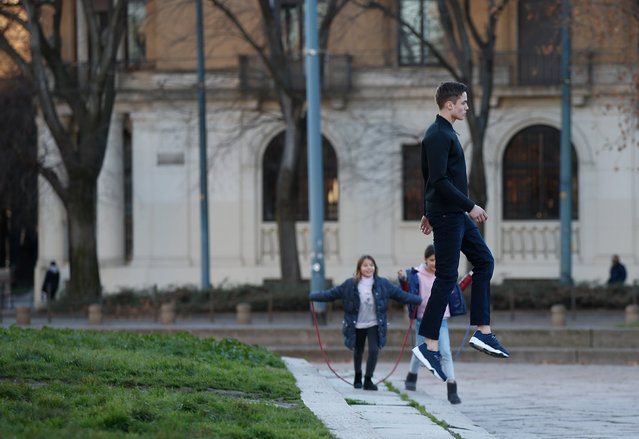
A model jumps during a photo shooting, in Milan, Italy, Friday, January 15, 2016. Men's fashion week starts today and will run until Tuesday, January 19. (Photo by Luca Bruno/AP Photo)

A model jumps during a photo shooting, in Milan, Italy, Friday, January 15, 2016. Men's fashion week starts today and will run until Tuesday, January 19. (Photo by Luca Bruno/AP Photo)
Details
17 Jan 2016 10:22:00
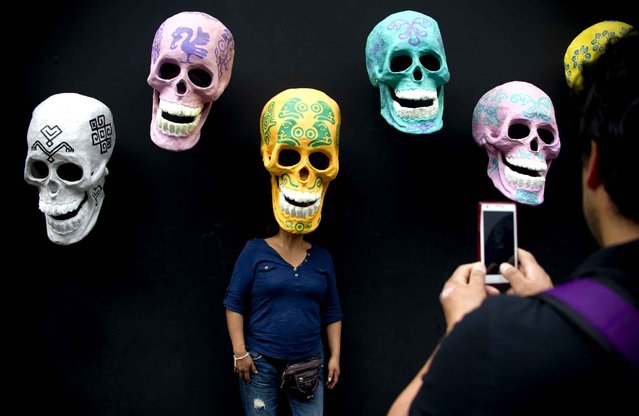
A woman poses for pictures with skulls made of cardboard placed on an altar next to the San Francisco church in Mexico City during the celebration of All Souls Day on November 2, 2015. (Photo by Yuri Cortez/AFP Photo)

A woman poses for pictures with skulls made of cardboard placed on an altar next to the San Francisco church in Mexico City during the celebration of All Souls Day on November 2, 2015. (Photo by Yuri Cortez/AFP Photo)
Details
05 Nov 2015 08:08:00
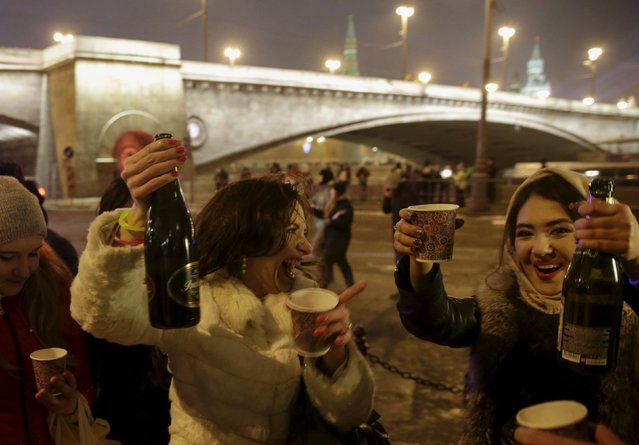
Revellers celebrate New Year's Day in central Moscow, Russia, January 1, 2016. (Photo by Tatyana Makeyeva/Reuters)

Revellers celebrate New Year's Day in central Moscow, Russia, January 1, 2016. (Photo by Tatyana Makeyeva/Reuters)
Details
02 Jan 2016 08:06:00
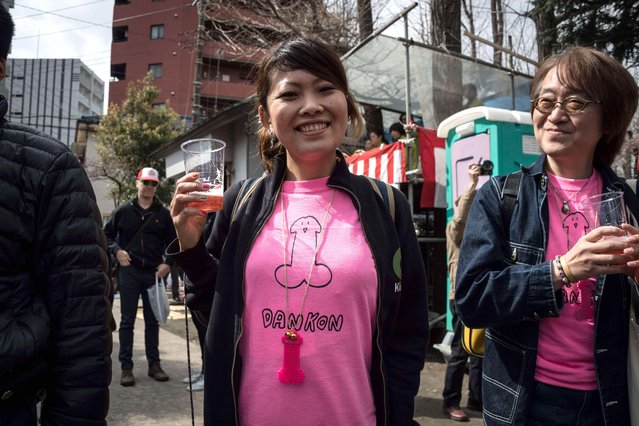
Festival goer with phallus logo t-shirt during the Kanamara Matsuri Steel Phallus Festival at Kawasaki, Japan on April 2, 2017. The Kanamara Matsuri or Festival of the Steel Phallus is held on the first Sunday of April at the Kanayama shrine. The shrine celebrates a legend of a steel pen*s and was frequented by prostitutes who wished to pray for protection from sexually transmitted diseases. Visitors now wish for easy delivery, marriage and matrimonial harmony. Because of the large steel phallus the unusual festival has become a tourist attraction attracting many overseas visitors and is used to raise money for HIV charities. Phallus shaped candy, carved vegetables, decorations, and a big parade are all part of the festival. (Photo by DELETREE/SIPA Press/Rex Features/Shutterstock)

Festival goer with phallus logo t-shirt during the Kanamara Matsuri Steel Phallus Festival at Kawasaki, Japan on April 2, 2017. The Kanamara Matsuri or Festival of the Steel Phallus is held on the first Sunday of April at the Kanayama shrine. The shrine celebrates a legend of a steel pen*s and was frequented by prostitutes who wished to pray for protection from sexually transmitted diseases. Visitors now wish for easy delivery, marriage and matrimonial harmony. Because of the large steel phallus the unusual festival has become a tourist attraction attracting many overseas visitors and is used to raise money for HIV charities. Phallus shaped candy, carved vegetables, decorations, and a big parade are all part of the festival. (Photo by DELETREE/SIPA Press/Rex Features/Shutterstock)
Details
04 Apr 2017 09:48:00
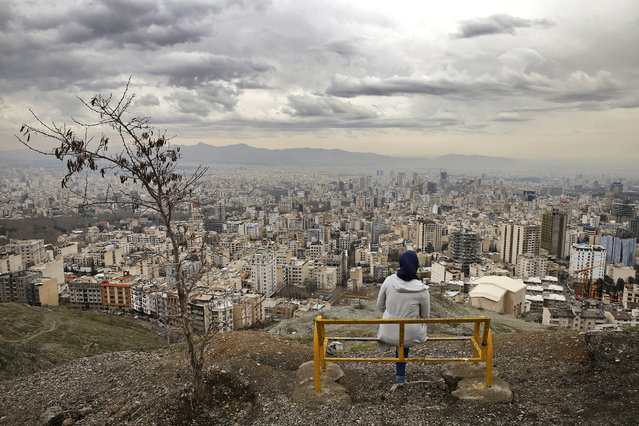
A woman spends her time outdoors to observe the ancient festival of Sizdeh Bedar, an annual public picnic day on the 13th day of the Iranian new year, at the Tochal mountainous area northern Tehran, Iran, Sunday, April, 2, 2017. Sizdeh Bedar, which comes from the Farsi words for “thirteen” and “day out”, is a legacy from Iran's pre-Islamic past that hard-liners in the Islamic Republic never managed to erase from calendars. (Photo by Ebrahim Noroozi/AP Photo)

A woman spends her time outdoors to observe the ancient festival of Sizdeh Bedar, an annual public picnic day on the 13th day of the Iranian new year, at the Tochal mountainous area northern Tehran, Iran, Sunday, April, 2, 2017. Sizdeh Bedar, which comes from the Farsi words for “thirteen” and “day out”, is a legacy from Iran's pre-Islamic past that hard-liners in the Islamic Republic never managed to erase from calendars. (Photo by Ebrahim Noroozi/AP Photo)
Details
21 Apr 2017 07:38:00