Loading...
Done
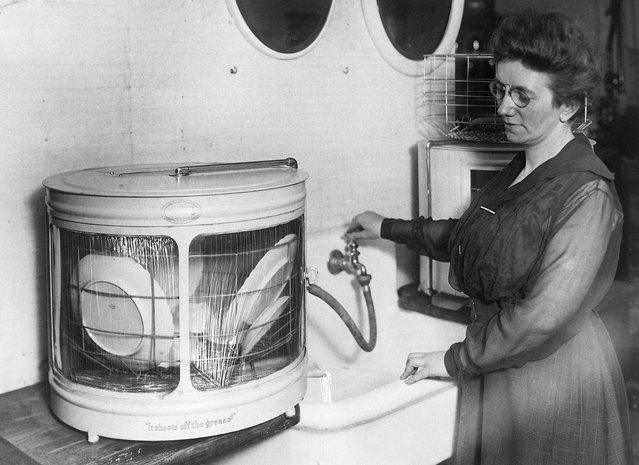
All the drugery of dishwashing in this three-times -a day task, which comes to the house wife who does her own house work, has been eliminated by the new dish washer shown in the photograph on April 25, 1921. It is the invention of a Cincinnati school teacher, who sought to make things a bit more pleasant for his wife. Incedently, his idea was worth 12,00 to him, for a manufacturing concern thought so much of the “dish-washer” they purchased the rights and will seek to add a little joy to thousands of other housewives. With the aid of only hot water, dishes placed in a wire rack and set into the drum are made clean and spotless in two minutes. (Photo by Bettmann Archive/Getty Images)

All the drugery of dishwashing in this three-times -a day task, which comes to the house wife who does her own house work, has been eliminated by the new dish washer shown in the photograph on April 25, 1921. It is the invention of a Cincinnati school teacher, who sought to make things a bit more pleasant for his wife. Incedently, his idea was worth 12,00 to him, for a manufacturing concern thought so much of the “dish-washer” they purchased the rights and will seek to add a little joy to thousands of other housewives. With the aid of only hot water, dishes placed in a wire rack and set into the drum are made clean and spotless in two minutes. (Photo by Bettmann Archive/Getty Images)
Details
08 Jul 2021 10:25:00
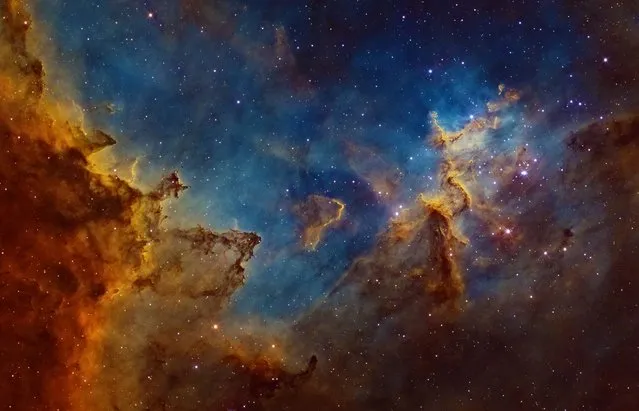
Centre of the Heart Nebula by Ivan Eder (Hungary). Situated 7500 light years away in the ‘W’-shaped constellation of Cassiopeia, the Heart Nebula is a vast region of glowing gas, energized by a cluster of young stars at its centre. The image depicts the central region, where dust clouds are being eroded and moulded into rugged shapes by the searing cosmic radiation. (Photo by Ivan Eder)

The competition, which is run by the Royal Observatory Greenwich in association with BBC Sky at Night Magazine, is now in its sixth year and has received over 2,500 entries. Photo: Centre of the Heart Nebula by Ivan Eder (Hungary). Situated 7500 light years away in the “W”-shaped constellation of Cassiopeia, the Heart Nebula is a vast region of glowing gas, energized by a cluster of young stars at its centre. The image depicts the central region, where dust clouds are being eroded and moulded into rugged shapes by the searing cosmic radiation. (Photo by Ivan Eder)
Details
03 Jul 2014 11:59:00
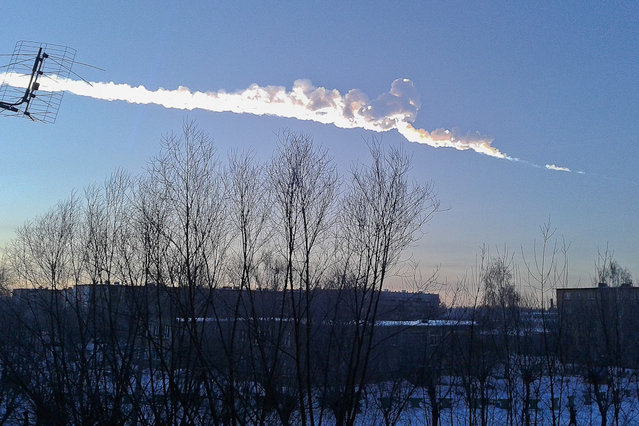
Meteor falls in Russia's Chelyabinsk region on February 15 , 2013. (Photo by Alexey Bulaew/RIA Nowosti)

“A meteor streaked across the sky above Russia's Ural Mountains on Friday morning, causing sharp explosions and injuring more than 500 people (20 had been hospitalized in serious condition), many of them hurt by broken glass. “There was panic. People had no idea what was happening. Everyone was going around to people's houses to check if they were OK”, said Sergey Hametov, a resident of Chelyabinsk, about 1500 kilometres (930 miles) east of Moscow, the biggest city in the affected region”. (Photo by Alexey Bulaew/RIA Nowosti)
Details
15 Feb 2013 12:04:00
Idiots - iPhone Parody

Barcelona-based visual effects/3D animation company Big Lazy Robot brings us a beautiful animated video that uses an alternate robotic world to satirize our dependence on technology.

Details
11 Sep 2014 13:19:00
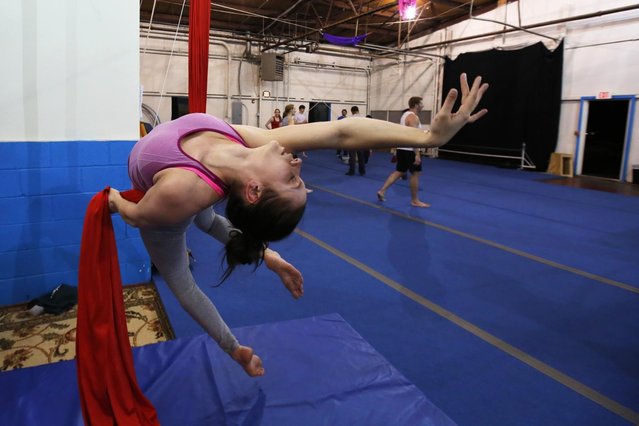
Nicole Londraville works on aerial silks at Esh Circus Arts, a circus school and training center offering recreational circus instruction, in Somerville, Massachusetts May 7, 2014. (Photo by Brian Snyder/Reuters)

Movement is the essence and meaning of our life. We feel so much more alive when we are in motion, while people who spend hours motionless tend to have trouble connecting with the outside world. Whether you dive from a high cliff, play your favorite sport, dance at a rave party, or simply walk down a path with autumn leaves rustling under your feet with the love of your life by your side, all those things make your life richer, more beautiful, and more fulfilling. This set of pictures beautifully captures the joy of never-ending motion that enriches our life. (Photo by Brian Snyder/Reuters)
Details
16 Oct 2014 13:50:00
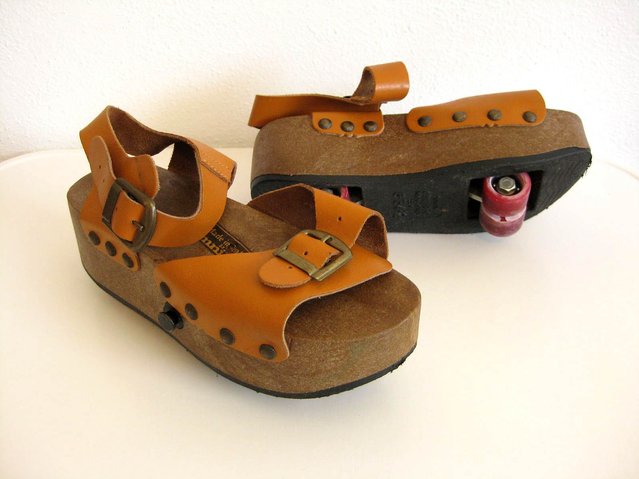
Old Roller Skate Sandals

Throughout time, people invented and reinvented rollerblades. Of course everyone’s dream was to combine them with regular footwear, so that at one moment you’re riding down the road, and in 5 seconds you’re walking into a shopping mall, without the mall cop chasing after you. The most resent inventions were heelys (sneakers with a wheel located in the heels) and Xsjados (aggressive skates, the exterior of which could be removed to reveal regular sneakers). In the past, people made similar attempts, however, these inventions were very inefficient and the trend never caught on. Omnia’C has found and made photos of one of such inventions: pop out roller skate sandals all the way from 1970s. Though their design is pretty cool, it seems like they would be very uncomfortable, since they totally lack ankle support.
Details
02 Nov 2014 11:04:00
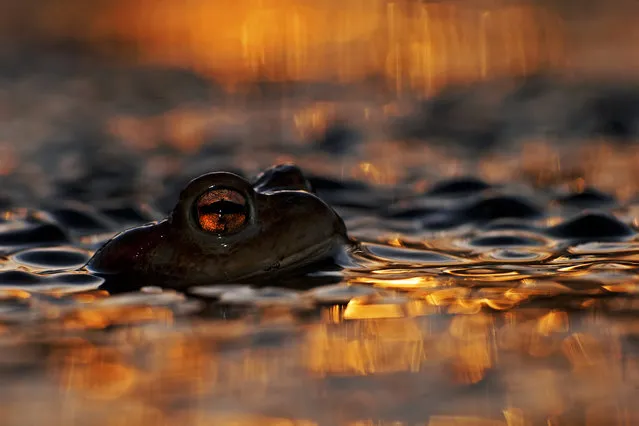
“Eye of a toad”. Animal Portraits, Łukasz Bożycki, Poland.  (Photo by Łukasz Bożycki)

“Eye of a toad”. Animal Portraits, Łukasz Bożycki, Poland. Early spring sees a pond near Łukasz’s home city of Warsaw, Poland, full of mating frogs and a few toads. On this March day, Łukasz shared the pond with them for an evening, sitting in the icy water in his chest-high waders, keeping as still as possible, despite the numbing cold, so that the amphibians could get used to him. “I wanted to find a fresh way of portraying the amphibians”, he says, “at water level”. Using a telephoto lens, he focused on one lone toad and waited for the sun to dip almost below the horizon before pressing the shutter, using flash to bring out the details in the shadow. His prize was “the glorious pool of sunset colour” and fiery glow of the toad’s eye. Nikon D80 + 70-300mm f4.5-5.6 lens + extension tube; 1/125 sec at f9 (-2.3 e/v); ISO 100; built-in flash. (Photo by Łukasz Bożycki)
Details
28 Aug 2013 11:45:00
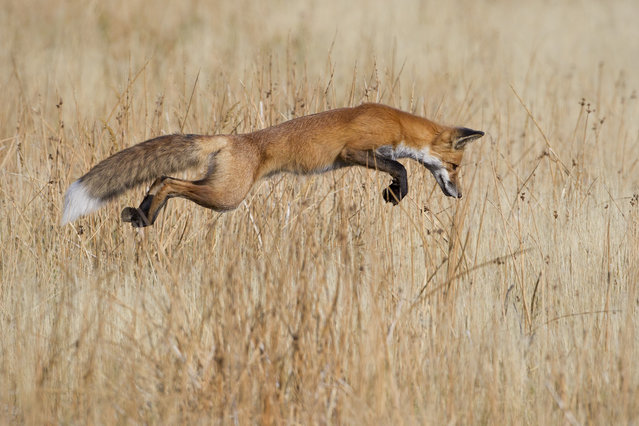
Canada: “Lucky pounce”. (Photo by Connor Stefanison/Wildlife Photographer of the Year 2013)

The winners of The London’s Natural History Museum's prestigious Wildlife Photographer of the Year for 2013 have finally been unveiled. Selected from almost 43,000 entries from 96 countries, the winners offer a glimpse of the stunning array of natural beauty on our planet. Photo: Canada: “Lucky pounce”. “Anticipating the pounce – that was the hardest part”, says Connor, who had come to Yellowstone National Park, Wyoming, USA, in search of wildlife as much as the spectacular landscape. He had found this fox, his first ever, on his last day in the park. It was so absorbed in hunting that Connor had plenty of time to get out of the car and settle behind a rock. It quartered the grassland, back and forth, and then started staring intently at a patch of ground, giving Connor just enough warning of the action to come. When it sprung up, Connor got his shot. And when it landed, the fox got his mouse. (Photo by Connor Stefanison/Wildlife Photographer of the Year 2013)
Details
17 Oct 2013 08:12:00