Loading...
Done
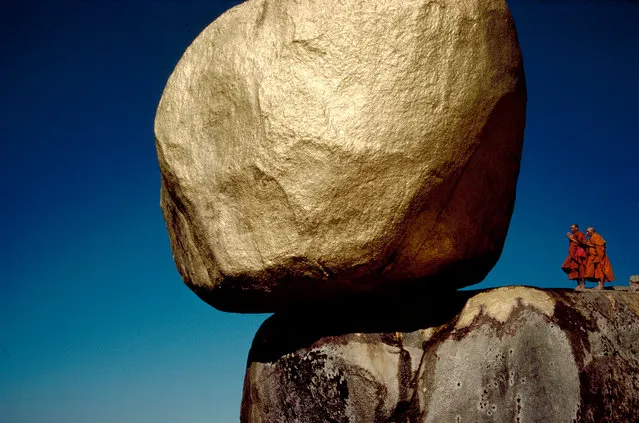
Kyaiktiyo, Burma, 1978. The Golden Rock at Shwe Pyi Daw (the Golden Country), the Buddhist holy place. Hiroji Kubota writes: “I was desperate to keep a distance from America for a while; luckily, I found Burma and its gentle and compassionate people. In the spring of 1978, on the top of the hill where I took this photo, I had two Leica bodies: the one with Tri-X and the other with Kodachrome 64. Soon after, I realised that the colour one looked very colourful and was more powerful. That was my decisive moment, to become a colour photographer”. (Photo by Hiroji Kubota/Magnum Photos)

Kyaiktiyo, Burma, 1978. The Golden Rock at Shwe Pyi Daw (the Golden Country), the Buddhist holy place. Hiroji Kubota writes: “I was desperate to keep a distance from America for a while; luckily, I found Burma and its gentle and compassionate people. In the spring of 1978, on the top of the hill where I took this photo, I had two Leica bodies: the one with Tri-X and the other with Kodachrome 64. Soon after, I realised that the colour one looked very colourful and was more powerful. That was my decisive moment, to become a colour photographer”. (Photo by Hiroji Kubota/Magnum Photos)
Details
10 Jun 2016 13:30:00
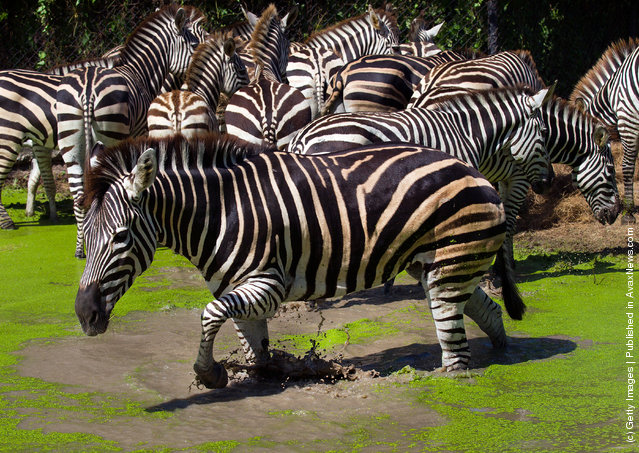
Zebras stand in the recently flooded Safari Park located at Safari World in Bangkok, Thailand

A zebra walks through the recently flooded Safari Park located at Safari World November 2, 2011 in Bangkok, Thailand. (Photo by Paula Bronstein /Getty Images)
Details
03 Nov 2011 09:45:00
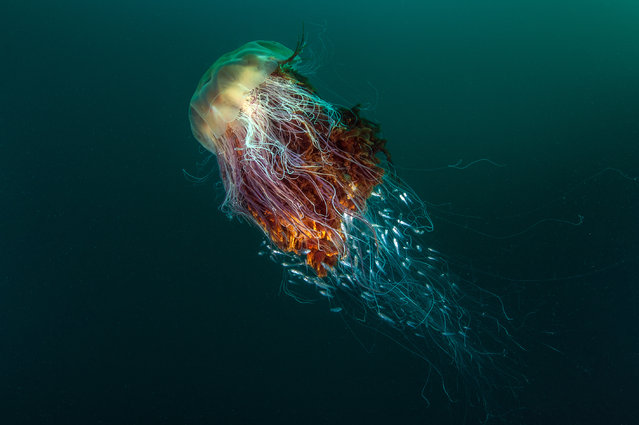
This year’s overall winner and winner of the coast and marine category is George Stoyle with his image “Hitchhikers” of a Lion’s mane jellyfish, photographed at St Kilda, off the Island of Hirta, Scotland. (Photo by George Stoyle/British Wildlife Photography Awards 2016)

This year’s overall winner and winner of the coast and marine category is George Stoyle with his image “Hitchhikers” of a Lion’s mane jellyfish, photographed at St Kilda, off the Island of Hirta, Scotland. (Photo by George Stoyle/British Wildlife Photography Awards 2016)
Details
06 Sep 2016 10:08:00
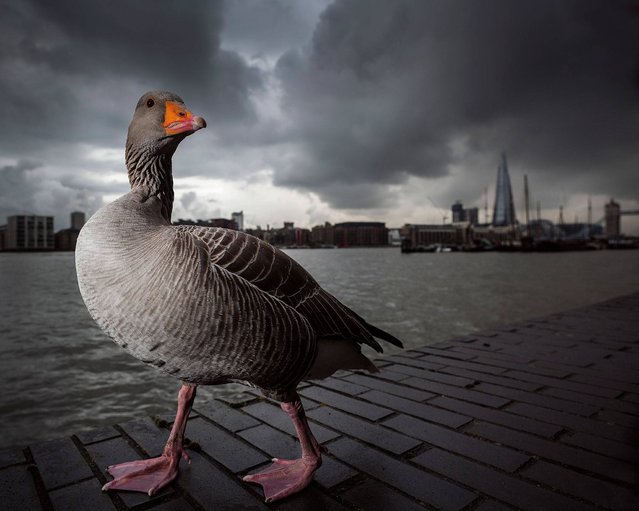
“Urban Tourist (Graylag Goose)”. Urban category and overall winner. (Photo by Lee Acaster/British Wildlife Photography Awards 2014)

The British Wildlife Photography Awards winners have been revealed, with Lee Acaster from Suffolk taking home the top prize for his shot of a Graylag Goose in London. Acaster, who received £5,000, photographed the animal against an ominous London skyline, with The Shard clearly visible in the background. Here: “Urban Tourist (Graylag Goose)”. Urban category and overall winner. (Photo by Lee Acaster/British Wildlife Photography Awards 2014)
Details
02 Sep 2014 12:24:00
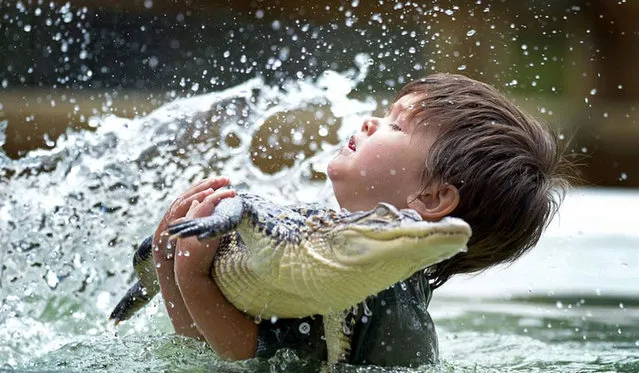
3year Old Wildlife Ranger Charlie Parker

Charlie Parker is only 3, but already he’s drawing comparisons to Crocodile Dundee because of his fondness for large reptiles.
Details
09 Apr 2013 10:38:00
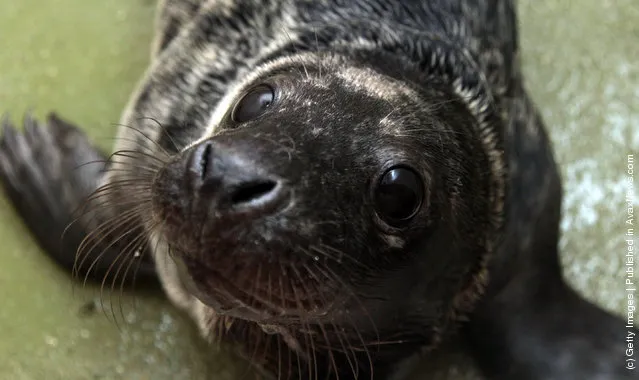
A recently rescued grey seal pup looks up from its indoor kennel at the RSPCA West Hatch Wildlife Centre

A recently rescued grey seal pup looks up from its indoor kennel at the RSPCA West Hatch Wildlife Centre on January 9, 2012 in Taunton, England. The centre is currently dealing with a number of mainly grey seals that have been rescued from the coast due to the recent storms. Staff at the centre hope to release all the seals back into the wild by the spring. (Photo by Matt Cardy/Getty Images)
Details
10 Jan 2012 13:34:00
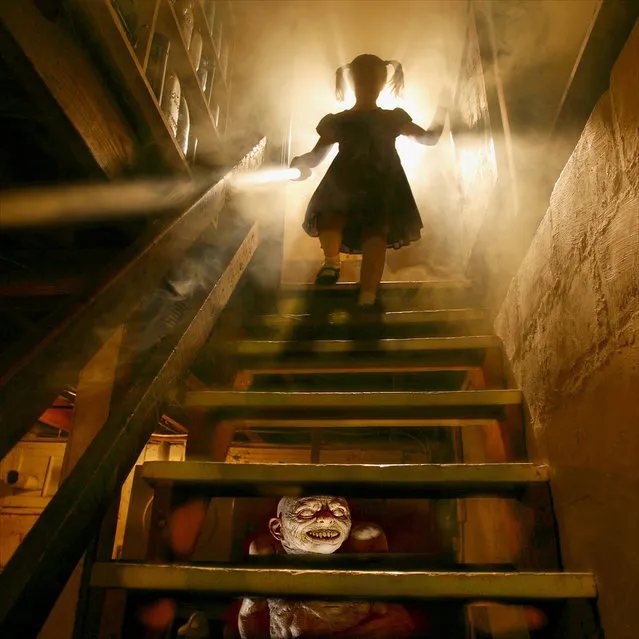
“Basement”. (Photo by Joshua Hoffine/The Washington Post)

Joshua Hoffine, based in Kansas City, Mo., and a self-proclaimed “Horror Photographer”, is interested in the psychology of fear. In his project “After Dark, My Sweet”, Hoffine’s surreal and staged images render these fears visible with the “visual grammar of a child”. Through elaborate sets, costumes, makeup and fog machines, Hoffine’s children act out these terrifying scenes in front of his camera. Here: “Basement”. (Photo by Joshua Hoffine/The Washington Post)
Details
29 Oct 2016 11:47:00
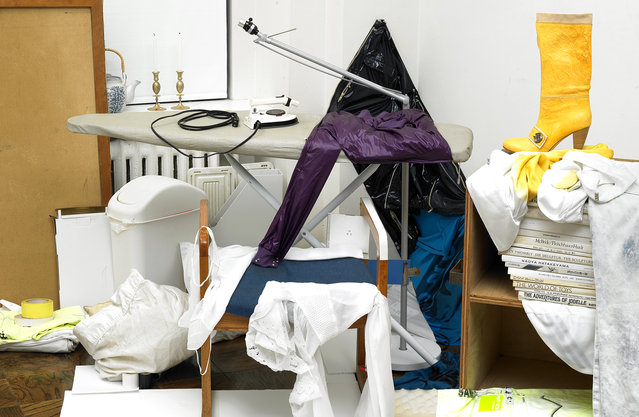
Alphabets Photographer By Bela Borsodi

Bela Bordosi is not the first person to arrange various household objects into the shape of the letters and making photos, and he’s definitely not the last. However, the way he does it is definitely very distinct and original. Sure, some photos are most definitely staged. However, some letters just pop out of the picture that doesn’t look staged at all. As if by chance, the items create a vivid “A” in your mind, so vivid that it’s very hard to notice the individual items that were used in the making of this composition. The reason behind it is probably because Bela Bordosi’s other photos are optical illusions created using a similar method. (Photo by Bela Borsodi)
Details
22 Oct 2014 13:41:00