Loading...
Done


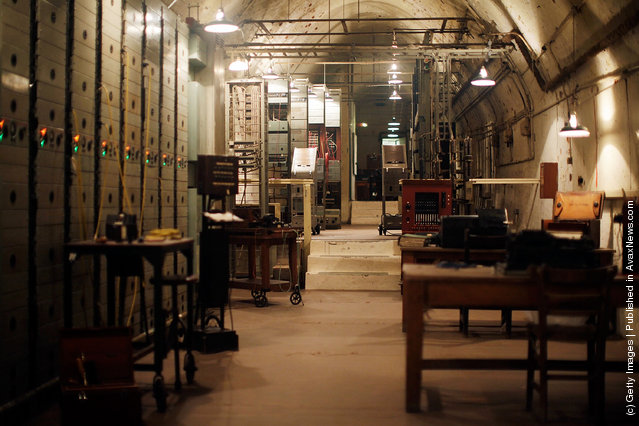
“Dover Castle is a medieval castle in the town of the same name in the English county of Kent. It was founded in the 12th century and has been described as the “Key to England” due to its defensive significance throughout history. It is the largest castle in England.

The outbreak of the Second World War in 1939 saw the tunnels converted first into an air-raid shelter and then later into a military command centre and underground hospital. In May 1940, Admiral Sir Bertram Ramsey directed the evacuation of French and British soldiers from Dunkirk, code-named Operation Dynamo, from his headquarters in the cliff tunnels”. – Wikipedia

Photo: The Repeater Station in the subterranean tunnels underneath Dover Castle, which has been restored by English Heritage for a public exhibition on June 3, 2011 in Dover, England. The evacuation of allied soldiers from Dunkirk was masterminded and co-ordinated from the secret command and control centre in the tunnels deep below the castle. (Photo by Matthew Lloyd/Getty Images)
Details
07 Jun 2011 09:26:00
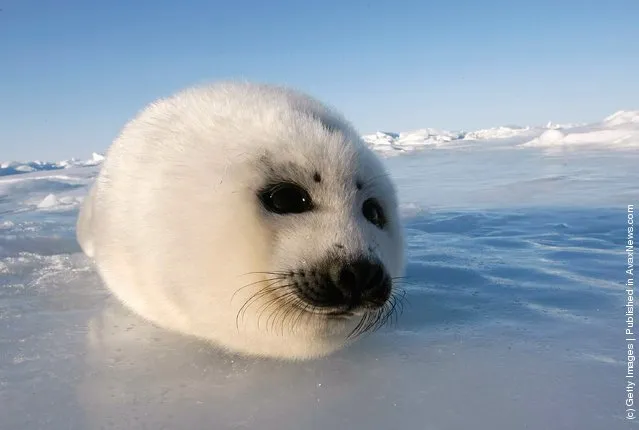
A harp seal pup

“The harp seal or saddleback seal is a species of earless seal native to the northernmost Atlantic Ocean and adjacent parts of the Arctic Ocean. Newborn pups weigh around 11 kilograms (24 lb) and are 80–85 centimetres (31–33 in) long. After birth, the mother only feeds that pup. During the 12 day nursing period, the mother does not eat, losing up to 3 kilograms (7 lb) per day. Harp seal milk contains up to 48% fat, so pups gain over 2.2 kilograms (4.9 lb) per day. During this time, the juvenile's “greycoat” grows in beneath the white neonatal coat, and it weighs 80 pounds (36 kg)”. – Wikipedia

Photo: A harp seal pup lies on an ice floe in the Gulf of Saint Lawrence March 24, 2008 in Charlottetown, Canada. (Photo by Joe Raedle/Getty Images)
Details
19 Sep 2011 15:49:00
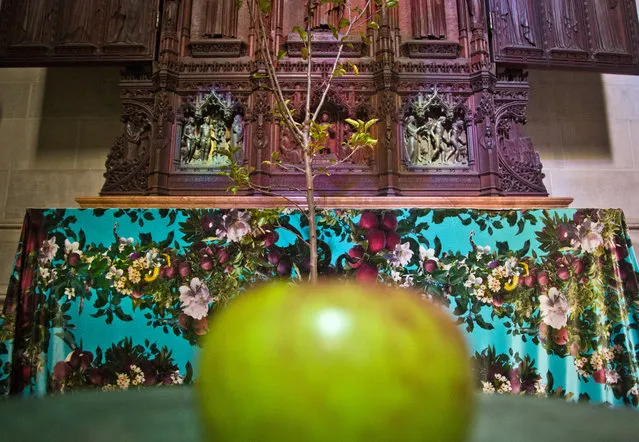
"Temptation", part of an installation from the artist-duo David Burns and Austin Young, appears among the works of 30 artists in the multimedia exhibition "The Value of Food: Sustaining a Green Planet" at the Cathedral of St. John the Divine, Wednesday, October 7, 2015, in New York.  (Photo by Bebeto Matthews/AP Photo)

"Temptation", part of an installation from the artist-duo David Burns and Austin Young, appears among the works of 30 artists in the multimedia exhibition "The Value of Food: Sustaining a Green Planet" at the Cathedral of St. John the Divine, Wednesday, October 7, 2015, in New York. The exhibition, installed in the cathedral's seven chapels and 14 bays, explores food accessibility, sustainability and other food-related issues and runs through April 3, 2016. (Photo by Bebeto Matthews/AP Photo)
Details
16 Oct 2015 08:01:00
Cornish students (R) Nina Brooke, 21 and (L) Bonnie Mably, 20, laugh as they pose for a photograph as they try a Cornish pasty that has been baked as part of the World Cornish Pasty Championships at The Eden Project

“A Cornish pasty, sometimes known as a pastie or British pasty in the United States, is a filled pastry case, associated in particular with Cornwall in Great Britain. It is made by placing the uncooked filling on a flat pastry circle, and folding it to wrap the filling, crimping the edge at the side or top to form a seal. The result is a raised semicircular package”. – Wikipedia

Photo: Cornish students (R) Nina Brooke, 21 and (L) Bonnie Mably, 20, laugh as they pose for a photograph as they try a Cornish pasty that has been baked as part of the World Cornish Pasty Championships at The Eden Project on March 3, 2012 in St Austell, England. (Photo by Matt Cardy/Getty Images)
Details
04 Mar 2012 11:49:00
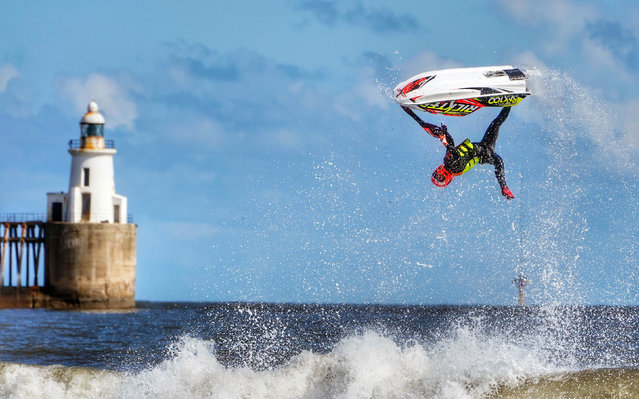
Ant Burgess practices his freestyle on a jet ski at Blyth beach in Northumberland, on the North East coast. Picture date: Saturday April 10, 2021. (Photo by Owen Humphreys/PA Images via Getty Images)

Ant Burgess practices his freestyle on a jet ski at Blyth beach in Northumberland, on the North East coast on Saturday, April 10, 2021. (Photo by Owen Humphreys/PA Images via Getty Images)
Details
11 Jun 2021 09:47:00
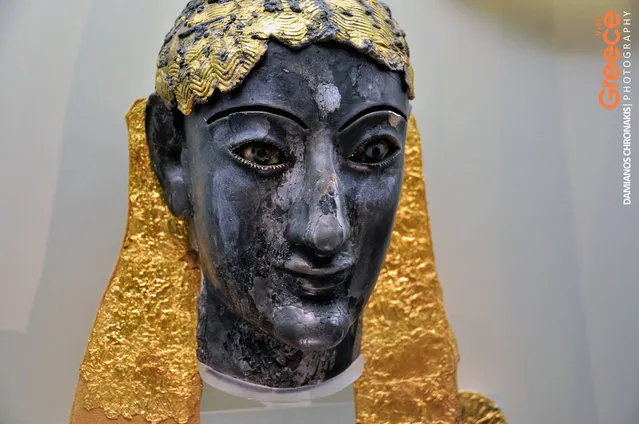
Delfoi Museum

Delfoi Museum by Damianos Chronakis
Details
12 Jun 2012 07:10:00
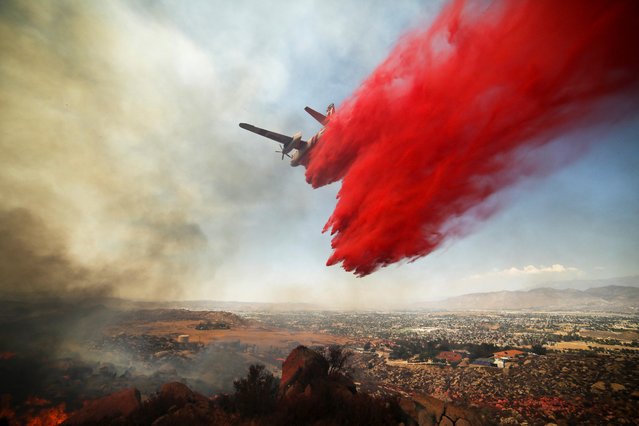
Fire retardant is dropped on the Fairview Fire burning near Hemet, California, U.S., September 6, 2022. (Photo by David Swanson/Reuters)

Fire retardant is dropped on the Fairview Fire burning near Hemet, California, U.S., September 6, 2022. (Photo by David Swanson/Reuters)
Details
13 Sep 2022 04:05:00
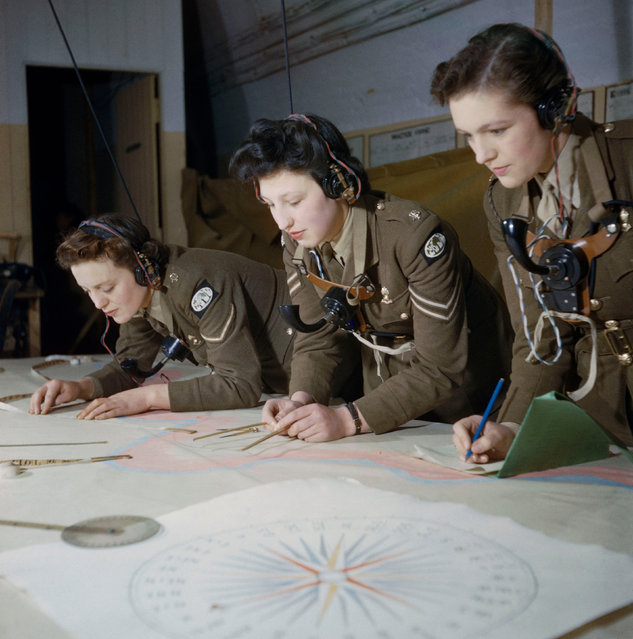
Auxiliary Territorial Service (ATS) plotters at work at Coastal Artillery Headquarters in Dover, December 1942. (Photo by Ted Dearberg/IWM/PA Wire)

Auxiliary Territorial Service (ATS) plotters at work at Coastal Artillery Headquarters in Dover, December 1942. The Auxiliary Territorial Service was the women's branch of the British Army during the Second World War. It was formed on 9 September 1938, initially as a women's voluntary service, and existed until 1 February 1949, when it was merged into the Women's Royal Army Corps. The ATS had its roots in the Women's Auxiliary Army Corps (WAAC), which was formed in 1917 as a voluntary service. During the First World War its members served in a number of jobs including clerks, cooks, telephonists and waitresses. The WAAC was disbanded after four years in 1921. (Photo by Ted Dearberg/IWM/PA Wire)
Details
13 Jul 2017 07:52:00