Loading...
Done
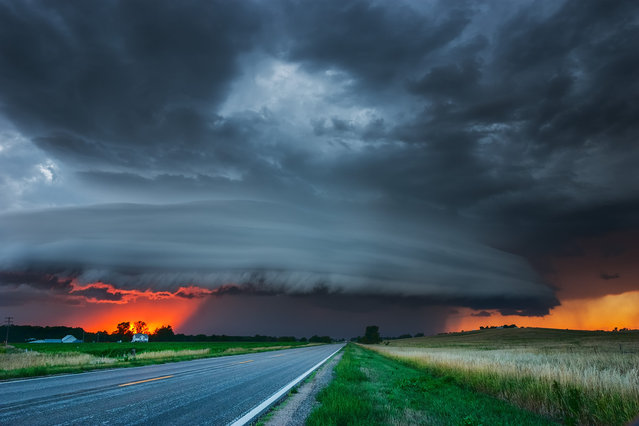
Vivid sunset under severe storm in central Nebraska August 17, 2005. (Photo by Mike Hollingshead)

Storm chasing photographer Mike Hollingshead makes a living following the worst storms in America, from snarling tornadoes chewing up the Kansas farmland to supercell thunderstorms massing over the Dakotas. His style is to get right in the path of the storm. While he says it’s less scary than you think – because most of the storm consists of heavy rain – it’s still extremely stressful. Photo: Vivid sunset under severe storm in central Nebraska August 17, 2005. (Photo by Mike Hollingshead)
Details
13 Aug 2014 11:25:00
World’s Shortest Cat

Pixel – the cat about to enter the record books as the world's shortest feline. Standing at just five inches from shoulder to paw this compact cat could break the previous record held by her mother Fizz Girl in 2012, who stood at six inches.
Details
12 Sep 2015 11:54:00
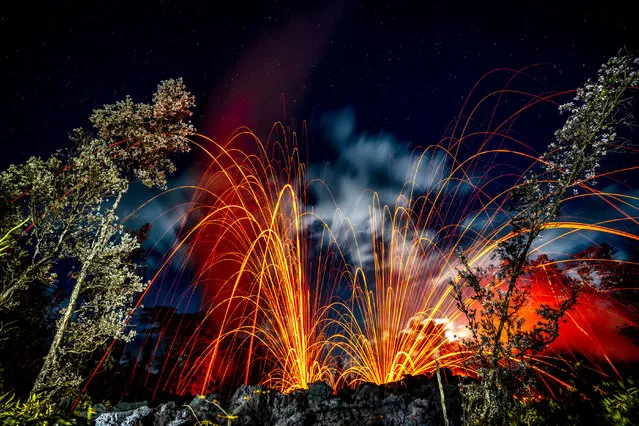
This photo highlights the sheer power of Mother Nature and the act of creating new land. (Photo by CJ Kale/Caters News Agency)

These beautiful images aim to show the more artistic side of Hawaii’s recent volcano eruption, highlighting the sheer power of Mother Nature and the act of creating new land. Photographer CJ Kale’s breathtaking works show the molten lava in its incredible vibrancy, whether it’s bursting from the ground in fireworks fashion or pouring into surrounding waters, causing steam to rise. (Photo by CJ Kale/Caters News Agency)
Details
13 Jul 2018 00:05:00
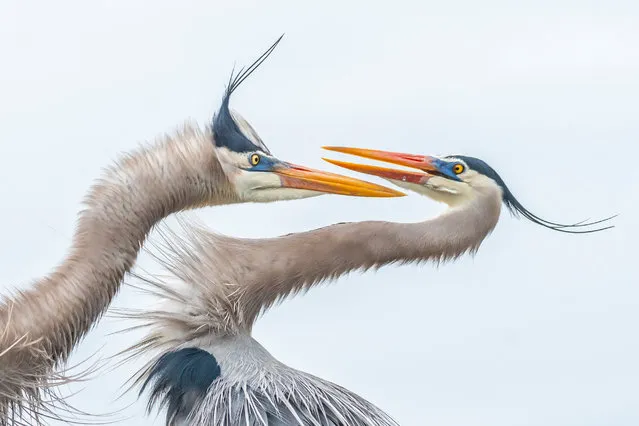
Melissa Rowell, amateur honourable mention. Wakodahatchee wetlands, Delray Beach, Florida, US. Equipped with sinewy necks and spear-like bills, great blue herons can lunge with fearsome speed to strike their aquatic prey. Adults will also employ rapid stabbing motions as one aspect of their complex courtship displays; they’re seemingly dangerous moves, but fitting to the intensity of mating season. (Photo by Melissa Rowell/Audubon photography awards)

Wakodahatchee wetlands, Delray Beach, Florida, US. Equipped with sinewy necks and spear-like bills, great blue herons can lunge with fearsome speed to strike their aquatic prey. Adults will also employ rapid stabbing motions as one aspect of their complex courtship displays; they’re seemingly dangerous moves, but fitting to the intensity of mating season. (Photo by Melissa Rowell/Audubon Photography Awards)
Details
17 Jul 2019 00:03:00
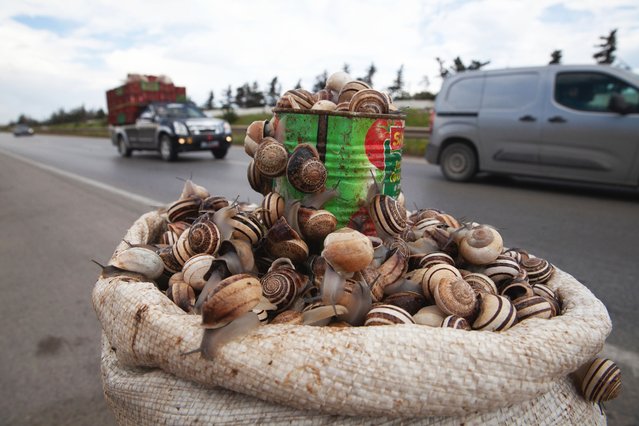
Snails are displayed to be sold on the side of a highway, in Sousse, Tunisia, March 27, 2025. (Photo by Ons Abid/AP Photo)

Snails are displayed to be sold on the side of a highway, in Sousse, Tunisia, March 27, 2025. (Photo by Ons Abid/AP Photo)
Details
08 Jan 2026 15:01:00


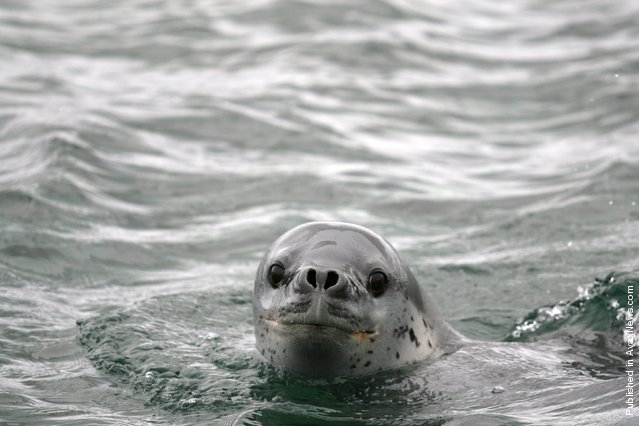
“The leopard seal (Hydrurga leptonyx), also referred to as the sea leopard, is the second largest species of seal in the Antarctic (after the southern elephant seal). It is most common in the southern hemisphere along the coast of Antarctica and on most sub-Antarctic islands, but can also be found on the coasts of southern Australia, Tasmania, South Africa, New Zealand, Lord Howe Island, Tierra del Fuego, the Cook Islands, and the Atlantic coast of South America. It can live twenty-six years, possibly more. Orcas and large sharks are the only natural predators of leopard seals”. – Wikipedia

Photo by: Gilad Rom; Source: Flickr
Details
13 Nov 2011 11:24:00
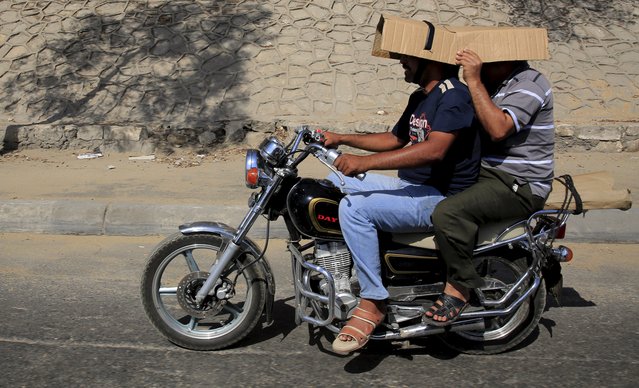
Men cover their heads from the sun while riding on a motorcycle during a hot day in Cairo, Egypt, August 17, 2015. A heatwave killed at least 61 people across Egypt from Sunday to Tuesday and caused nearly 600 people to be admitted to hospital, Egypt's health ministry said on state news agency MENA on Wednesday. (Photo by Amr Abdallah Dalsh/Reuters)

Men cover their heads from the sun while riding on a motorcycle during a hot day in Cairo, Egypt, August 17, 2015. A heatwave killed at least 61 people across Egypt from Sunday to Tuesday and caused nearly 600 people to be admitted to hospital, Egypt's health ministry said on state news agency MENA on Wednesday. (Photo by Amr Abdallah Dalsh/Reuters)
Details
18 Aug 2015 13:47:00
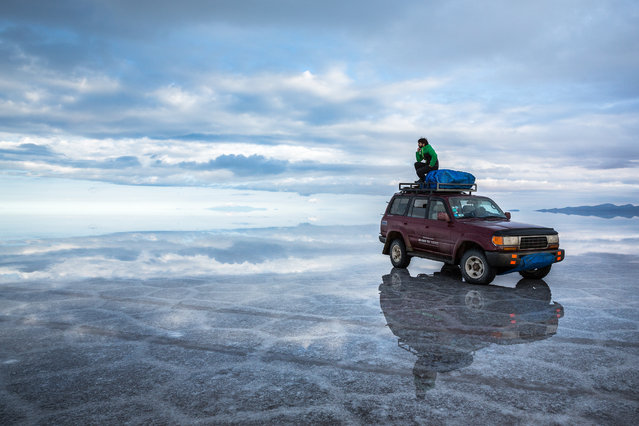
At 10,582 square kilometres, the Bolivian salt flats – otherwise known as Salar de Uyuni – are the largest on the planet and contain between 50 and 70% of the world’s lithium reserves. After exploring Chile and Argentina, photographer Joel Santos decided to travel to Bolivia in January 2017 to check the salt flats off his bucket list. With an electrical storm rolling in, Joel and his two travelling companions were the only souls left on the vast flats and captured the eerie flats without a person in sight. (Photo by Joel Santos/Barcroft Images)

At 10,582 square kilometres, the Bolivian salt flats – otherwise known as Salar de Uyuni – are the largest on the planet and contain between 50 and 70% of the world’s lithium reserves. After exploring Chile and Argentina, photographer Joel Santos decided to travel to Bolivia in January 2017 to check the salt flats off his bucket list. With an electrical storm rolling in, Joel and his two travelling companions were the only souls left on the vast flats and captured the eerie flats without a person in sight. (Photo by Joel Santos/Barcroft Images)
Details
12 Aug 2019 00:03:00